Skip to content

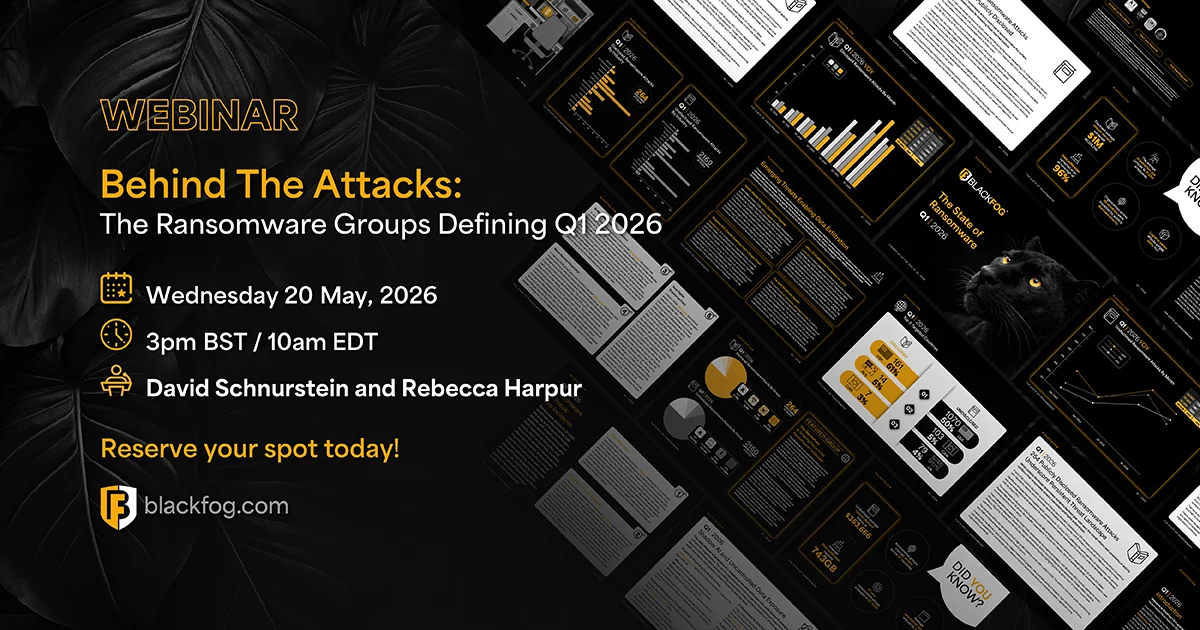
Behind The Attacks: The Ransomware Groups Defining Q1 2026
Date: Wednesday 20 May, 2026
Time: 3pm BST / 10am EDT
Presenters: David Schnurstein and Rebecca Harpur
Ransomware continues to evolve at pace, but behind the headlines are the groups driving today’s most significant attacks.
In this webinar, we will take a closer look at the ransomware groups that defined Q1 2026, including who they are, how they operate, and where they are focusing their efforts. From newly emerged groups to rapidly scaling operations, we will break down the key players shaping the current threat landscape.
Join us as we examine:
- The most active and impactful ransomware groups in Q1 2026
- The industries and regions most heavily targeted
- How these groups are scaling, rebranding, and expanding their reach
- What these trends signal for the months ahead
We will also translate these insights into practical takeaways, helping organizations better understand their risk and strengthen defenses against evolving ransomware threats.
Share This Story, Choose Your Platform!