 Skip to content


Malware Distribution
Malware, that malicious software that infects our computers may have just found a new distribution mechanism which is being called Malvertising. Traditionally spread through so called Phishing techniques, like emails that promise to make you rich or links to free software, malware is just a fact of life these days.
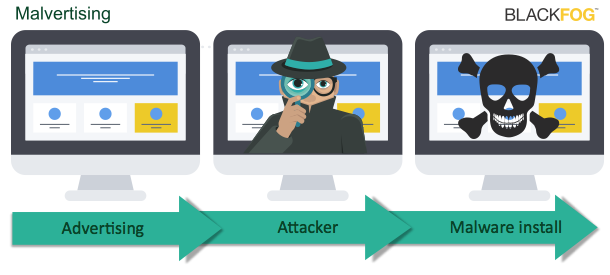
Distribution via Web Ads
While most people are wary of not clicking on links in emails from spam or people we don’t know, malware producers have discovered new ways to get their software onto your computer. Now they are infecting advertising networks in what is now being referred to as Malvertising. Malware distribution via web ads on major sites (including msn.com, nytimes.com, bbc.com, aol.com, my.xfinity.com, nfl.com, realtor.com, theweathernetwork.com, thehill.com, and newsweek.com) has recently been discovered. According to Malwarebytes, the affected networks included those owned by Google, AppNexis, AOL, and Rubicon. The attacks are flowing from two suspicious domains, including trackmytraffic[c].biz and talk915[.]pw.
Malvertising is now considered the leading threat vector, overtaking porn. Almost 1 in 5 cyber attacks is now through malvertising.
What can I do?
The only real way to prevent cyberattacks is to stop them from activating in the first place. BlackFog Privacy is designed to specifically block malware execution by disrupting their bidirectional communication back to their command centers.
By preventing activation, the malware has no way to activate and therefore is prevented from being installed on your computer.
BlackFog’s entire focus is on prevention. Rather than focusing on known vulnerabilities using perimeter defense techniques (at the Firewall) or signature based detection, such as virus and spyware scanners, BlackFog stops the activation and replication of new threats before they can cause any damage.

Share This Story, Choose Your Platform!
Related Posts
WEBINAR: The Ransomware Groups Defining Q1 2026 – Register now!
Explore the ransomware groups shaping Q1 2026, their tactics, targets, and what evolving threats mean for organizations worldwide.

Breaking Down CoPhish: How Copilot Studio Became a Phishing Platform
CoPhish turns Microsoft Copilot Studio into an OAuth phishing platform, bypassing MFA and domain filters by delivering token theft through legitimate Microsoft infrastructure.
The State of Ransomware: April 2026
BlackFog's state of ransomware April 2026 measures publicly disclosed and non-disclosed attacks globally.
BlackFog Q1 2026 Ransomware Report: Only 1 in 9 Ransomware Attacks Made Public as Data Exfiltration Hits 96%
BlackFog Q1 2026 Ransomware Report reveals only 1 in 9 attacks are disclosed as data exfiltration hits 96% worldwide.
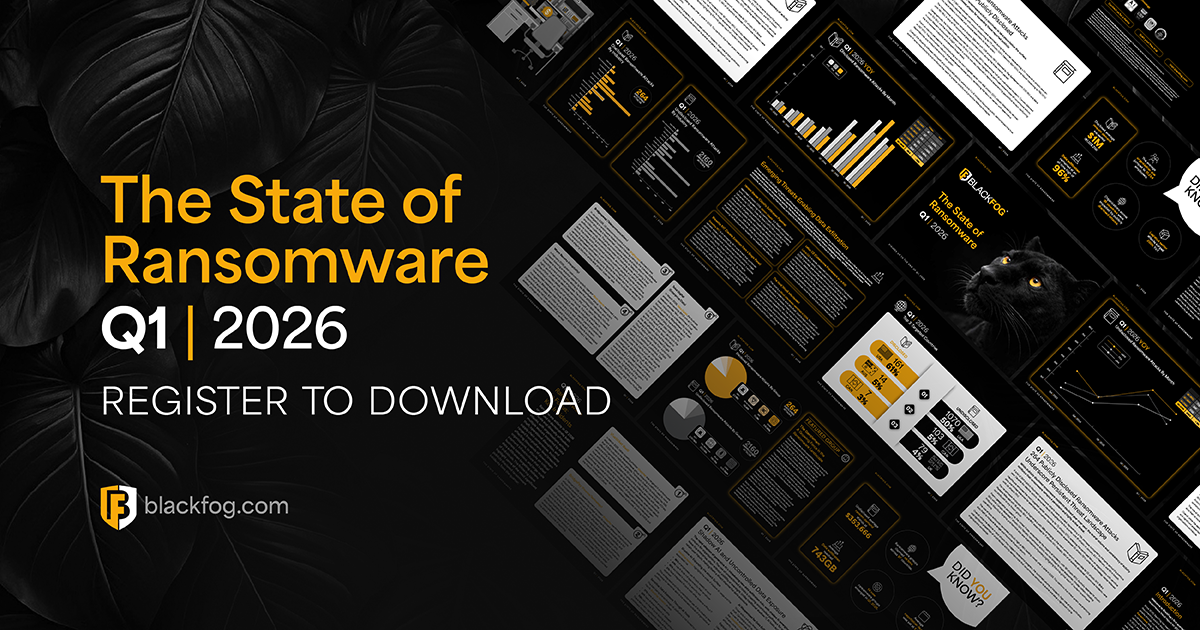
2026 Q1 Ransomware Report
BlackFog’s 2026 Q1 Ransomware Report - Ransomware Remains Relentless with Data Exfiltration Holding at 96%

Shadow AI and Governance: Why Traditional Control Is Failing CISOs
Shadow AI and Governance: Why traditional controls are failing CISOs as AI adoption accelerates, increasing risk and reducing visibility.