Skip to content

5 Steps To Effective Endpoint Management
In today’s hyper-connected business landscape, the traditional network perimeter no longer exists. Trends such as cloud adoption, hybrid work models and the rise of the Internet of Things (IoT) and personal devices mean that modern networks now span thousands of access points.
Each one of these is a potential entry for cyberthreats. As the number and variety of endpoints continue to grow, so too does the attack surface organizations must defend. Without proper visibility and control, managing this sprawl becomes a serious risk. This is where endpoint management comes in. By monitoring every device that connects to the network, effective endpoint security solutions greatly improve businesses’ security posture and minimize their exposure to data breaches.
What Is Endpoint Management And Why Does It Matter?
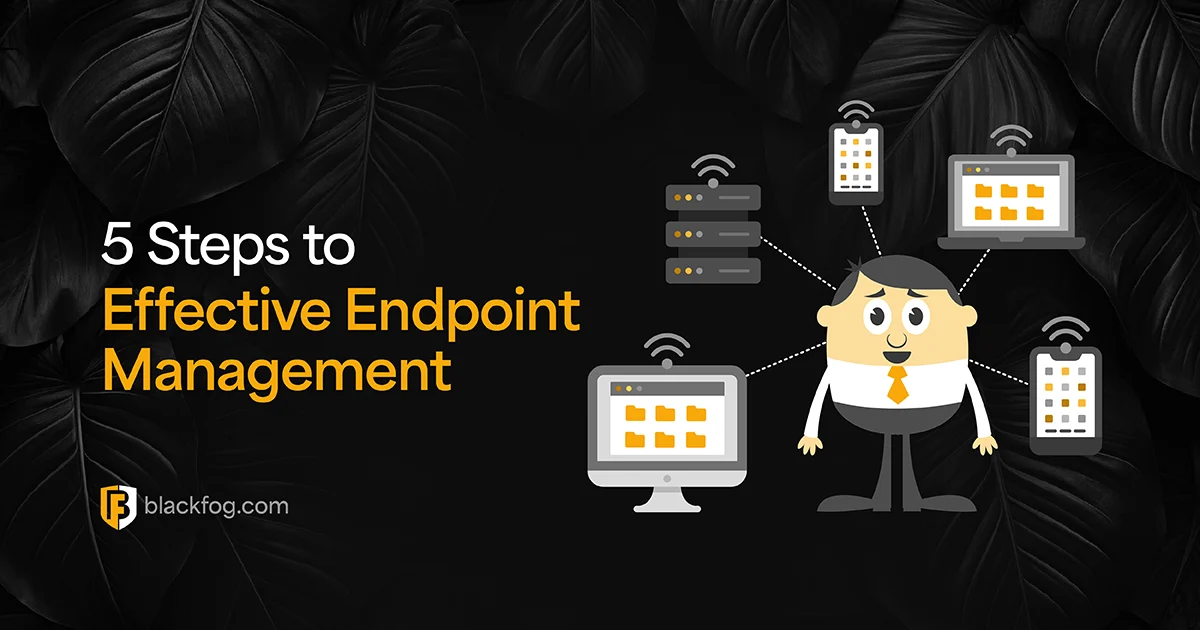
Endpoint management is the process of centrally controlling, monitoring and securing every device that connects to a company’s network. This includes both physical and virtual machines, including laptops, desktops, smartphones, tablets, servers, IoT devices and more, whether owned by the business, its employees or third-parties.
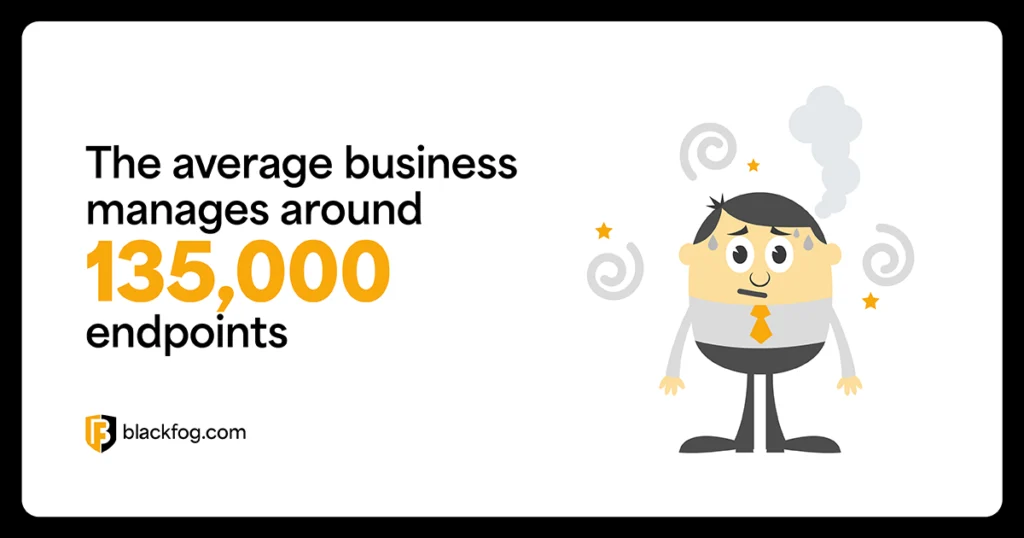
It matters because the number of endpoints in the modern enterprise has exploded. According to the Ponemon Institute, the average business manages around 135,000 endpoints. What’s more, almost half of these (48 percent) are said to be at risk because of outdated systems or a lack of visibility by IT departments.
Hackers target endpoints to bypass traditional network perimeters, steal sensitive information or deploy ransomware. Without proper endpoint management, businesses lack the visibility and control needed to defend against these threats, leaving them vulnerable to costly and highly disruptive cyber incidents and data breaches.
Why Endpoint Security Must Cover Both Inbound And Outbound Risks
Effective endpoint security isn’t just about keeping hackers out. It’s also about keeping sensitive data in. While intrusion prevention systems focus on detecting and blocking inbound threats like malware and unauthorized access, modern cyberattacks often involve data exfiltration as a second, equally dangerous phase.
Double extortion ransomware has become a leading threat, where attackers not only encrypt files but also steal data and threaten to leak it. Unsecured endpoints are critical in achieving this. At the same time, firms also have to consider threats from within the network. Malicious insiders, for example, can quietly extract sensitive information over time, often without triggering alarms in traditional defenses.
Without controls at the endpoint level, these outbound threats can go undetected until it’s too late. That’s why enterprise endpoint management must include monitoring for unusual data transfers. By doing so, businesses can detect and shut down exfiltration attempts in real-time, before data ever leaves the device.
5 Best Practices For Strong Endpoint Management
Managing endpoints effectively requires more than just antivirus software or basic policy enforcement. Organizations need a structured, proactive approach to secure their entire digital perimeter. That means ensuring consistent oversight, deploying the right tools and building a strong foundation of policies and controls that cover every device. These five best practices are steps that every business should follow to defend against advanced threats like ransomware and data exfiltration.
1. Standardize Security Policies Across All Devices
Establishing clear, organization-wide security policies is the first step in strong endpoint management. These policies should define how devices are used, what applications are allowed and what controls are mandatory. These must apply equally to company-issued and personal devices.
Enforcing standards reduces the risk posed by shadow IT or misconfigured endpoints. Documenting these policies also supports compliance efforts and incident response. Without standardized rules, endpoints become a patchwork of vulnerabilities that attackers can easily exploit.
2. Use On-Device Protection, Not Just Perimeter Defense
Relying on network-based tools alone is no longer enough. Modern threats often originate or act entirely at the endpoint level, bypassing traditional firewalls or perimeter defenses. On-device protection, such as EDR or XDR technology, as well as dedicated anti data exfiltration (ADX) solutions, enable real-time threat detection and response directly on the device.
Local protection is especially vital for remote or hybrid work environments where devices operate outside the corporate network. The ability to do this without sending data back to central servers for analysis ensures every endpoint remains resilient, even when away from the network.
3. Automate Deployment And Updates
Manual software deployment and patching creates gaps in coverage and increases the chance of human error. Endpoint management tools should allow IT teams to push updates, patches and configuration changes remotely and without delay.
This is critical for defending against known vulnerabilities that are frequently exploited in ransomware attacks. Automating these processes also helps onboard new devices securely, enforce configuration standards and ensure that no endpoint is overlooked.
4. Monitor Data Movement, Not Just Device Activity
Monitoring user behavior, file access patterns and data flows offers deep visibility into how data is accessed, used and transferred across all devices and helps detect signs of exfiltration.
Solutions that use tools like behavioral monitoring and AI endpoint security can flag suspicious activity, enforce usage policies and block attempts to move data off-network. This is especially important in defending against double extortion ransomware, where the goal is to steal, not just encrypt, critical information.
5. Enforce Role-Based Access And Least Privilege
Not every employee needs access to every system or file. Implementing role-based access controls and zero-trust policies ensures that devices can only reach the data and applications required for their users’ functions and limits potential damage if an account is compromised.
This approach reduces the attack surface and helps contain threats before they spread laterally across the network. Endpoint management tools should enable granular policy enforcement, continuous access monitoring and dynamic adjustments based on context, such as location or user behavior.
How Endpoint Management Fits Into Broader Cybersecurity
Effective endpoint management is a cornerstone of any modern cybersecurity strategy. As network sprawl grows and data becomes more mobile, lightweight, on-device solutions are essential to maintain protection without disrupting daily operations. By using smart, adaptive tools that detect and shut down threats in real-time, organizations can safeguard systems, data and users across every endpoint.