Skip to content

Cybersecurity Incident Response: How to Prepare for and Manage Modern Threats
No matter how advanced your cybersecurity defenses are, no organization is immune to cyberattacks. The threat landscape in 2025 is fast-moving, adaptive and increasingly complex, using a range of cyberattack vectors.
For example, ransomware gangs now use multi-layered extortion techniques, cloud misconfigurations can expose sensitive data in seconds and AI-powered phishing emails can catch out even the most vigilant employees.
With so many advanced risks out there, the reality is that 100 percent prevention is no longer a realistic expectation. Threat actors only need to find one weakness and an entire network can be compromised. What matters most is how your organization responds when – not if – this happens.
That’s where cybersecurity incident response comes in. A well-prepared incident response plan doesn’t just limit the damage of a breach. It enables businesses to react quickly to protect critical data, maintain operations and meet compliance demands. In today’s environment, an effective strategy is not just about defending your perimeter – it’s about being ready for what happens after it’s breached.
What is Cybersecurity Incident Response?
Cybersecurity incident response refers to the structured process an organization follows to detect, contain, investigate and recover from a cyberattack.
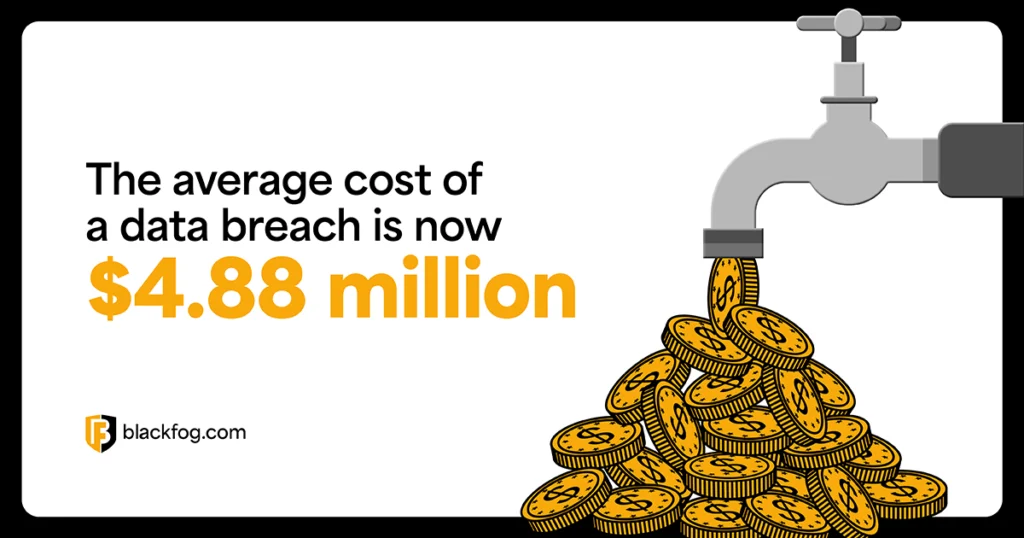
This forms a critical part of a modern security strategy in an environment where cyberattacks are not just more frequent, but also more damaging. According to IBM, the average cost of a data breach has risen to $4.88 million, while 94 percent of ransomware attacks now seek to exfiltrate data – potentially exposing highly sensitive and mission-critical documents to the world. With the average time to detect a breach still hovering around 200 days, a rapid response plan can be the difference between a contained incident and a full-scale crisis.
Common types of cybercrime incident that require a response include:
- Ransomware attacks and data exfiltration
- Insider threats and privilege misuse
- Phishing and social engineering compromises
- Zero-day or advanced persistent threats (APTs)
- Cloud service breaches or misconfigurations
Without a well-rehearsed incident response plan that covers what to do in all these situations, businesses risk prolonged downtime, regulatory penalties, reputational fallout and lasting financial damage.
The Cybersecurity Incident Response Lifecycle
To do this, you need a clear, step-by-step process that can be deployed the moment a threat is detected. Frameworks like NIST’s Computer Security Incident Handling Guide and the SANS Institute’s Incident Response Framework both outline structured lifecycles that organizations can follow.
Broadly speaking, whichever method you use – or develop yourself – there are six key stages that you should factor in. These are:
- Preparation: Prior to any breach, you should develop clear policies, assign response roles, and ensure all tools and backups are in place.
- Detection and analysis: Monitoring tools (e.g. SIEM, ADX, EDR) can detect anomalies and confirm whether a cybersecurity incident is underway.
- Containment: Isolate affected systems to prevent the spread of malware or data exfiltration. This may involve removing hardware from the network or revoking access rights.
- Eradication: Remove the root cause and ensure systems are clean. This could include targeting malware, malicious users, or exploited vulnerabilities.
- Recovery: Safely restore systems, services and data, validate functionality and monitor for any remaining signs of infection.
- Review: After a breach is secured, be sure to document the incident, report it to regulators where necessary and update security practices based on lessons learned.
Creating and Testing Your Incident Response Plan
A strong incident response must be more than a checklist. It should be a living, evolving document that provides structure and a clear roadmap when a cyberattack strikes. At a minimum, your plan should include the following:
- Defined roles and responsibilities across IT, legal, leadership, and communications teams.
- Clear escalation paths and decision-making authority.
- Communication protocols, including internal updates and regulatory notifications.
- Technical playbooks for different incident types.
Even the best-written plan is useless if it hasn’t been tested. In order to validate your plan, make sure your testing processes cover these points:
- Run regular tabletop exercises to simulate real-world scenarios.
- Include both technical and executive stakeholders.
- Review performance to assess what worked and what didn’t.
- Update plans quarterly. This should reflect evolving threats and technologies, as well as any team changes.
Technologies That Strengthen Incident Response
To respond effectively to cyberthreats, a response plan should detail what technology will be used at every stage of the process.
This starts with early identification. Solutions like SIEM platforms, which aggregate logs and provide real-time alerts, access management tools and networks are essential. Technologies that can spot advanced brute force attacks are also important early warnings.
Another key solution if perimeter defenses have failed to spot an intrusion is anti data exfiltration. This technology can react to an attack in progress by automatically blocking outbound data theft. Network segmentation and automated access controls, these tools help contain threats as they unfold.
Finally, services like strong backups and automated recovery tools ensure businesses can restore operations quickly and securely, minimizing disruption. Together, these technologies underpin modern incident response capabilities.
Post-Incident Response: Reporting, Compliance, and Continuous Improvement
Recovery doesn’t mark the end of an incident. Once systems are restored, businesses must conduct a thorough post-incident review to understand what happened, how it was handled, and where improvements are needed.
This process should include detailed documentation of the attack, response actions taken, and timelines. The goal is to strengthen your defenses. The lessons learned should be used to update security policies, patch vulnerabilities, retrain staff and hone your response plan.
In many sectors, it’s also a legal requirement to report certain incidents. Regulations like GDPR, HIPAA, and the SEC’s cyber disclosure rules demand timely reporting, particularly when personal data or material risks are involved.
Every cybersecurity incident is an opportunity to evolve. Staying one step ahead means treating recovery as the start of future resilience.