 Skip to content


What Enterprises Need To Know About Cyber Governance, Risk And Compliance
In 2026, cyber governance, risk and compliance (GRC) is firmly a board-level responsibility. Investors, enterprise partners and customers increasingly expect organizations to demonstrate responsible data stewardship, transparent risk oversight and measurable compliance maturity.
This is not just about protecting against threats such as ransomware groups and data exfiltration. While these risks continue to grow, they represent only part of the challenge. Insider threats, inadvertent data leaks and weak internal controls can be just as damaging, especially as more firms encounter issues such as shadow AI that require new ways of thinking about data security.
To address this, a structured cyber GRC framework is a must. This brings oversight, accountability and discipline to how data is handled across the organization. It protects day-to-day operations, strengthens cybersecurity compliance and ensures responsible data governance in an increasingly scrutinized business environment.
What Is Cyber Governance, Risk And Compliance?
Cyber governance, risk and compliance is a structured framework for overseeing cybersecurity strategy, managing threats and ensuring adherence to legal and regulatory obligations. Rather than operating as separate functions, these elements must work together to create a cohesive and defensible security posture. In more detail, the core components are:
- Governance: Establishes executive accountability, defines policy direction and ensures cybersecurity aligns with broader business objectives.
- Risk: Involves identifying, assessing and prioritizing cyber threats that could impact operations, financial stability or reputation.
- Compliance: Ensures controls and processes meet applicable laws, industry standards and contractual requirements.
When integrated effectively, cyber GRC strengthens information security compliance, reduces exposure to internal and external threats, and creates a disciplined, organization-wide approach to protecting sensitive data and sustaining operational resilience.
The Real-World Consequences Of Weak Cyber GRC
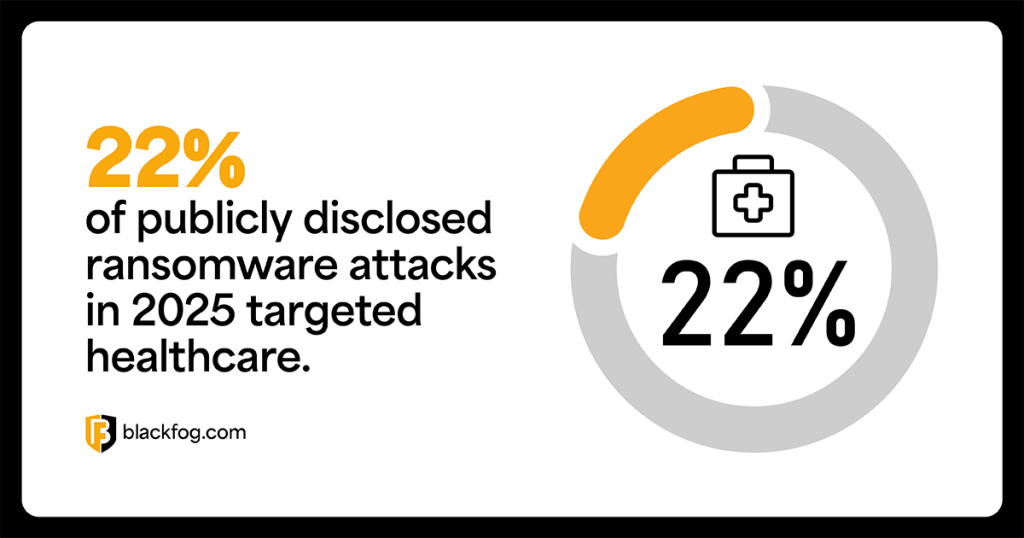
Weak performance in this area often stems from unclear executive accountability and fragmented oversight. When governance is inconsistent and compliance is treated as a box-ticking exercise, organizations lose visibility into how data is handled and where risks are concentrated. This creates systemic exposure to data exfiltration, ransomware and insider-driven incidents.
This has major consequences in a challenging environment, especially for those organizations using the most sensitive data. For example, BlackFog’s latest State of Ransomware Report found that in 2025, ransomware attacks increased by 49 percent year-on-year, with healthcare the most targeted vertical sector, accounting for 22 percent of all publicly disclosed ransomware attacks.
Highly regulated industries face even greater consequences, as breaches trigger regulatory investigation alongside operational disruption. The impact of weak cyber GRC can include:
- Financial losses: Ransom payments, regulatory fines and remediation costs.
- Operational disruption: System downtime and business interruption.
- Reputational damage: Erosion of customer, investor and partner trust.
- Contractual consequences: Terminated agreements and exclusion from supply chains.
Why Cyber GRC Must Be Driven From The Top
Effective cyber governance, risk and compliance begins with visible leadership at the executive and board level. Senior leaders set the tone for how seriously cybersecurity and data protection are treated across the organization. By defining clear expectations, allocating appropriate resources and promoting accountability, leadership ensures compliance is embedded into daily operations rather than treated as a periodic audit exercise.
Board-level oversight also reinforces that cyber risk is also a business risk, not solely a technical concern. Senior executives can bridge the gap between IT, cybersecurity teams and operational units, aligning security controls with strategic objectives and regulatory obligations. When cyber GRC is delegated entirely to IT, it risks becoming siloed and reactive. Driven from the top, it becomes a coordinated, organization-wide priority that supports resilience, compliance and long-term business performance.
How Strong Cyber GRC Reduces Data Breach And Ransomware Risk
Strong cyber GRC reduces the risk posed by ransomware and other data breaches by embedding accountability into decision-making and translating regulatory requirements into actionable, measurable controls. Governance ensures the board formally defines cyber risk appetite, mandates regular enterprise-wide risk assessments and requires reporting on the effectiveness of protections. In turn, this drives better decision-making when it comes to high-impact safeguards, rather than ad hoc tool purchases of point defenses.
Meanwhile, risk management processes identify critical data assets, map data flows and assess third-party exposure. Compliance obligations are then met through controls such as role-based access restrictions, multi-factor authentication, data classification policies, encryption standards and anti data exfiltration monitoring.
What’s more, regular testing, auditing and reporting provide continuous feedback. This prevents gaps from persisting unnoticed and ensures remediation timelines are tracked. By aligning leadership oversight with technical enforcement, cyber GRC moves security from reactive incident response to proactive, measurable risk reduction.
Cyber GRC As A Business Enabler
Cyber GRC should not be viewed solely as a defensive strategy to guard against threats. When implemented effectively, it becomes a strategic asset that supports growth and competitive differentiation. This can be especially useful for less-sizable firms looking to scale, as a strong framework demonstrates to investors, regulators and enterprise partners that the organization manages data responsibly and understands its risk exposure. This builds trust and shortens due diligence cycles during procurement or partnership negotiations.
Mature GRC frameworks also improve decision-making. Clear risk reporting enables leadership to evaluate technology investments and market entry strategies with a full understanding of cyber requirements. In highly regulated industries, strong compliance alignment can also unlock access to new contracts and supply chains. Rather than slowing innovation, well-structured cyber GRC provides the confidence and governance foundation required to scale securely and sustainably.
Cyber Governance, Risk And Compliance FAQs
What is governance, risk and compliance in cybersecurity?
Cyber GRC is a structured framework that integrates executive oversight, risk management and regulatory compliance to protect systems and data while aligning cybersecurity strategy with business objectives and legal obligations.
How does risk management support regulatory compliance?
Risk management identifies and prioritizes threats to sensitive data, ensuring controls are implemented where exposure is greatest. This helps organizations meet regulatory requirements through targeted safeguards, documented assessments and continuous monitoring.
What are the key components of an effective cyber GRC framework?
Core components include executive governance, defined risk appetite, regular risk assessments, documented policies, compliance monitoring, control testing, incident response planning and ongoing reporting to leadership and stakeholders.
What are the five elements of an information security policy?
The five core elements typically include purpose and scope, roles and responsibilities, acceptable use requirements, data classification and protection standards, and enforcement and review procedures.
Share This Story, Choose Your Platform!
Related Posts
What Enterprises Need To Know About Cyber Governance, Risk And Compliance
Learn all about cyber governance, risk and compliance in 2026 and why this must be a consideration at the highest levels of all organizations.
Navigating Essential Cybersecurity Compliance Standards: What To Know
There are a range of cybersecurity compliance standards firms of all sizes must deal with, including mandatory and voluntary frameworks. Here's what you need to know.
Understanding The Requirements Of Information Security Compliance
Learn precisely what information security compliance entails and the various steps that go into making this effective.

The Importance Of Effective Cybersecurity Services For Small Businesses
Find out why cybersecurity services for small businesses are more in-demand than ever as cybercriminals shift their focus to less-sizable enterprises.

Cybersecurity Compliance: What You Need Without Hiring A CISO
Find out what's required to ensure cybersecurity compliance and how this can be achieved without the need for a full-time CISO.
How Cybersecurity Startups Manage Compliance And Security Certifications
For cybersecurity startups, prioritizing compliance early builds trust, accelerates growth, and ensures security standards align with evolving threats and customer expectations.