 Skip to content

AI Security Guidelines And Frameworks Enterprises Need To Be Aware Of
Generative AI is now embedded across the enterprise, from marketing and finance to the cybersecurity team. The adoption of these tools brings many opportunities, but it also raises a critical question: how can they be used safely and in line with a fast-growing regulatory burden?
The good news is that there are a range of frameworks, standards and best practice guidelines available to help cybersecurity professionals implement AI securely, both in their own departments and across the wider business. Some structure how AI risk should best be governed, while others set out legal obligations that must be followed. Understanding them is the foundation of safe, compliant adoption.
Why AI Governance Matters When Adopting New Tools
Adopting AI security tools without governance creates blind spots that can open up new security vulnerabilities. When staff use tools the security team cannot see or have not vetted for issues like data protection, sensitive information can flow into external systems with little visibility or control over how the data is processed, stored or secured.
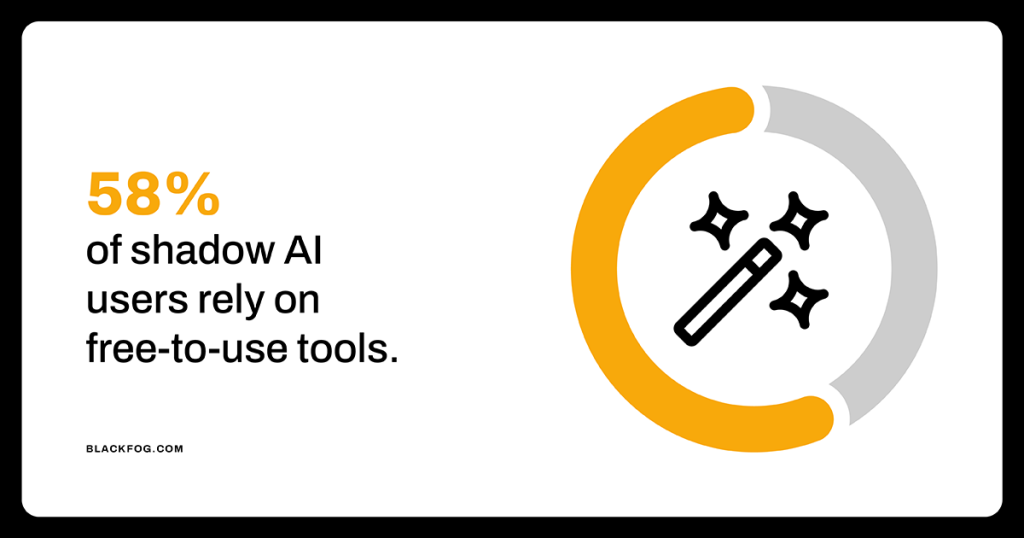
This is a particular problem when employees turn to unapproved consumer tools. BlackFog research, for example, found that 58 percent of employees using unsanctioned AI tools rely on free versions that often lack enterprise-grade security, data governance and privacy protections.
Clear governance policies close these gaps. As AI security trends place greater emphasis on regulation and control of such tools, adopting recognized standards is the best way to structure safe AI deployment rather than hinder it. Below are a few common frameworks to know about.
NIST AI Risk Management Framework
The NIST AI Risk Management Framework is voluntary guidance from the US National Institute of Standards and Technology for managing the risks AI introduces. It covers the technology’s full lifecycle, from model design through deployment to retirement. It is not law, but it has become a widely referenced benchmark for AI risk, drawn on across US industry and increasingly reflected in procurement rules and state-level AI laws.
Rather than a checklist, it provides a structured method built around four core functions:
- Govern: Establish policies, culture and accountability to underpin responsible AI use.
- Map: Identify each AI system in its operational context and highlight specific risks introduced.
- Measure: Assess and track risks using both quantitative and qualitative methods, covering issues such as validity, security, bias and transparency.
- Manage: Prioritize risks, allocate resources to treat them and respond to incidents.
For security leaders, NIST’s AI framework offers a shared, structured vocabulary for risk management that gives teams a defensible, repeatable basis for decisions without prescribing a rigid set of boxes to check.
ISO/IEC 42001
ISO/IEC 42001 is the first international standard specifically tailored for AI management and is published jointly by ISO and the IEC. Unlike guidance that a business can simply reference, this sets out auditable requirements, which means an organization can be certified for compliance with the framework by an accredited third party. It applies across the AI value chain, covering firms that develop, provide or use AI systems.
The standard defines how an organization governs AI rather than how any single model performs. Its requirements cover:
- Governance and leadership: Clear policies, roles and accountability for AI use set from the top.
- Risk and impact assessment: A structured process for identifying and treating AI-specific risks, including effects on individuals.
- Data and lifecycle controls: Managing data governance and oversight across the full lifecycle of each AI system.
- Continual improvement: Ongoing monitoring and refinement as systems and risks evolve.
Certification offers independent proof that AI governance is treated as a priority which increasingly carries weight with regulators, customers and partners.
EU AI Act
The EU AI Act is the world’s first comprehensive law governing artificial intelligence. It is a binding regulation, not voluntary guidance. While enacted by the EU, in practice its scope is global, as any company with customers within the bloc who would be affected by the use of AI tools must comply, regardless of where the business is based.
Beyond banning a small set of AI use cases outright, the Act places substantial obligations on high-risk systems. These include cybersecurity and robustness against manipulation such as data poisoning or adversarial attacks, automatic logging for traceability, enforced human oversight, strong data governance and detailed technical documentation. In effect, the Act makes security and accountability a legal requirement rather than best practice.
Noncompliance can be highly costly. Breaching prohibited-use rules can bring fines of up to €35 million or seven percent of global annual turnover, whichever is higher, making breaches potentially more expensive than even regulations such as GDPR. This means the EU AI Act must be a priority for any firm with business dealings in Europe.
OWASP Top 10 For LLM Applications
Another set of useful AI security guidelines to consider is the OWASP Top 10 for LLM Applications. This is not a governance framework or a standard to certify against. Rather, it is an awareness resource that provides a community-built list of the most critical security vulnerabilities that generative AI tools introduce, from prompt injection and sensitive information disclosure to data and model poisoning.
Its value is helping cybersecurity teams focus their efforts. The list highlights what to defend against, naming the specific weaknesses attackers target in LLM systems. For security teams, that makes it a practical guide for prioritizing effort and directing attention to the threats that matter most.
Building An Effective AI Governance Process
Frameworks only work when applied consistently. Knowing the standards is the starting point, but active governance is the key to real protection. This means assigning ownership of AI, mapping deployments to the right requirements, monitoring use and reviewing controls as tools and regulations change. Done well, this guards against AI-powered threats from both outside and within the business, including deliberate attacks and careless use, as well as ensuring firms keep their data protected wherever AI systems touch it.
FAQs About AI Security Guidelines
Is the NIST AI Risk Management Framework mandatory?
No. It is voluntary guidance with no legal force or certification. Despite this, it has become a widely referenced benchmark, drawn on across US industry and increasingly reflected in procurement rules and some state-level AI laws, which gives it real practical weight.
Does the EU AI Act apply to companies outside the EU?
Yes. Its reach is extraterritorial, much like GDPR. Any business whose AI systems are used in the EU or whose outputs affect people there must comply, regardless of where the company is based, or face significant financial penalties.
What is the OWASP Top 10 for Agentic Applications?
It is a companion list to the LLM Top 10, published by the OWASP GenAI Security Project. It catalogs the ten most critical risks specific to autonomous AI agents, such as goal hijacking, tool misuse and memory poisoning, that arise when models act with delegated authority.
Which AI security guideline should a US-based enterprise start with?
There is no single answer, but the NIST AI Risk Management Framework is a common starting point for US firms, since it offers a structured, widely recognized method. Businesses serving EU customers should also assess EU AI Act obligations early.
Share This Story, Choose Your Platform!
Related Posts
What Are The Advantages Of Using AI In Intrusion Detection?
Explore the advantages of AI in intrusion detection, from faster analysis and greater scale to identifying previously unseen attack patterns.
How Can Cybersecurity Professionals Defend Against Threats Posed By Malicious AI Tools?
Learn how cybersecurity professionals can defend against malicious AI tools with AI-specific monitoring, least-privilege access and outbound visibility.
Are There Any Government Policies On Using AI For Cybersecurity?
Learn how the EU AI Act and US NIST frameworks address the use of AI in cybersecurity and what their different approaches mean for businesses.
Can AI Be Used To Effectively Prevent Cyberattacks?
AI helps prevent cyberattacks by spotting threats without known signatures, but it works best alongside human oversight, governance and a layered strategy.
How Is GenAI Transforming Cybersecurity Strategies?
GenAI is reshaping cybersecurity strategy, from faster alert triage and incident response to the consolidation of tools into fewer platforms.
What Are the Main Security Risks Associated With Generative AI?
Generative AI security risks: data leakage, hallucination-driven errors and adversarial misuse. Learn the threats and how to mitigate them.