Skip to content

We have identified a new Windows infostealer called Bee Stealer being sold on cybercrime networks. It targets authentication data and chat histories from Codex and Claude. Separately, it includes an AI profiling feature that builds victim profiles from broader stolen-log data, helping operators determine who a victim is, what they do, and which services are likely to be valuable.
AI Profiles Built From Stolen Logs
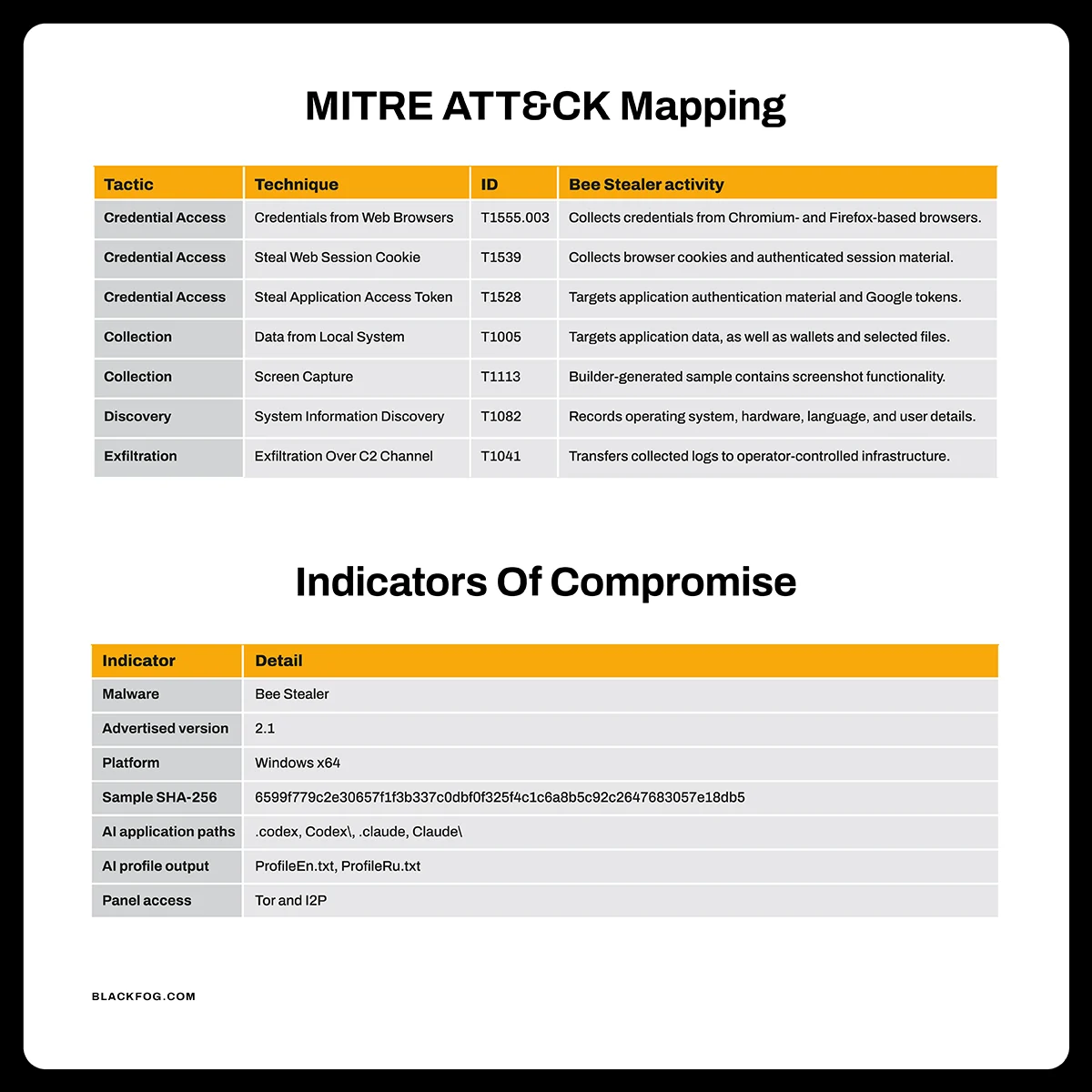
Bee Stealer version 2.1 adds what the developer calls an “AI PC profile.” According to the update announcement, a neural network receives and parses a significant portion of the stolen log. The resulting profile is written to ProfileEn.txt and ProfileRu.txt in English and Russian.
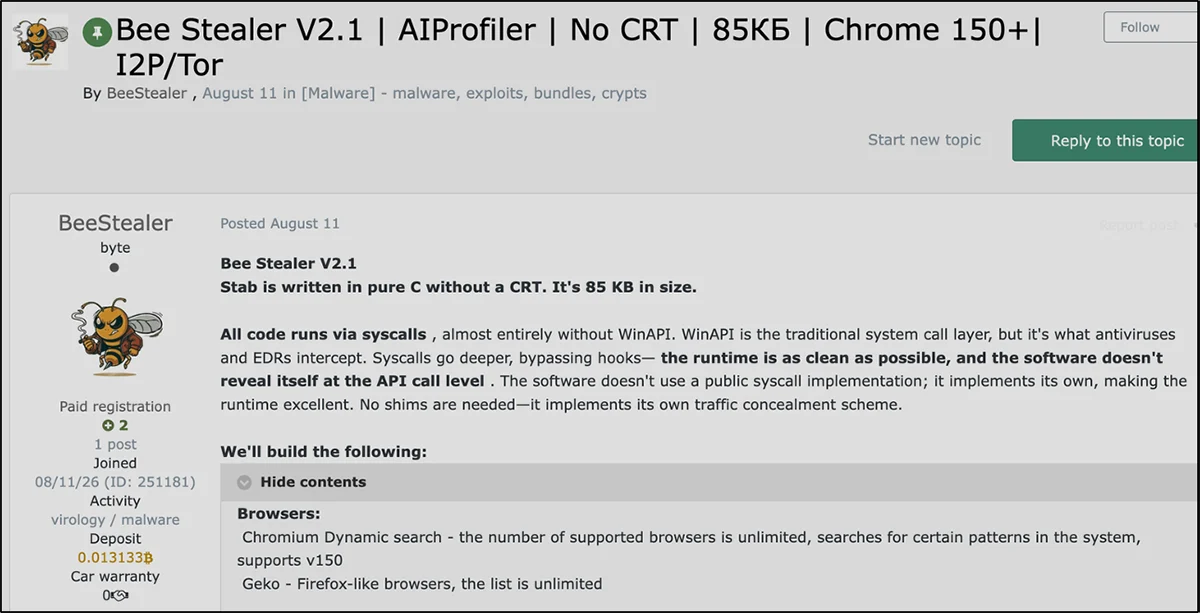
Figure 1: The Bee Stealer advertisement leads with AI profiling and a compact Windows payload.
The developer’s example presents the output in four fields covering the victim’s likely identity, activity, and frequently used services. It characterizes the example victim as an IT specialist and web developer with an interest in security, while showing development-related activity and selected domains from the stolen logs.
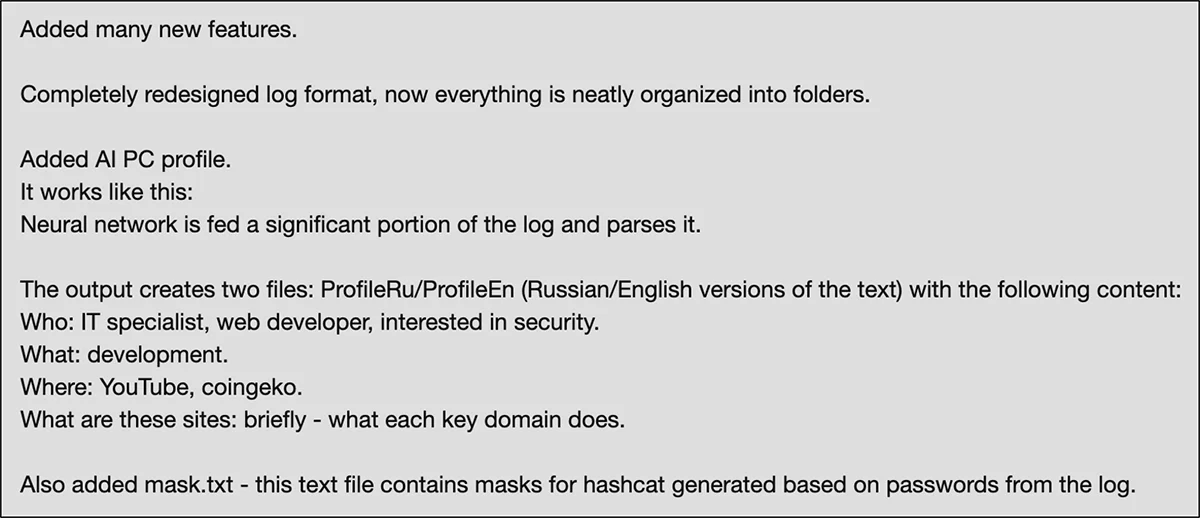
Figure 2: The version 2.1 update describes AI-generated victim profiling from stolen log data.
Our controlled log contained both profile files, confirming that Bee Stealer produces this output. The test machine had little useful browser data, so the profile could not identify the owner or build a meaningful portrait. It reported that no cookies or saved logins were available and that the machine’s country was the only usable detail.
The result also shows the limit of the evidence. Bee Stealer profiles victims from information in stolen logs. We found no evidence that the AI reads or summarizes files collected by the separate file-grabber, or that profiling takes place inside the Windows payload. The available artifacts point to processing after the log reaches the service.
For an operator, this is a triage tool. Infostealer logs can contain thousands of cookies, credentials, domains, and application records. A short profile helps bring valuable employees and accounts to the top before sessions expire or defenders respond.
Codex And Claude Collection
Bee Stealer also treats AI applications as direct sources of data. The advertisement lists Codex and Claude among the newly supported programs and claims the stealer collects authentication data and chat history from both.
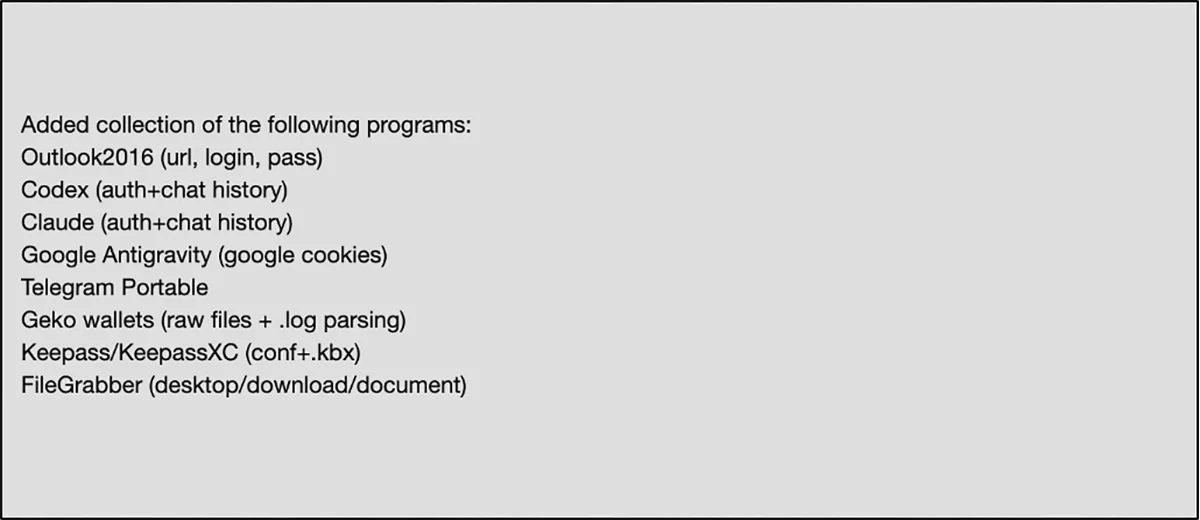
Figure 3: Codex and Claude appear among the newly supported collection targets.
Our static analysis of a builder-generated sample confirmed dedicated .codex and .claude collection paths within the payload. However, because the sample does not reveal every file or field sent to an operator, the developer’s full claim remains unverified.

Figure 4: Codex and Claude collection paths in the x64 payload.
Collection, Panel And Builder
Beyond AI tools, Bee Stealer searches for Chromium and Firefox-based browsers, taking cookies, saved logins, browsing data, autofill records, and browser extensions.
Other collectors cover email and messaging clients, file-transfer software, password managers, cryptocurrency services, and wallets. A separate file-grabber targets Desktop, Downloads, and Documents.
Our sample is a 64-bit Windows executable. Static analysis confirmed browser collection, application discovery, system profiling, screenshot capture, and dedicated paths for many advertised applications.
The sample imported no Microsoft C runtime, which supports part of the developer’s claim. It also called numerous conventional Windows functions, so it is not an exclusively direct-system-call payload.
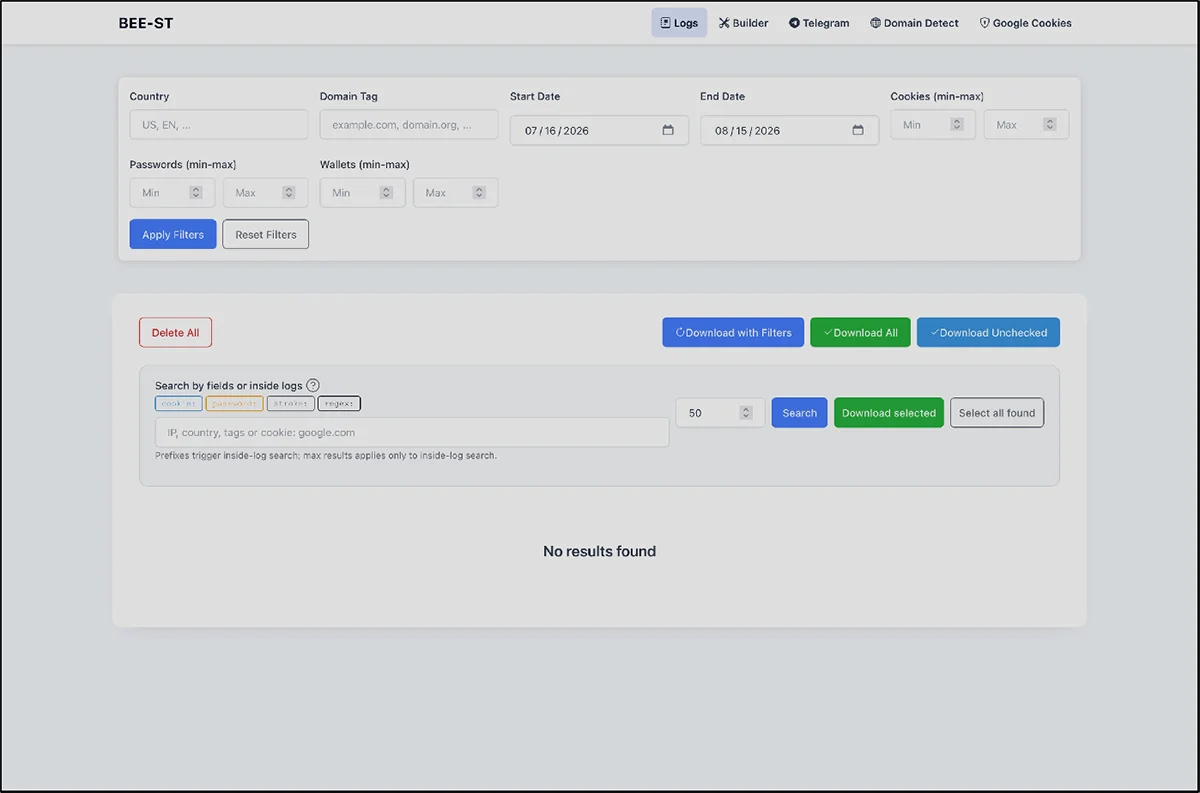
Figure 5: The operator panel supports filtering, full-text search, and bulk log downloads.
The browser-based panel filters logs by country, date, cookie count, password count, wallet count, and operator-defined domain tags. Operators can search cookies, passwords, and custom strings, then download matching logs in bulk.
Domain-detection rules label logs containing selected services, making high-value accounts easier to find. A Google token tool accepts an access token and proxy details, helping operators regain account access through stolen session material.
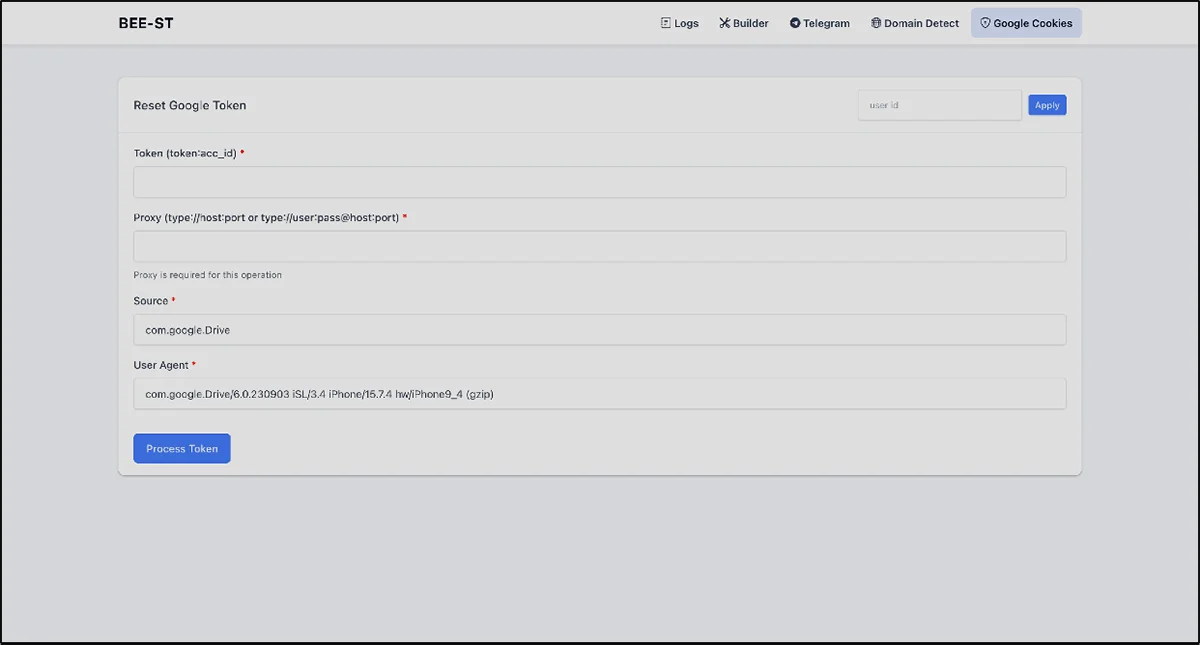
Figure 6: The operator panel includes a tool for processing stolen Google access tokens.
Bee Stealer is distributed through cybercrime networks as malware-as-a-service (MaaS). Its developer manages the builder, control panel, payment infrastructure, and updates, while advertising panel access via Tor and I2P. Together, these components provide a unified workflow for data collection and search, token management, and AI-assisted victim prioritization.
Protecting Enterprise AI Data
For organizations, Bee Stealer poses two related risks.
The first is direct data theft. Stolen authentication material and conversation histories can expose source code, customer information, operational details, and incident response activities.
The second is accelerated victim selection. Bee Stealer uses AI to convert stolen logs into concise profiles, enabling operators to identify high-value employees and accounts before sessions expire or cybersecurity analysts can respond.
To mitigate these risks, organizations should think about including AI applications in endpoint inventories, data-handling policies, and incident response plans. Following a suspected infection, they should terminate active sessions, revoke tokens, reset compromised credentials, and review subsequent access for unusual locations or behavior.
Both risks, however, still depend on successful data exfiltration. Bee Stealer’s search capabilities, token processing, and AI generated profiles provide no value until the stolen logs reach attacker-controlled infrastructure. Monitoring for and blocking unauthorized outbound transfers can therefore prevent collected data from becoming actionable.