 Skip to content


Cybercriminals are increasingly targeting the banking and finance industry
Cybercrime is a lucrative business and the banking and finance industry is under relentless attack from hackers. As cybersecurity attacks continue to grow in both sophistication and frequency and financial services firms become increasingly reliant on customer data and technology to run their businesses, staying one step ahead of cyber criminals is critical.
Ransomware remains the tactic of choice
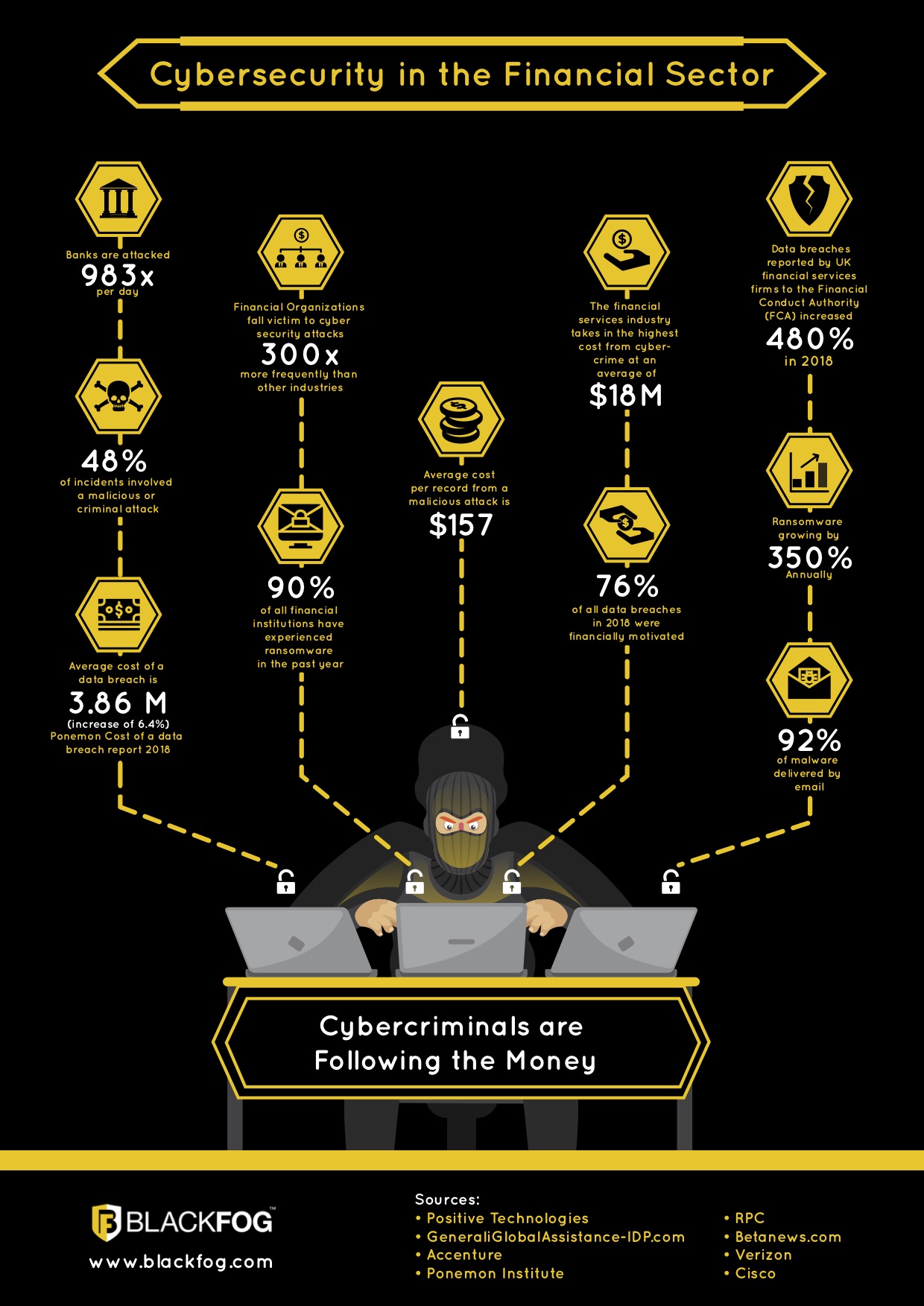
With more than 90% of financial institutions targeted by a ransomware attack in 2017, it’s clear that ransomware is still the tactic of choice for cybercriminals. With financial gain being the primary motivation for cybercriminals, it’s not surprising that banking and finance organizations are a regular target.
Cybersecurity challenges in banking and finance
- Banking and finance remain a top target for ransomware and malware. Verizon reported that 76% of all data breaches in 2017 were financially motivated.
- Customers are reliant on electronic banking to complete transactions so financial institutions have developed more mobile apps and web portals. This has increased their exposure and risk to cyberattack.
- Mobile banking threats include mobile malware, third-party apps, unsecured Wi-Fi networks, and risky consumer behaviour.
- The financial institution owns the risk, whether or not the institution uses a proprietary or third-party mobile banking application.
- Security breaches can lead to lost revenue, reputational damage, regulatory fines and interruption to operations.
- Maintaining GDPR compliance and mitigating the risk of regulatory fines.
So, how do banking and finance leaders mitigate the risk?
Lots of cyber security solutions can tell you when a breach or attack has taken place and data has been lost. BlackFog stops it from happening in the first place.
BlackFog fills the gap between security solutions that focus on preventing access through intrusion detection systems, such as Firewalls and Anti-Virus/ Malware solutions that remove known infections after they have been discovered. Consisting of multiple layers of defense, BlackFog protects against ransomware, spyware, malware, phishing, unauthorized data collection and profiling.
Prevention is the best form of defense
Cyberattacks and data breaches are inevitable, especially in the banking and finance sector and hackers will find their way in, but with a preventative approach to cybersecurity these threats can be eliminated before the damage is done. Gartner estimates that companies globally could incur $10.5 trillion in costs and lost revenue over by 2025 due to cyberattacks, so all businesses, particularly those in the financial sector simply must prioritize cyber defense.
Benefits for banking and finance
- Prevents cyberattacks before they happen
- Data protection
- GDPR / regulatory compliance
- Privacy
- Cyberattack prevention
- Data breach protection
BlackFog prevents
- Data leaks
- Ransomware
- Hacking
- Identity theft
- Dark Web
- Data profiling
- Phishing
Share This Story, Choose Your Platform!
Related Posts
LotAI: How Attackers Weaponize AI Assistants for Data Exfiltration
What happens when attackers use your approved AI tools as a data exfiltration channel? New research reveals how the LotAI technique turns Copilot and Grok into covert C2 relays.
The State of Ransomware: February 2026
BlackFog's state of ransomware February 2026 measures publicly disclosed and non-disclosed attacks globally.
Steaelite RAT Enables Double Extortion Attacks from a Single Panel
Steaelite is a newly emerging RAT that unifies credential theft, data exfiltration, and ransomware in a single web panel, accelerating double extortion attacks.
ClawdBot and OpenClaw: When Local AI Becomes A Data Exfiltration Goldmine
ClawdBot stores API keys, chat histories, and user memories in plaintext files, and infostealers like RedLine, Lumma, and Vidar are already targeting it.

West Harlem Group Assistance Stops Ransomware and Cryptojacking with BlackFog ADX
West Harlem Group Assistance secures its community mission by preventing ransomware and cryptojacking with BlackFog ADX.
Why Traditional Security Fails To Deal With Advanced Persistent Threats
Learn why advanced persistent threats remain a growing cybersecurity risk in 2026 and where organizations must focus to address them.