 Skip to content

How Generative AI Is Changing Cybersecurity: Opportunities And Risks For Security Teams
AI has become part of the fabric of modern security operations. It plays a central role in many of the tools defenders use to spot threats, sift alerts and respond at speed. However, it is also being adopted by threat actors to power a new generation of AI-driven attacks.
In many cases, the same models that help security teams write detection logic and accelerate responses are giving threat actors cheaper routes to convincing phishing, custom malware and automated social engineering.
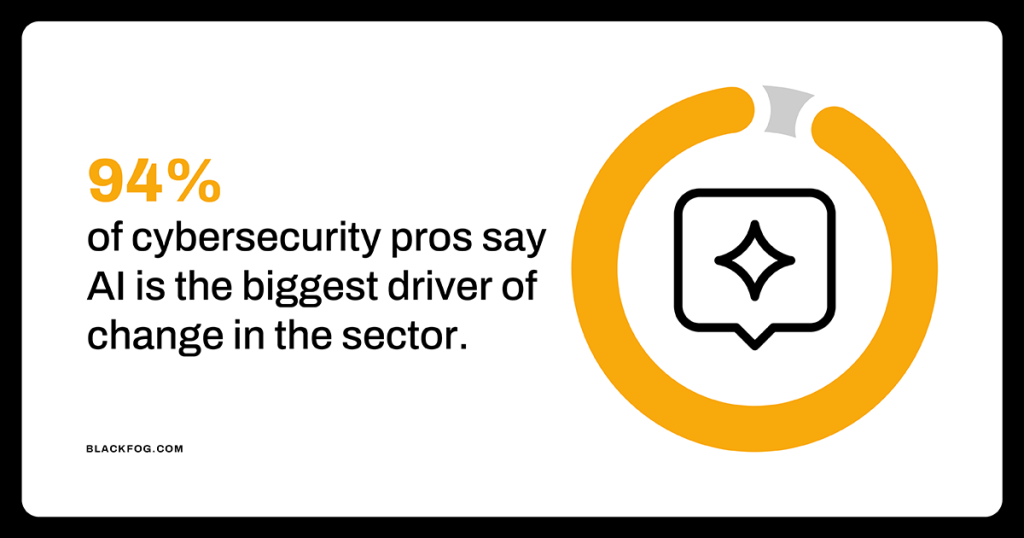
This dual role is what makes generative AI so consequential and such a top priority for businesses. For example, one study by the World Economic Forum has found that 94 percent of professionals – including C-suite executives, academics and public-sector cybersecurity leaders – expect AI to be the single most significant driver of change in the sector in 2026. For enterprises, this sends a clear message that AI is no longer optional in cybersecurity. Threat actors are using it, so businesses must respond.
What Does Generative AI In Cybersecurity Actually Mean?
Generative AI refers to models that create new content rather than simply classifying or scoring existing data. Trained on large datasets, they produce text, code, images or synthetic data in response to a prompt. Large language models and the assistants built on them fall into this category.
In cybersecurity, this ability to craft cuts both ways. Attackers can use these tools to write more convincing phishing emails at scale, generate new malware variants that traditional detection tools have difficulty spotting and scale up social engineering attacks at speed.
However, these AI security trends can benefit defenders as well. For instance, cybersecurity pros may use such models to draft a detection rule, summarize a complex incident or alert in plain language, or accelerate the slow, manual work that ties up analysts.
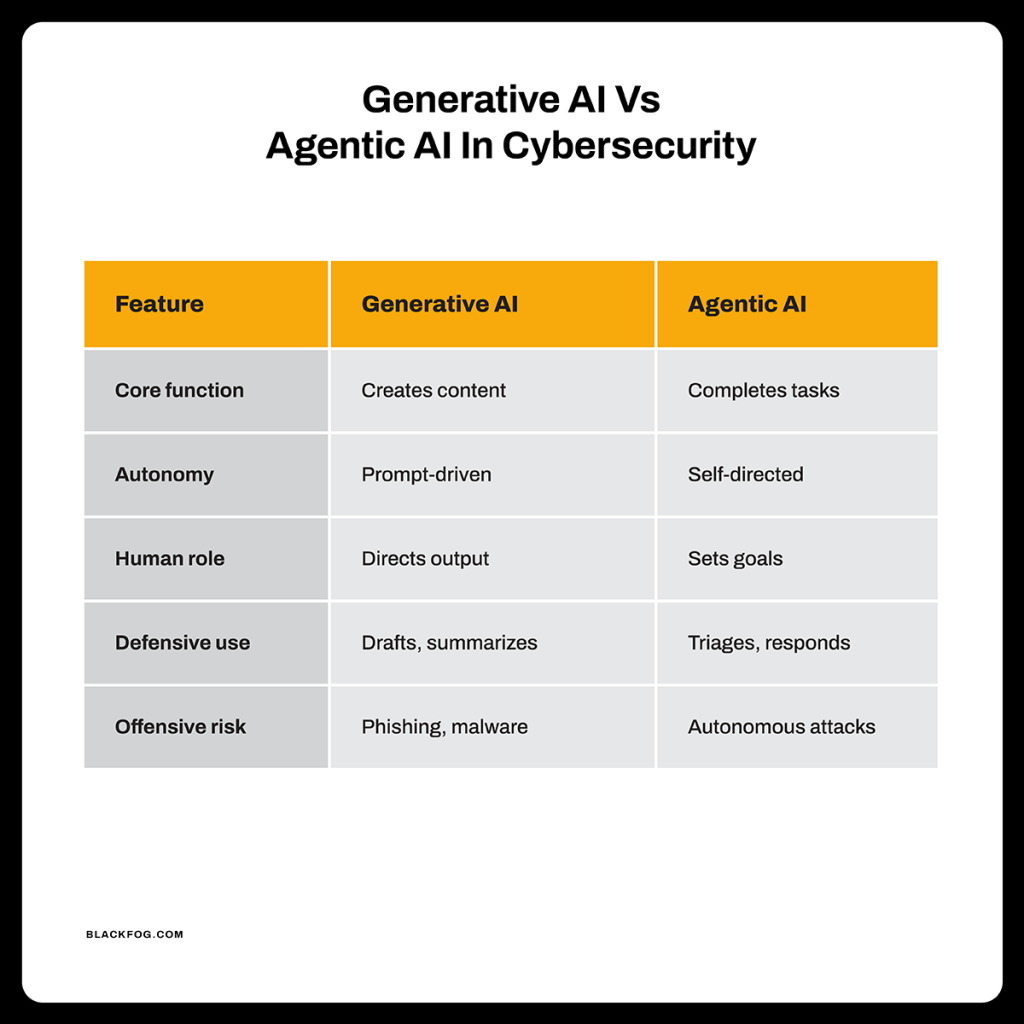
Generative AI is just one of the new tools that are changing cybersecurity. Another to be aware of is agentic AI, which is a related but distinct category. While generative AI creates content, agentic tools work autonomously. They can plan and execute actions across multiple steps with limited oversight, often using generative models to do so, which can help automate many essential cybersecurity activities, but also open up new vulnerabilities.
“Generative AI is changing cybersecurity on both sides of the equation. It gives defenders greater speed and scale, but it gives attackers exactly the same advantages. The organizations that benefit will be those that embrace AI without losing control of their data.”
– Dr. Darren Williams, Founder and CEO, BlackFog
6 Ways Security Teams Are Using Generative AI
Generative AI is finding its place across every aspect of business – and security operations are no exception. Used effectively, it can speed up slow work and lead to better-informed decision-making. However, if deployed carelessly, it can introduce greater risk. Knowing what these tools do well, along with where their limits lie, is what separates useful adoption from exposure. Here are six applications of AI security best practices using these tools.
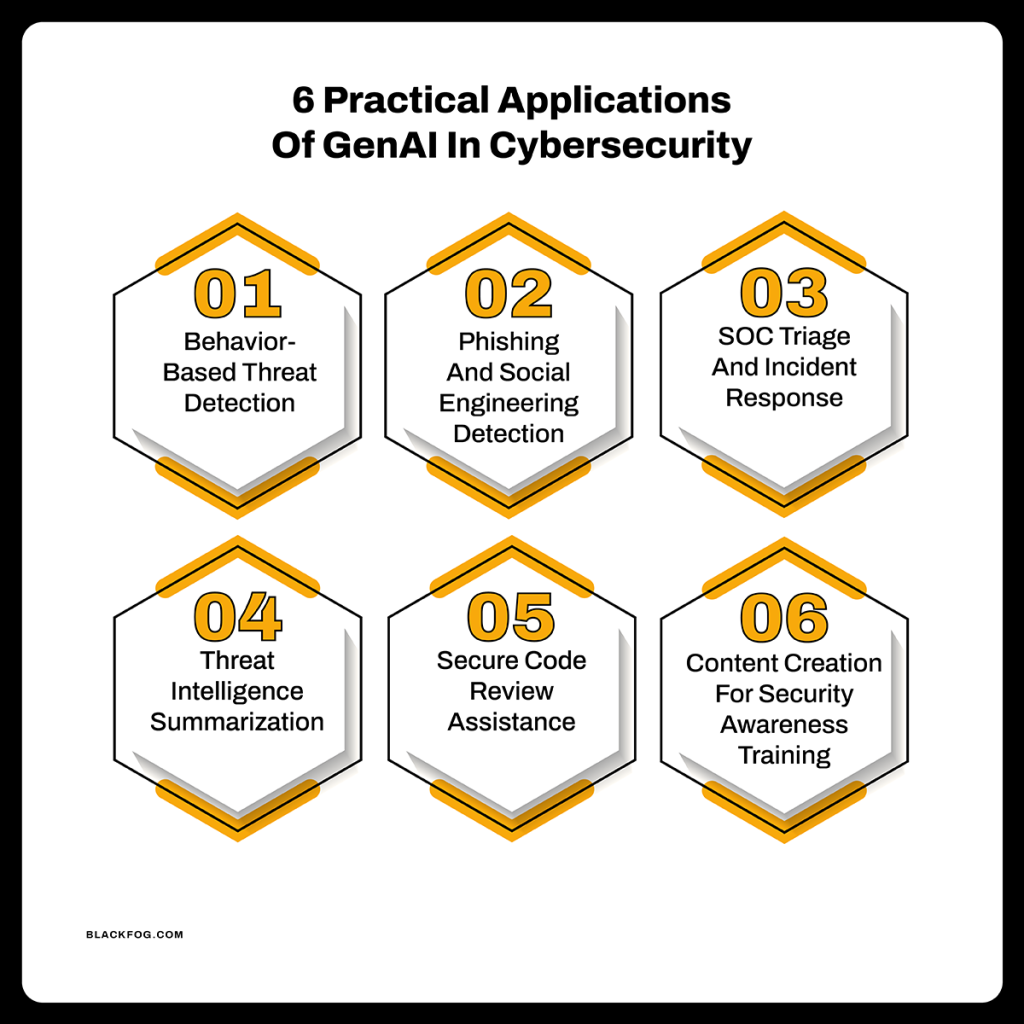
1. Behavior-Based Threat Detection
Behavior-based threat detection watches how users, devices and applications normally act, then flags activity that breaks from that baseline. This is not a new concept, but the addition of generative AI-powered threat detection strengthens this approach by interpreting the signals rather than just raising them. Where a traditional system produces a raw anomaly score and can raise alerts for incidents that appear out of the ordinary, a generative model can pull together related events, add context and explain in plain language why a pattern looks suspicious.
The benefit is speed and clarity. It means cybersecurity analysts spend less time piecing together what happened and more time deciding what to do. Alerts arrive with a readable summary rather than a wall of log data, which helps smaller teams cover more ground.
For example, if an employee account suddenly accesses sensitive files at unusual hours and moves data to an external service, the model can not only flag those actions as anomalous, but connect the sequence of events, describe the incident as a likely account compromise – with reasoning – and hand the analyst a clear starting point.
2. Phishing And Social Engineering Detection
Generative AI aims to consider the meaning of a message rather than scanning for obvious tells. Where older filters looked for bad grammar, spoofed addresses and known bad links to detect phishing and social engineering attacks, a generative model can weigh tone, intent and context. It flags the pressure of an urgent payment request, an unusual sender relationship or wording designed to trigger a quick reaction.
This matters because attackers now use the same technology. AI-written phishing is fluent, personalized and free of the mistakes staff were once trained to catch, which makes it one of the hardest threats for businesses to identify. Responding to machine-generated attacks with machine-level analysis helps address this vulnerability.
For instance, an email that appears to come from a supplier and asks finance to change bank details can be assessed for tone, timing and intent, then held for review even when every other detail looks legitimate.
3. SOC Triage And Incident Response
Security operations centers (SOCs) face more alerts than any team can review manually. Generative AI helps by reading incoming alerts, grouping related ones and ranking them by likely severity. Instead of a flat queue, analysts get a prioritized view that separates genuine threats from noise.
A model can pull together log data, threat intelligence and asset context, then summarize what happened, what is affected and what to check next, ensuring the team focuses its attention where it counts.
When an incident is confirmed, the same tools speed up response by suggesting containment steps, drafting log searches to run and preparing a clear timeline for reporting. In practice, this can mean that even if a team is faced with hundreds of alerts after suspicious logins, the system can cluster them into a single incident, flag the ones that matter and provide analysts with a ready summary to act on.
4. Threat Intelligence Summarisation
Staying current on emerging threats is a constant demand on security teams. Vendor reports, vulnerability disclosures, dark web chatter and government advisories all add to the pressure facing threat intelligence teams. Generative AI can condense this into clear, relevant briefings, pulling out what matters to a specific organization and leaving the rest aside.
This is especially valuable as AI has shortened the attacker’s timeline. New techniques and malware variants emerge and spread in hours rather than weeks, so intelligence that sits unread quickly becomes a liability. A model can scan fresh sources, flag threats relevant to the systems a business runs and explain the risk in plain terms, as well as set out a plan for reacting to emerging threats. For instance, when a new advisory is published, the system can assess whether the affected software is in use, summarize the risk and recommend a priority for patching.
5. Secure Code Review Assistance
Developers increasingly write code with AI assistants, which speeds up delivery but can introduce flaws. AI-crafted code may carry insecure patterns, outdated dependencies or subtle logic errors that slip past a quick review. The same technology can help close that gap.
A generative model can scan code as it is written, whether by humans or AI, to flag risky functions, explain why a pattern is unsafe and suggest a safer alternative. Developers get plain-language feedback they can act on without consulting a security specialist.
This fits naturally into frameworks like DevSecOps, where security is built into the pipeline rather than bolted on at the end. Automated reviews run on every commit, catching issues early when they are cheapest and easiest to fix, which keeps secure software moving to deployment at speed.
For example, these tools may step in when a developer pulls in a library with a known vulnerability. In such cases, the assistant can flag it and point to a patched version before the code merges.
6. Security Awareness Training Content Generation
The human factor remains the biggest cybersecurity weakness in any organization. As such, comprehensive training is a must. However, many programs have become outdated, still relying on sharing telltale signs of phishing that no longer apply with today’s AI-generated, personalized attacks.
Effective programs need current, realistic scenarios that reflect how attacks look now. Building that material by hand takes time most security teams do not have. Generative AI eases the load by drafting tailored content on demand. This can include mock phishing emails, short explainers, quiz questions and role-specific guidance that can be quickly refreshed as threats change.
The benefit is relevant, engaging training without a large investment. A small team can run a program that once needed outside help. For instance, if asked to prepare a module on invoice fraud, the model can generate a realistic sample email, a breakdown of the warning signs and a short quiz to test understanding.
Where Generative AI Expands The Attack Surface
While generative AI tools offer great potential for addressing security vulnerabilities, it should not be forgotten that, if implemented poorly, these platforms can introduce new threats of their own. Models connect to sensitive data, sit inside workflows and accept input from users, all of which present potential openings for attackers.
For instance, they may use prompt injection to manipulate a model into leaking data or taking unintended action, or poison training data to corrupt models into providing false outputs that employees rely on.
A major risk is shadow AI, where staff use unsanctioned tools without oversight. This can result in company data being shared with systems security teams cannot see or control. Every unmanaged model widens the attack surface a little further. Clear AI security guidelines are essential in keeping this in check by defining which tools are approved, how data may be used and where human review is required.
Keeping AI In The Enterprise Under Control
Generative AI has found a clear place in many organizations’ security stacks. It speeds up triage, sharpens detection and helps small teams do more with less. However, it only brings benefits if it is used with care, as the same technology that strengthens defense can widen the attack surface when it runs unchecked.
The difference comes down to control. Approved tools, clear rules on data and consistent human oversight are what turn generative AI into an asset rather than a liability. Businesses that set those boundaries early will gain the advantage, while those that don’t will simply hand attackers another way in.
FAQs On Generative AI In Cybersecurity
Is generative AI safe to use in a SOC?
Yes, when governed properly. Generative AI speeds up triage and analysis, but outputs need human review and access to sensitive data must be controlled. Clear usage rules keep it an asset rather than a new source of risk.
What’s the difference between generative AI and agentic AI in cybersecurity?
Generative AI creates content, such as summaries, detection rules or reports, in response to a prompt. Agentic AI acts autonomously, planning and carrying out tasks across multiple steps with limited oversight. Agents often use generative models to do so.
Can attackers use the same generative AI tools defenders use?
Yes. The same models that draft detection logic can write convincing phishing emails, generate malware variants and scale social engineering. This dual use is why defenders must adopt the technology rather than cede the advantage to attackers.
Does using generative AI in security operations create compliance risk?
It can, if sensitive data flows into tools without oversight. Feeding regulated data into unsanctioned models may breach data protection obligations. Approved tools, clear data rules and audit trails keep generative AI use within compliance boundaries.
Share This Story, Choose Your Platform!
Related Posts
What Are The Advantages Of Using AI In Intrusion Detection?
Explore the advantages of AI in intrusion detection, from faster analysis and greater scale to identifying previously unseen attack patterns.
How Can Cybersecurity Professionals Defend Against Threats Posed By Malicious AI Tools?
Learn how cybersecurity professionals can defend against malicious AI tools with AI-specific monitoring, least-privilege access and outbound visibility.
Are There Any Government Policies On Using AI For Cybersecurity?
Learn how the EU AI Act and US NIST frameworks address the use of AI in cybersecurity and what their different approaches mean for businesses.

Can AI Be Used To Effectively Prevent Cyberattacks?
AI helps prevent cyberattacks by spotting threats without known signatures, but it works best alongside human oversight, governance and a layered strategy.
How Is GenAI Transforming Cybersecurity Strategies?
GenAI is reshaping cybersecurity strategy, from faster alert triage and incident response to the consolidation of tools into fewer platforms.
What Are the Main Security Risks Associated With Generative AI?
Generative AI security risks: data leakage, hallucination-driven errors and adversarial misuse. Learn the threats and how to mitigate them.