Skip to content


Security Vulnerabilities That Enable Persistent Cyber Threats
Advanced persistent threats (APTs) are one of the biggest cybersecurity risks faced by businesses today. Often associated with sophisticated zero-day exploits and nation-state level capabilities, they are typically tailored to bypass even the toughest defenses. But while those risks are real, they are not the main reason many attacks succeed.
In practice, a large number of APT campaigns still take advantage of weaknesses that already exist inside modern security environments. Rapid digital transformation has introduced new layers of complexity that are difficult to secure consistently. Identities sprawl across systems, configurations drift over time and visibility becomes fragmented. As a result, even organizations that have invested heavily in cybersecurity may remain exposed.
As infrastructure expands and changes faster than security teams can adapt, these gaps not only persist, but grow. In today’s environment, reducing security vulnerabilities is not just harder than before. It is a critical challenge that persistent attackers are actively exploiting.
The Modern Attack Surface: Why Vulnerabilities Persist
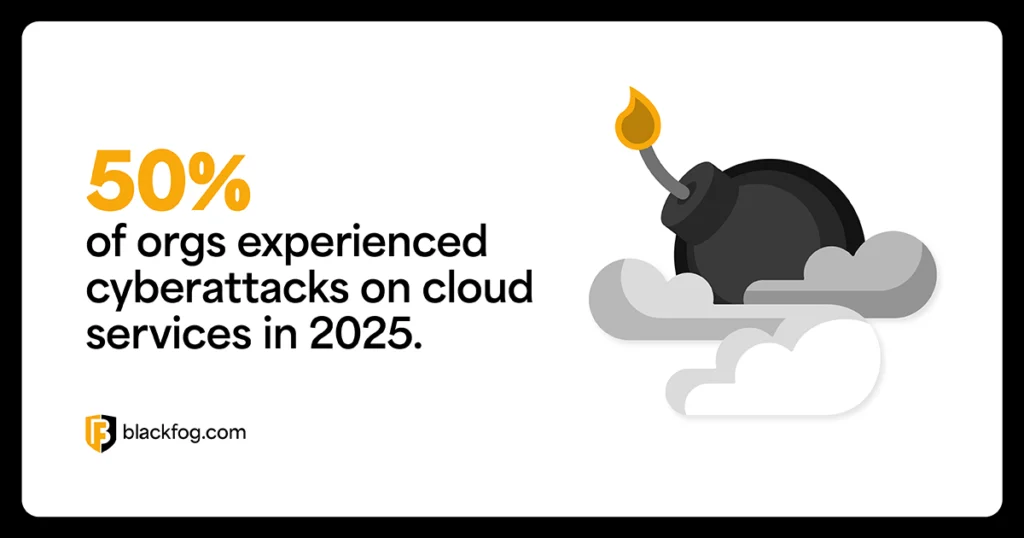
Security vulnerabilities remain a major issue for many organizations because modern environments are vastly more complex than ever before. Cloud adoption, hybrid work and sprawling networks have dramatically increased the number of systems, applications and endpoints that must be protected, which opens up more avenues for cybercriminals. For instance, figures from Scale show that last year, 0 percent of organizations reported cyberattacks against cloud services, highlighting how cloud complexity exposes new weaknesses that attackers exploit.
Interconnected ecosystems pose another major challenge. Security Scorecard estimates that more than 70 percent of companies experienced a significant third-party cyber incident in 2025, with the majority of businesses saying less than half of their extended supply chain is actively monitored for risk.
These trends show that vulnerabilities are not simply technical bugs. They are systemic issues driven by scale, integration gaps and fragmented visibility across tools. And, as such, advanced threat protection is needed to counter them.
The Most Common Vulnerabilities Used By Persistent Threat Actors
Most APT campaigns do not rely on a single critical flaw. Instead, they exploit a combination of common weaknesses that exist across modern enterprise environments. These vulnerabilities allow attackers to gain a foothold with viruses or malicious code, move quietly and remain embedded for long periods without triggering alerts.
Common vulnerabilities persistent threat actors exploit include:
- Over-privileged identities and service accounts: Excessive permissions give attackers freedom to move laterally, access sensitive systems and blend in with legitimate user activity.
- Poorly secured cloud identities and tokens: Stolen access tokens and misconfigured identity providers allow attackers to bypass perimeter controls entirely.
- Unmonitored SaaS and cloud storage access: Lack of visibility into cloud platforms enables data discovery and exfiltration without detection.
- Legacy systems and unsupported software: Older systems often lack modern security controls and are rarely monitored closely.
- Weak network segmentation: Flat networks allow attackers to move between systems without encountering meaningful barriers.
- Unrestricted outbound traffic: Limited controls on data egress make it easier to exfiltrate data slowly over time using encrypted channels.
Together, these vulnerabilities enable attackers to stay hidden, escalate access gradually and steal data without raising alarms.
How Vulnerabilities Enable Stealth And Persistence
Modern attackers use security vulnerabilities not just to break into systems, but to hide inside them. By exploiting hidden gaps in identity controls, permissions and monitoring, APTs can operate in ways that look legitimate to security tools.
One common technique is blending malicious activity into normal workflows. Attackers use trusted tools, approved applications and valid user accounts so their actions appear routine. This makes it difficult for traditional security controls to distinguish between legitimate behavior and abuse.
Low-and-slow access patterns are also critical. Rather than triggering spikes in activity, attackers spread actions over days or weeks. Small permission changes, limited lateral movement and gradual data collection help them stay below behavioral anomaly detection thresholds.
This patience enables long dwell times. Attackers observe systems, identify valuable data and wait for the right moment to exfiltrate information. By the time suspicious activity is detected, sensitive data may have been leaving the organization quietly for months.
Why Patching Alone Is Not Enough
Effective patch management remains essential, but it is not sufficient on its own. Many modern APT attacks do not rely on unpatched software vulnerabilities at all. Instead, attackers bypass fully updated systems by abusing legitimate functionality.
Credential theft is a common example. Stolen usernames, passwords and access tokens allow attackers to log in without exploiting a vulnerability. Living off the Land techniques further reduce reliance on exploits by using trusted tools like PowerShell, scheduled tasks and cloud APIs that patches cannot block.
Misconfigurations also play a major role. Excessive permissions, exposed cloud services and weak identity controls persist even in well patched environments. Once inside, attackers move slowly and deliberately, avoiding behavior that would trigger alerts. Patching reduces risk, but it does not prevent misuse of trusted access, identities and data paths that APTs rely on.
Closing The Gaps That Persistent Threats Exploit
Persistent cyber threats succeed not because security defenses are missing, but because critical vulnerabilities are often misunderstood, underestimated or deprioritized. In complex modern environments, small gaps in identity controls, visibility or data protection can provide everything an attacker needs to remain undetected.
Having a cyber threat intelligence framework is an important first step. With the knowledge this offers, organizations can look beyond isolated tools and adopt advanced threat management that addresses how identities, endpoints and data interact across the environment. This means improving visibility into behavior, tightening control over access and enforcing prevention at every stage of the attack lifecycle.
When these gaps are closed, attackers lose the ability to hide, persist and quietly exfiltrate data over time.