 Skip to content

The Importance Of Effective Cybersecurity Services For Small Businesses
Today’s cybersecurity environment is more aggressive and more complex than ever, and this can be a particular problem for small and medium-sized businesses. Once seen as secondary targets, these firms are now firmly in the crosshairs of cybercriminals who view them as easier targets, with valuable data and fewer defensive layers. As a result, ransomware attacks and data exfiltration campaigns are now among the most significant business risks smaller companies face.
At the same time, cybersecurity compliance expectations are rising. Regulators are tightening data protection rules, while enterprise partners increasingly demand proof of strong security controls before contracts are signed. For small businesses, cybersecurity is therefore now a strategic requirement that cannot be ignored without serious financial and reputational consequences.
Why Small Businesses Are Now Prime Targets
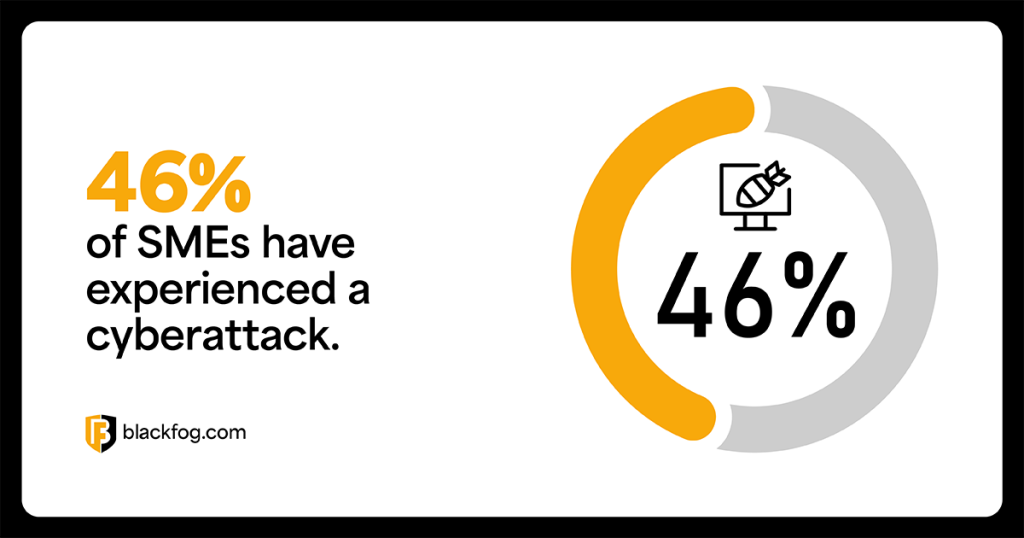
Small businesses are now frequently under attack by cybercriminals – and the consequences can be severe. According to one 2025 study by Mastercard, which surveyed more than 5,000 small and medium enterprises around the globe, 46 percent reported experiencing at least one cyberattack. Of these, 80 percent said they needed to spend time rebuilding trust with clients and partners after an incident, while nearly one in five targeted firms went on to close or file for bankruptcy, illustrating the existential threat of serious cyberattacks.
There are several factors that make smaller firms attractive targets. Many still process highly sensitive customer and financial data while lacking dedicated security teams or expertise. Attackers also often assume these firms are more likely to pay a ransom in order to recover operations quickly, as they often lack the resilience of their enterprise counterparts.
Smaller firms also frequently serve as gateways into larger partners’ ecosystems, giving criminals a foothold to move through supply chain connections to more valuable prizes. Limited resources, low confidence in threat detection and underinvestment in protective controls contribute to an environment where opportunistic attackers see high reward with comparatively low risk.
The Unique Cybersecurity Challenges Facing Smaller Firms
Small businesses operate under constraints that larger enterprises typically do not face. While large organizations have dedicated security teams, structured governance and layered defenses, smaller firms often need to balance cybersecurity alongside day-to-day operational demands. This creates a very different risk profile and set of practical challenges. Common issues include:
- Limited budgets: Security investment must compete with revenue-generating priorities, making it difficult to fund advanced tools, monitoring services or external expertise.
- Lack of in-house skills: Many smaller firms do not employ dedicated cybersecurity professionals, leaving IT generalists or external consultants to manage complex security requirements.
- Talent shortages: Even if smaller firms want to invest in specialized talent, competition for experienced cybersecurity personnel makes recruitment and retention difficult, particularly for companies unable to offer enterprise-level compensation.
- Reliance on basic protections: Smaller organizations often depend on standard antivirus software, built-in software protections or consumer-grade tools that lack advanced threat detection and data exfiltration controls.
- Limited governance and oversight: Without executive-level leadership, security efforts can become reactive, fragmented and poorly aligned with compliance requirements.
Why Oversight Matters As Much As Security Tools
Investing in tools such as firewalls and antimalware software is important in meeting cybersecurity compliance standards, but technology alone does not create effective protection. Small businesses often assume that purchasing security products is enough to reduce risk. In reality, tools must be supported by clear oversight, defined responsibilities and structured governance.
Without leadership and accountability, security efforts can become fragmented. Point solutions operate in isolation, policies may be undocumented or inconsistently enforced, and employees may access sensitive data from personal devices without adequate controls. This creates blind spots that attackers can exploit and compliance gaps that regulators may question.
Effective cybersecurity requires more than defensive technology. It demands clear policies governing how data is handled, who can access it and how risks are monitored. Strategic oversight ensures that tools work together, controls remain aligned with information security compliance requirements and solutions evolve alongside the business.
What Effective Small Business Cybersecurity Services Should Include
For small businesses, effective cybersecurity services must go beyond basic antivirus software. Limited budgets and smaller teams are a constraining factor, but there are still a few essentials that every company, regardless of size, should prioritize for investment. The right mix of services should reduce risk, support compliance and provide visibility into how data is protected. Key elements of this are:
- Access control and identity management: Ensure only authorized users can access sensitive systems, reducing insider risk and compliance exposure.
- Continuous monitoring and threat detection: Detect suspicious activity early rather than relying solely on reactive defenses.
- Endpoint and anti data exfiltration protection: Prevent unauthorized data transfers and ransomware-related data theft, which can trigger regulatory and reputational consequences.
- Policy development tools and compliance support: Maintain documented policies and audit readiness to meet regulatory and partner expectations.
Incident response solutions: Establish clear procedures and technologies like reliable backups to contain damage quickly and protect business continuity.
Achieving Enterprise-Grade Security Without Enterprise-Level Cost
Small businesses do not need the budget of a global enterprise to build strong cybersecurity defenses. What they require is focus, structure and access to the right expertise. Cloud-based security platforms and managed services allow firms to scale protection without heavy upfront investment in infrastructure or in-house teams.
Partnering with a managed security provider or adopting a vCISO model adds strategic leadership and governance that many smaller firms lack. A vCISO can guide risk assessments, align controls with frameworks such as NIST or ISO 27001 and ensure policies remain current as the business evolves.
By combining scalable technology, structured oversight and prevention-focused controls, smaller enterprises can achieve enterprise-grade resilience while maintaining cost discipline and operational flexibility.
Small Business Cybersecurity FAQs
What cybersecurity capabilities should small businesses prioritize first?
Start with risk assessment, endpoint protection, anti data exfiltration controls and strong access management. These foundational measures reduce exposure to ransomware, data theft and compliance-related risks.
What role does data monitoring play in small business cybersecurity?
Continuous data monitoring helps detect unusual activity early, prevent unauthorized transfers and provide evidence of active controls required for regulatory and partner compliance expectations.
How can small businesses ensure their cybersecurity services scale with growth?
Use cloud-based and managed security services that expand as the business grows, supported by vCISO oversight to maintain governance, policy alignment and framework compliance.
Share This Story, Choose Your Platform!
Related Posts
What Enterprises Need To Know About Cyber Governance, Risk And Compliance
Learn all about cyber governance, risk and compliance in 2026 and why this must be a consideration at the highest levels of all organizations.
Navigating Essential Cybersecurity Compliance Standards: What To Know
There are a range of cybersecurity compliance standards firms of all sizes must deal with, including mandatory and voluntary frameworks. Here's what you need to know.
Understanding The Requirements Of Information Security Compliance
Learn precisely what information security compliance entails and the various steps that go into making this effective.
The Importance Of Effective Cybersecurity Services For Small Businesses
Find out why cybersecurity services for small businesses are more in-demand than ever as cybercriminals shift their focus to less-sizable enterprises.
Cybersecurity Compliance: What You Need Without Hiring A CISO
Find out what's required to ensure cybersecurity compliance and how this can be achieved without the need for a full-time CISO.
How Cybersecurity Startups Manage Compliance And Security Certifications
For cybersecurity startups, prioritizing compliance early builds trust, accelerates growth, and ensures security standards align with evolving threats and customer expectations.