 Skip to content

5 Enterprise Use Cases Where AI Privacy Concerns Must Be Addressed
AI is rapidly reshaping how businesses operate, but its growing presence also creates new privacy challenges that must be addressed. As organizations introduce the technology into customer interactions, internal processes and high-value decision-making systems, the amount of sensitive data being collected, analyzed or inferred expands significantly.
This can expose firms to AI compliance gaps and unexpected data risks if not properly managed. The foundation of effective AI privacy protection is understanding exactly where AI has been deployed, what information it touches and how it uses that data. Without this clarity, it becomes difficult to ensure sensitive information is safeguarded and used appropriately.
5 Use Cases That Demand Strong Privacy Oversight
AI concerns feature prominently in the thinking of risk professionals. According to a 2025 survey of senior enterprise risk executives by Gartner, AI-related information governance-driven risks are now their second-biggest business risk factor, behind only weak economic growth. This was up from fourth place three months earlier. Meanwhile, the use of shadow AI climbed from fifth to third in the firm’s list.
These risks stem from AI systems operating beyond established governance frameworks, accessing sensitive information without clear accountability and introducing unpredictable privacy exposure into everyday workflows, highlighting the need for strong visibility among compliance professionals.
The following use cases illustrate where privacy concerns most commonly emerge and why targeted oversight is critical.
Use Case 1: Customer-Facing AI
Customer-facing AI tools are now embedded in websites, mobile apps and support channels. They power chatbots, virtual assistants, recommendation engines and automated service workflows. All of these tools can collect and process large volumes of personal information, including account details, behavioral patterns, purchase history and real-time queries that may reveal sensitive data. AI also uses this information to personalize responses, predict needs and automate resolutions.
Key privacy concerns involved with the use of these services include:
- Collecting more personal data than customers expect or consent to.
- Storing queries and behavioral insights longer than necessary.
- Exposing sensitive information through incorrect or overly personalized outputs.
- Lack of transparency over how customer data is used to train or refine models.
Customer-facing AI must also comply with requirements around consent, transparency, data minimization and the right to request or challenge automated decisions. Regulations such as GDPR and the EU AI Act place stricter obligations on systems that directly process personally identifiable information.
Use Case 2: Automated Decision-Making Systems
AI-driven decision-making systems are increasingly used in hiring, credit scoring, fraud detection, insurance assessments, healthcare triage and customer eligibility checks. These tools rely on extensive personal data to predict outcomes, classify individuals or determine access to services. Inputs may include application data, behavioral indicators, financial history, communication patterns or operational records.
The resulting decisions can have significant real-world impact on individuals. This means there are a range of potential issues that must be addressed, including:
- Using personal or sensitive attributes without user awareness.
- Deriving insights that influence decisions without clear justification.
- Inability of individuals to understand or challenge automated outcomes.
- Decisions influenced by inaccurate, biased, incomplete or inferred data.
Automated decision-making systems are also subject to heightened regulatory scrutiny. Organizations must demonstrate how decisions are made and ensure data used is accurate, relevant and processed lawfully.
Use Case 3: Real-Time Monitoring And Analytics
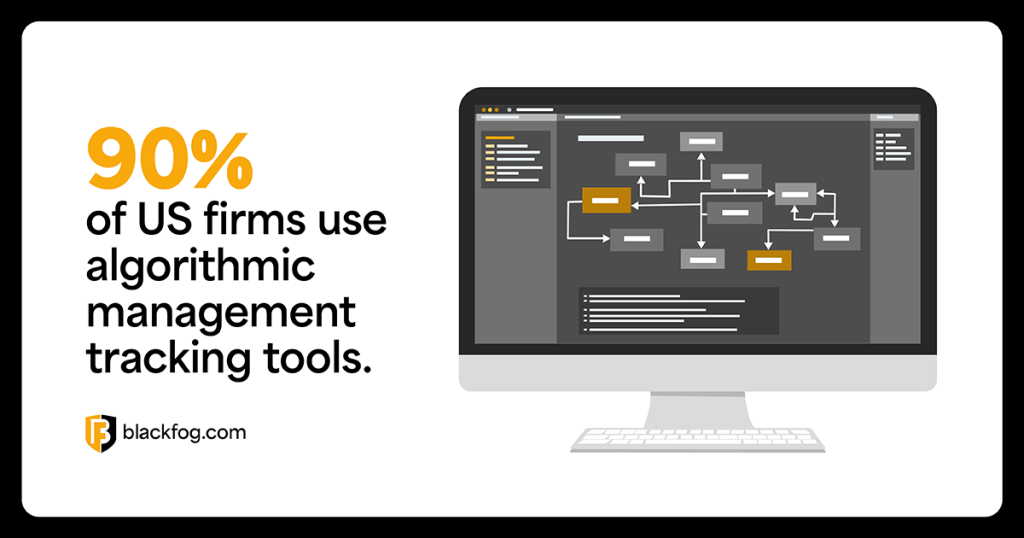
Real-time monitoring and analytics systems are now widely used to track both customer behavior and employee activities in real-time. On the customer side, these tools help companies analyze app usage, social interactions and service responses. On the employee side, firms use dashboards, behavioral analytics, keystroke tracking and productivity monitoring to manage distributed or hybrid workforces. These tools are becoming highly common, with 2025 data from the OECD indicating that 90 percent of US firms use some form of algorithmic management tool.
Potential privacy issues with these solutions include:
- Continuous collection of highly granular personal or professional activity data without clear consent.
- Real-time profiling or scoring of individuals that occur without transparency.
- Data retention and sharing practices not being aligned with original collection purpose.
Because these systems often touch sensitive or inferred personal data, businesses must ensure they meet legal obligations around transparency, purpose limitation, data minimization and individual rights.
Use Case 4: Large-Scale Data Processing And Retention
AI thrives on large datasets. Many enterprises already have access to expansive data lakes that can be used to feed AI-powered analytics platforms. These systems often handle customer records, employee information, transactional history, operational logs and unstructured files at massive scale. In many cases, AI also generates additional metadata and derived insights that expand the overall data footprint far beyond what was originally collected.
This creates several challenges, such as:
- Long-term storage of personal or sensitive data without clear retention limits.
- Difficulty tracking how personal information moves across interconnected AI pipelines.
- Storing derived or inferred data that individuals never knowingly provided.
- Inability to meet deletion or data-subject access requests due to complex data lineage.
Organizations must therefore have clear policies in place for how data used for these AI systems can be accessed by automated tools, who can view the conclusions of analytics and how outcomes are protected and stored.
Use Case 5: AI In Cybersecurity And Threat Detection
With the volume of AI-powered cyberattacks growing, companies are increasingly turning to their own AI defenses to counter these security risks. These platforms scan vast amounts of information to identify threats, which often requires deep access to sensitive personal and corporate data.
The tools inspect network traffic, internal communications, authentication activity and user behaviors, generating extensive logs to analyze for suspicious activity. This information may be stored long after the initial scan and could, if not managed correctly, result in inadvertent data exfiltration or other privacy breaches.
Examples of potential issues in this area include:
- Capturing personal or confidential content from emails, messages or files during threat analysis.
- Generating detailed behavioral logs that reveal patterns about individual employees or customers.
- Retaining security telemetry for long periods without clear justification.
- Storing sensitive data in monitoring tools or SIEM systems with broad internal access.
- Aggregating multiple data sources in ways that reveal more than intended about an individual.
To stay compliant with data privacy rules across all these use cases, organizations must use AI management tools that tightly control how employees and systems access and retain data, limit log retention windows and ensure their monitoring practices respect legal and privacy requirements.
Share This Story, Choose Your Platform!
Related Posts
LotAI: How Attackers Weaponize AI Assistants for Data Exfiltration
What happens when attackers use your approved AI tools as a data exfiltration channel? New research reveals how the LotAI technique turns Copilot and Grok into covert C2 relays.
The State of Ransomware: February 2026
BlackFog's state of ransomware February 2026 measures publicly disclosed and non-disclosed attacks globally.
Steaelite RAT Enables Double Extortion Attacks from a Single Panel
Steaelite is a newly emerging RAT that unifies credential theft, data exfiltration, and ransomware in a single web panel, accelerating double extortion attacks.
ClawdBot and OpenClaw: When Local AI Becomes A Data Exfiltration Goldmine
ClawdBot stores API keys, chat histories, and user memories in plaintext files, and infostealers like RedLine, Lumma, and Vidar are already targeting it.

West Harlem Group Assistance Stops Ransomware and Cryptojacking with BlackFog ADX
West Harlem Group Assistance secures its community mission by preventing ransomware and cryptojacking with BlackFog ADX.

Why Traditional Security Fails To Deal With Advanced Persistent Threats
Learn why advanced persistent threats remain a growing cybersecurity risk in 2026 and where organizations must focus to address them.