 Skip to content

What AI Management Really Means For The Enterprise
The deployment of AI tools doesn’t end once they’re launched. In fact, this is where the real work begins. Without strong day-to-day management, even well-planned AI systems can quickly become unpredictable, insecure or noncompliant. From data handling to performance oversight, management plays a critical role in ensuring that enterprise tools are aligned with AI compliance requirements and don’t introduce unnecessary security risks.
This is a key part of the governance process that keeps AI usage visible, ensures user behavior is controlled and maintains consistent outcomes. As AI becomes more embedded in business processes, effective management will be essential for protecting both trust and future business value.
What Is AI Management?
AI management refers to the ongoing, day-to-day operation, oversight and control of AI systems once they’ve been deployed. It’s about making sure these tools function as expected, remain secure and continue to meet organizational goals for the long term.
This includes activities like monitoring performance, controlling access, tracking usage, maintaining logs and responding to issues like model drift, bias or data exposure. While AI governance sets the strategic direction and compliance defines legal boundaries, management ensures those frameworks are actually followed in practice. In other words, it’s about putting AI policies into action.
Why AI Management Matters
With AI increasingly embedded in core operations, poor day-to-day management can create serious business challenges, ranging from the potential for sensitive data to be leaked to insecure, unapproved platforms or easy targets for cybercriminals.
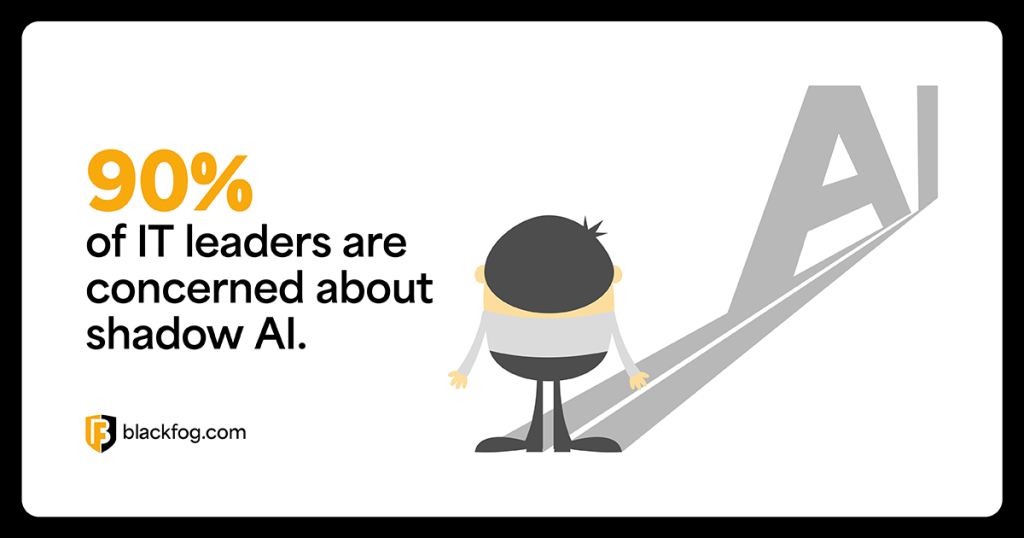
For example, the use of ‘shadow AI’ remains a major issue, with one study by data management provider Komprise indicating that 90 percent of IT leaders are concerned about this. What’s more, almost half (44 percent) have already seen sensitive information fed into generative tools, raising further concerns about AI privacy.
When AI systems operate without proper oversight, the consequences can be significant. Among the problems businesses may experience are:
- Operational disruption: Faulty outputs or misaligned automations can derail processes, slow service delivery or cause teams to make decisions based on inaccurate information.
- Reputational damage: If AI tools deliver incorrect, biased or inappropriate results, especially in customer-facing settings, trust in the brand can erode quickly.
- Financial loss: Errors caused by unmanaged AI systems can lead to wasted spend, duplicated work, incorrect forecasting or losses tied to poor decision-making.
- Regulatory and legal consequences: When AI use drifts outside compliance requirements, businesses face fines, investigations, litigation and forced operational changes that can impact growth.
Strong AI management ensures these risks remain under control so AI delivers value rather than unexpected setbacks.
How AI Management Supports Governance And Compliance
Governance and compliance define what responsible AI use should look like, but AI management determines whether it happens in practice. These three layers are closely connected but serve different purposes. Understanding how they relate and where their individual responsibilities lie is important in developing an effective strategy for AI in the enterprise.
- AI governance sets the principles, ethical expectations, ownership structures and strategic direction for AI use across the business.
- AI compliance ensures AI activities align with legal, regulatory and industry requirements, including data protection, documentation and accountability standards.
- AI management executes the day-to-day oversight needed to put governance and compliance into action, ensuring rules are followed and systems behave as intended.
Management is the operational layer where policy is adopted into practice. For example, governance may require models to be transparent and unbiased, but only ongoing management verifies those conditions are being met over time, through performance checks, monitoring and version control. Similarly, compliance may mandate audit logs and restricted access, but management ensures records are maintained and usage stays within approved boundaries.
In this way, AI management acts as the bridge between expectations and reality. It keeps AI activity visible, measurable and aligned with business goals, preventing gaps that can arise when policies exist on paper but aren’t enforced in daily use.
Common Oversights And Gaps In AI Management
Even with strong governance and clear policies, AI systems can create serious problems if day-to-day management is neglected. Many of the biggest risks come from simple oversights that grow into larger issues when they go unnoticed. Being able to spot and correct these early is essential for keeping AI secure, compliant and effective. Common gaps include:
- Assuming deployment is the finish line: AI performance and behavior change over time, so monitoring must be continuous to identify issues such as model drift or bias, as well as respond to new regulations.
- No clear operational owner: Without assigned responsibility, issues go unreported and unmanaged.
- Limited visibility into usage: If teams cannot see how AI tools are being used, misuse or shadow AI becomes harder to detect.
- Uncontrolled system access: Allowing AI systems over-permissive access to data increases the risk of mistakes or misuse.
- Failure to track model behavior: Without regular checks, drift or declining accuracy may go unnoticed.
Making AI Work Day To Day
Effective management is essential for avoiding AI security risks and keeping systems secure, compliant and reliable in real-world use. It ensures that AI supports business goals without creating unnecessary regulatory risk or exposing firms to threats like AI data exfiltration. As AI becomes embedded across more business functions, the absence of clear oversight and structured management can expose organizations to unacceptable operational, legal and financial consequences. Companies that invest in strong AI management today will be far better protected as adoption continues to grow.
Share This Story, Choose Your Platform!
Related Posts
LotAI: How Attackers Weaponize AI Assistants for Data Exfiltration
What happens when attackers use your approved AI tools as a data exfiltration channel? New research reveals how the LotAI technique turns Copilot and Grok into covert C2 relays.

The State of Ransomware: February 2026
BlackFog's state of ransomware February 2026 measures publicly disclosed and non-disclosed attacks globally.

Steaelite RAT Enables Double Extortion Attacks from a Single Panel
Steaelite is a newly emerging RAT that unifies credential theft, data exfiltration, and ransomware in a single web panel, accelerating double extortion attacks.
ClawdBot and OpenClaw: When Local AI Becomes A Data Exfiltration Goldmine
ClawdBot stores API keys, chat histories, and user memories in plaintext files, and infostealers like RedLine, Lumma, and Vidar are already targeting it.

West Harlem Group Assistance Stops Ransomware and Cryptojacking with BlackFog ADX
West Harlem Group Assistance secures its community mission by preventing ransomware and cryptojacking with BlackFog ADX.

Why Traditional Security Fails To Deal With Advanced Persistent Threats
Learn why advanced persistent threats remain a growing cybersecurity risk in 2026 and where organizations must focus to address them.