 Skip to content

Data Breach Prevention: Practical Ways To Stop Data Loss
Data breaches are a daily risk for organizations. Yet despite increased spending on efforts to tackle this problem, they’re only becoming more frequent. According to 2025 research by Pentera, for example, one in three enterprises experienced a breach in the preceding 12 months, highlighting the gap between spending and real-world protection.
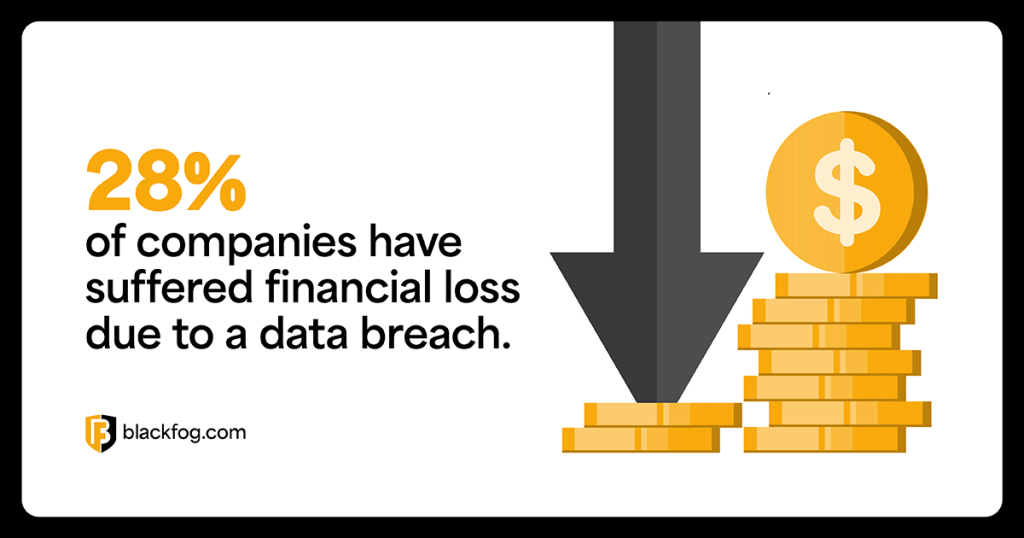
Once data leaves the network, the damage can be wide-ranging. Direct financial loss is common, with 28 percent of organizations experiencing this. However, reputational impacts and regulatory scrutiny can also result in long-term damage. That’s why prevention matters more than response. But as businesses navigate an increasingly complex landscape, including hybrid working environments, third-party dependencies and AI-powered attacks, defending data at the edge of sprawling networks has never been more difficult.
Therefore, effective breach prevention requires a modern, proactive strategy designed to stop threats before data is lost – and this begins by understanding what risks firms face.
What Is Data Breach Prevention?
Data breach prevention is the practice of stopping sensitive data from being exposed, stolen or exfiltrated by unauthorized parties. It is important to distinguish this from data loss, which is a wider term that can refer to data that is deleted, corrupted or otherwise rendered unavailable. A data breach occurs when data remains intact, but is accessed or removed by someone who should not have it.
Many security programs still focus on detection or protection at the perimeter to counter this threat. While these approaches are important, they often identify an incident only after data has already left the environment. Data breach prevention takes a different approach by focusing on controlling data movement and blocking exfiltration before damage occurs.
An effective strategy for preventing data breaches includes understanding where sensitive data is stored, how it is accessed and how it could leave the organization. By prioritizing prevention, organizations reduce risk, limit exposure and avoid the costly consequences of reacting too late.
“Data breaches are a daily operational risk. Organizations are spending more than ever on security, yet breaches continue to rise because too many strategies focus on reacting after data is lost. Real protection comes from stopping threats at the point of exposure, before sensitive data ever leaves the network.”
– Darren Williams, CEO and Founder, BlackFog
Common Types Of Data Breaches And How To Prevent Them
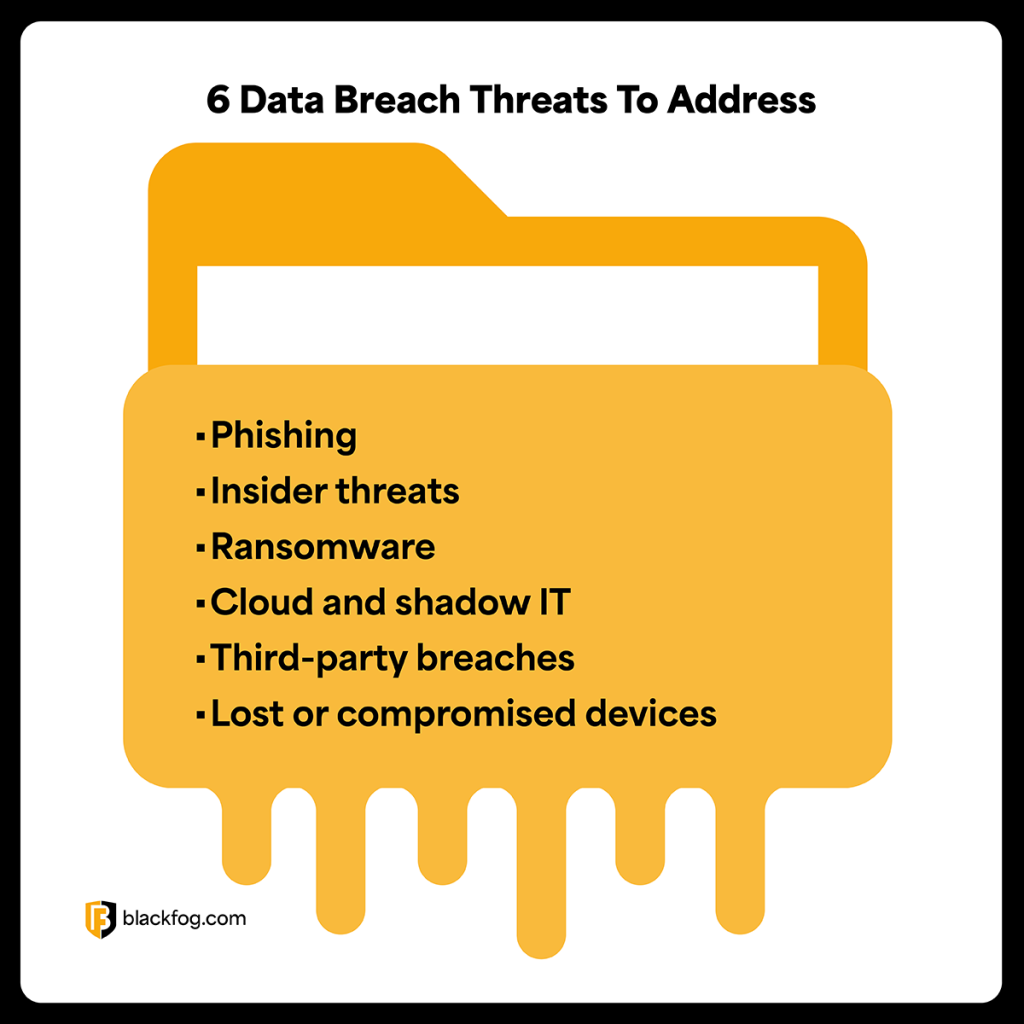
Data breaches can occur in many different ways and no two organizations face exactly the same risks. Attackers may exploit human error, technical weaknesses or gaps in process and visibility, while careless handling of data can lead to accidental – but no less damaging – exposures.
Understanding the most common types of data breaches is critical for identifying where vulnerabilities exist within an organization. By recognizing how breaches happen, businesses can pinpoint weaknesses, close security gaps and take targeted steps to reduce the risk of sensitive data being exposed. Here are a few of the most common issues you may encounter and key ways to prevent data breaches as a result.
Phishing And Credential Theft
Phishing and credential theft attacks are among the most common ways cybercriminals gain access to businesses in order to steal data. They rely on deceiving users into revealing usernames, passwords or tokens through fake emails, messages or login pages.
Once credentials are compromised, attackers can bypass perimeter defenses and access systems as legitimate users. This allows them to quietly locate and exfiltrate sensitive data over time, often without triggering alerts.
In order to tackle this threat, key steps include:
- Enforcing multi factor authentication across all accounts.
- Applying least privilege access policies consistently.
- Training users to identify phishing techniques.
- Monitoring for abnormal login patterns and session behavior.
Insider Threats And Privilege Misuse
Insider threats occur when trusted users misuse their access to expose or remove sensitive data. This can involve malicious intent or simple human error. Excessive permissions, shared accounts and limited monitoring make these breaches difficult to detect. Because insiders already have access, traditional security tools may fail to identify suspicious activity until data has already left the organization.
Important prevention steps for this type of data breach are:
- Limiting access strictly to job requirements.
- Reviewing permissions regularly and removing unused privileges.
- Monitoring access to sensitive data continuously.
- Blocking unauthorized attempts to move or upload data externally.
Ransomware And Malware
Modern ransomware and malware attacks are almost exclusively designed to steal data, not just encrypt systems. Indeed, BlackFog research indicates this is an objective in 96 percent of recorded attacks. Threat actors often spend weeks inside environments mapping data locations and quietly exfiltrating files. While encryption is still used as leverage, the real damage comes from the risk of public exposure of data.
Traditional defenses often detect ransomware too late, after data has been transferred outside the network. To remedy this, businesses should:
- Monitor all outbound traffic for suspicious data transfers.
- Restrict unauthorized connections to external destinations.
- Patch systems and applications consistently.
- Deploy endpoint controls that stop exfiltration of data in real-time.
Cloud Misconfigurations And Shadow IT
Data breaches can also stem from misconfigured cloud storage, weak identity controls or exposed managed services. Shadow IT increases this risk by introducing unsanctioned applications and data repositories that are beyond security awareness and oversight. These gaps can make sensitive data visible to attackers without the need for exploitation or malware.
In order to effectively mitigate cloud data breach risks, organizations should:
- Continuously assess cloud configurations for exposure risks.
- Enforce strong identity and access controls.
- Gain visibility into unsanctioned cloud tools.
- Apply consistent security policies across all environments.
Third Party And Supply Chain Breaches
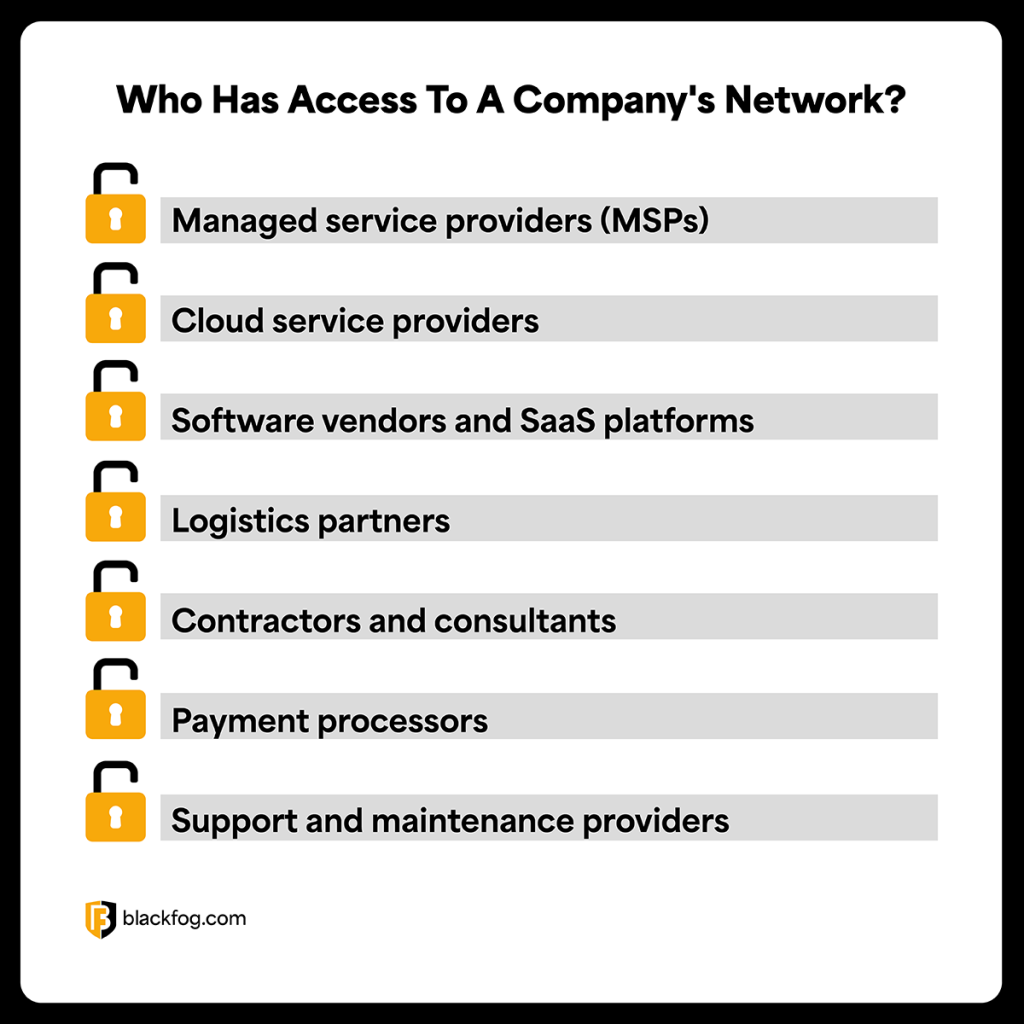
Many networks are increasingly interlinked, with a range of suppliers, service providers and other third parties able to connect and exchange information. Third party breaches occur when attackers exploit vendors or partners that have trusted access to systems or data. Because this access is legitimate, malicious activity often blends in with normal traffic. These breaches can quickly spread sensitive data beyond organizational boundaries.
Steps to prevent this type of data breach include:
- Limiting third party access to specific systems and data.
- Continuously monitoring vendor activity.
- Segmenting environments connected to external partners.
- Regularly assessing vendor security practices and access requirements.
Lost Or Unsecured Endpoints
Endpoints such as laptops, mobile devices and removable media are common sources of data exposure. Lost devices, weak endpoint controls and unsecured transfers can all allow sensitive data to be accessed by unauthorized parties. What’s more, this risk has been significantly increased due to remote and hybrid work.
To expand enterprise data loss prevention efforts to these devices, organizations must be able to:
- Encrypt data on all endpoints.
- Restrict use of removable media.
- Monitor endpoint behavior for abnormal data movement.
- Block unauthorized attempts to transfer data off devices.
How Does Malicious Data Exfiltration Work?
Where there are many causes of inadvertent data breaches, malicious data exfiltration – the deliberate extraction of sensitive data from systems without authorization – is one of the biggest threats enterprises face. Yet it’s also among the hardest to detect.
Cybercriminals use numerous techniques designed to blend into normal activity and exfiltrate data stealthily. Data is often hidden inside legitimate protocols such as HTTPS, which allows stolen information to move alongside routine web traffic. Attackers also use methods like DNS exfiltration, where data is encoded into DNS requests that are rarely inspected in depth.
Many threat actors use ‘low-and-slow’ methods to steal data while avoiding detection. Instead of moving large volumes at once, they extract small amounts of data over extended periods to avoid triggering alerts. These techniques exploit the fact that most networks generate large volumes of outbound traffic every day.
To stop these threats, businesses must be able to review all outbound traffic for suspicious behavior, in real-time and across every endpoint. What’s more, these tools must be able to identify abnormal data movement without introducing latency or friction for legitimate users. This is among the most challenging aspects of a data breach prevention strategy and is why dedicated anti data exfiltration technologies are increasingly a must-have.
Building An Effective Data Breach Prevention Policy
An effective data loss prevention policy starts with culture, not documentation. Even well-written policies fail when employees view security as a compliance task rather than a shared responsibility.
Data breaches often occur because policies are poorly communicated, inconsistently enforced, or disconnected from how people actually work. If controls create friction or slow productivity, users will find ways around them, increasing risk rather than reducing it. A successful policy therefore treats data protection as a core business priority.
To do this, clearly define expectations, provide practical guidance to users and focus on preventing data from leaving the organization in the first place. Most importantly, reinforce policies through training, leadership support and continuous improvement.
Key elements of an effective data breach prevention policy include:
- Clear classification of sensitive data and handling requirements.
- Defined access controls based on least privilege.
- Continuous monitoring of outbound data movement.
- Controls to prevent unauthorized data transfers.
- Regular employee training tied to real-world risks.
- Incident response procedures focused on containment.
- Ongoing reviews to adapt to new threats and technologies.
Turning A Data Breach Prevention Strategy Into Action
Data breach prevention measures only work when policy is translated into consistent, enforceable action. This means applying the same controls everywhere data lives and moves, not just within the core network. Prevention must extend across all endpoints, including cloud environments, employee-owned devices and third-party connections, as any gaps in coverage create blind spots that attackers are quick to exploit.
Putting a data loss prevention strategy into action also requires visibility and accountability. Organizations need to know when data is accessed, how it is used and where it is going at all times. Just as importantly, success must be measurable. Metrics such as blocked exfiltration attempts, exposure risk and containment times help demonstrate whether controls are working.
Why Proactive Data Breach Prevention Matters
Knowing how to prevent data breach incidents helps build a resilient and trustworthy organization, which is essential to success in a digital-first, data-driven world. As cyber threats continue to evolve, relying on reactive strategies leaves businesses exposed to significant financial, operational and reputational damage.
A proactive prevention approach shifts the focus to stopping data from being exposed in the first place, reducing risk across the entire organization. Key benefits include:
- Reduced likelihood of sensitive data exposure.
- Lower financial and regulatory impact from breaches.
- Stronger protection against insider threats and credential misuse.
- Improved visibility into how data is accessed and moved.
- Greater confidence when adopting cloud and remote work models.
- Enhanced ability to withstand ransomware and extortion attempts.
By prioritizing data breach prevention strategies, organizations gain greater control over their security posture. Businesses that are able to stop data loss before sensitive information leaves the network will be best positioned to reduce cyber risks such as ransomware and stay one step ahead in a rapidly-changing environment.
Share This Story, Choose Your Platform!
Related Posts
The State of Ransomware: February 2026
BlackFog's state of ransomware February 2026 measures publicly disclosed and non-disclosed attacks globally.
Steaelite RAT Enables Double Extortion Attacks from a Single Panel
Steaelite is a newly emerging RAT that unifies credential theft, data exfiltration, and ransomware in a single web panel, accelerating double extortion attacks.
ClawdBot and OpenClaw: When Local AI Becomes A Data Exfiltration Goldmine
ClawdBot stores API keys, chat histories, and user memories in plaintext files, and infostealers like RedLine, Lumma, and Vidar are already targeting it.
West Harlem Group Assistance Stops Ransomware and Cryptojacking with BlackFog ADX
West Harlem Group Assistance secures its community mission by preventing ransomware and cryptojacking with BlackFog ADX.
Why Traditional Security Fails To Deal With Advanced Persistent Threats
Learn why advanced persistent threats remain a growing cybersecurity risk in 2026 and where organizations must focus to address them.
What Does Advanced Threat Protection Really Mean In 2026?
Find out why businesses need advanced threat protection to cope with the new era of sophisticated, persistent cyber risks.