 Skip to content

Getting A Data Loss Prevention Strategy Right
Businesses are increasingly recognizing the need for a clear, coordinated strategy to improve their cybersecurity posture. Yet despite growing awareness of the risks faced on a day-to-day basis leading to a greater focus on data breach prevention, many organizations continue to experience data loss incidents – and targeted cyberattacks are only one part of the problem.
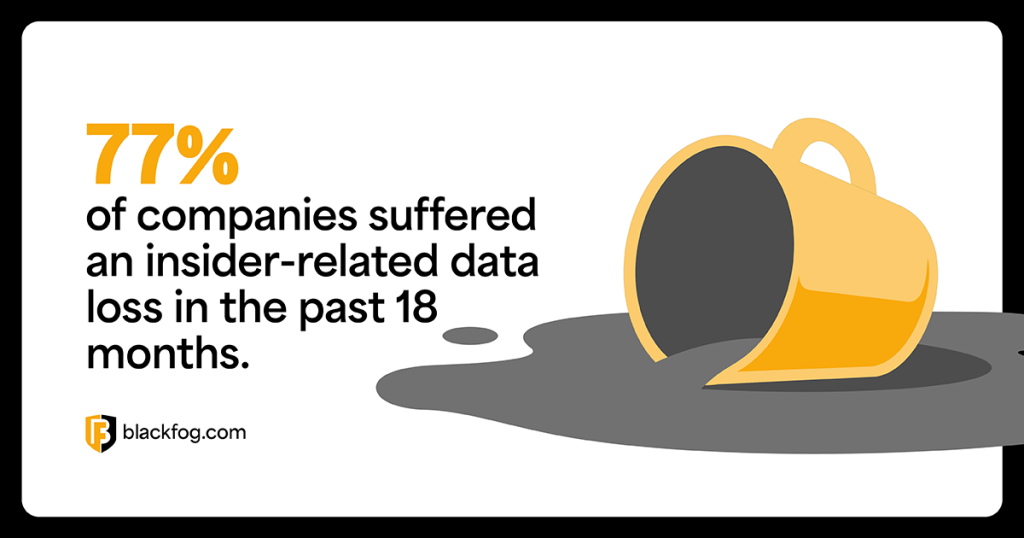
According to research from Cybersecurity Insiders, for example, more than three-quarters of enterprises (77 percent) have suffered insider-related data loss over the past 18 months. Often, this is driven by mistakes made during routine user behavior rather than malicious intent.
This highlights a critical gap between expectations and reality within businesses. Simply putting policies in place or relying on traditional data loss prevention tools is no longer enough. To defend against both advanced threats such as data exfiltration and poor behavior from within the business, organizations must be able to translate their principles into practical and enforceable action to protect sensitive information.
What A Data Loss Prevention Strategy Really Is
A data loss prevention strategy is a coordinated approach to protecting sensitive data across the entire organization. Rather than relying on isolated tools or point controls, it aims to merge a data loss prevention policy with practical processes and technology that reduce the risk of data being exposed or exfiltrated. The goal is not just to detect incidents, but to prevent data loss from occurring in the first place.
Unlike standalone security solutions that focus on a single layer, a data loss prevention strategy provides consistent protection wherever data lives and moves. This includes endpoints, networks, cloud services and third-party connections. By applying controls uniformly and maintaining visibility across environments, organizations can manage data risk more effectively and ensure protection keeps pace with how the business operates.
Why Fragmented Approaches Fail
Legacy approaches to enterprise data loss prevention often rely on disconnected tools and controls that operate in isolation. While these may address specific risks, they rarely provide full visibility into how data moves across the organization. This creates gaps that cybercriminals can exploit, particularly when it comes to data exfiltration. Without full visibility across every endpoint, attackers may be able to hide stolen data inside legitimate traffic using methods like DNS exfiltration, allowing it to leave the network unnoticed.
Fragmented defenses also struggle to address inadvertent insider threats. When controls vary between endpoints, networks and environments, careless actions by users can bypass safeguards without malicious intent. Hybrid working models and third-party access only increase this complexity. As a result, many firms end up with inconsistent enforcement and blind spots in monitoring.
Key Aspects Of An Effective Data Loss Prevention Strategy
There are several factors that go into creating an effective data loss prevention strategy. It’s important to develop a unique, adaptable solution that reflects how the organization actually operates, instead of relying on generic policies that may not be consistently enforced. Rather than relying on isolated controls, it should deliver consistent, practical protection across the business.
Important elements to bear in mind include:
- Alignment with business risk: Data loss prevention efforts should focus on the information that presents the greatest financial, regulatory or reputational risk. This ensures controls are applied where a breach would have the most impact.
- Integration with existing security controls: A strategy should work alongside current security tools and processes. This reduces blind spots, avoids duplication and prevents gaps caused by disconnected systems.
- Consistent protection across environments: Data must be protected wherever it lives and moves, including endpoints, networks and cloud environments. Inconsistent coverage creates opportunities for data loss.
- Visibility into data movement: Organizations need clear insight into how data is accessed, used and transferred. Without this visibility, risky or suspicious behavior is difficult to identify early.
- Real-time prevention capabilities: Effective strategies rely on controls that stop unauthorized data transfers as they occur. Preventing data loss before it leaves the environment is far more effective than responding after exposure.
The Role Of Technology In Enabling Data Loss Prevention
Improving employee understanding is an important step in reducing the risk of accidental data breaches. Clear guidance and training help users make better decisions when handling sensitive information. However, awareness alone is not enough. Organizations also need strong technology in place to address both deliberate attacks and inadvertent data loss that occurs during everyday work.
This is where dedicated anti data exfiltration solutions play a critical role. These technologies are designed to monitor how data moves across the organization and apply controls that prevent unauthorized transfers before damage occurs. Effective solutions focus on three core capabilities: visibility into data movement, control over how and where data can leave the environment, and automated blocking of traffic that stops risky exfiltration activity in real-time.
Crucially, these controls must operate without disrupting users. Prevention technology should work seamlessly in the background, allowing employees to stay productive while ensuring sensitive data remains protected at all times.
Strategy As The Foundation Of Data Protection
A cohesive data loss prevention strategy is essential for protecting organizations against the full spectrum of data breach risks. From accidental exposure caused by human error to deliberate attacks such as double extortion ransomware, prevention requires a coordinated approach that combines policy, technology and execution. When these elements work together, organizations gain the visibility and control needed to reduce risk.
Looking ahead to 2026 and beyond, the most successful companies will treat data protection as an integral part of their operational responsibilities and not just a compliance tick-box. Rather than reacting to incidents after the fact, they will embed prevention into everyday processes, ensuring sensitive data remains protected as threats continue to evolve.
Share This Story, Choose Your Platform!
Related Posts
The State of Ransomware: February 2026
BlackFog's state of ransomware February 2026 measures publicly disclosed and non-disclosed attacks globally.
Steaelite RAT Enables Double Extortion Attacks from a Single Panel
Steaelite is a newly emerging RAT that unifies credential theft, data exfiltration, and ransomware in a single web panel, accelerating double extortion attacks.
ClawdBot and OpenClaw: When Local AI Becomes A Data Exfiltration Goldmine
ClawdBot stores API keys, chat histories, and user memories in plaintext files, and infostealers like RedLine, Lumma, and Vidar are already targeting it.
West Harlem Group Assistance Stops Ransomware and Cryptojacking with BlackFog ADX
West Harlem Group Assistance secures its community mission by preventing ransomware and cryptojacking with BlackFog ADX.
Why Traditional Security Fails To Deal With Advanced Persistent Threats
Learn why advanced persistent threats remain a growing cybersecurity risk in 2026 and where organizations must focus to address them.
What Does Advanced Threat Protection Really Mean In 2026?
Find out why businesses need advanced threat protection to cope with the new era of sophisticated, persistent cyber risks.