 Skip to content

Why Traditional Security Fails To Deal With Advanced Persistent Threats
Advanced persistent threats (APTs) are one of the most pressing challenges for businesses in 2026. These attacks offer a level of sophistication over and above many common cyberattacks and, as the name suggests, take a sustained approach to data theft, relying on stealth to stay hidden within systems for many months while working toward long-term objectives.
An APT is a cyberattack where an intruder gains unauthorized access to a network and seeks to remain undetected for an extended period. The goal is not immediate disruption, but long-term data theft, surveillance or sabotage. Many legacy cybersecurity tools make blocking threats at the source their priority – and APTs often take advantage of this by seeking to evade perimeter-level defenses. That’s why organizations need a more holistic approach to cybersecurity.
To effectively tackle APTs, the focus must shift to detecting and preventing data exfiltration across every endpoint and network layer.
What Makes An Advanced Persistent Threat Different?
Unlike attacks like Ransomware-as-a-Service, APTs are highly targeted and sophisticated. They are often manually operated by skilled threat actors who tailor each step to bypass specific defenses. Many are linked to state-sponsored groups and focus on high-value targets such as government agencies, critical infrastructure and enterprises handling sensitive intellectual property.
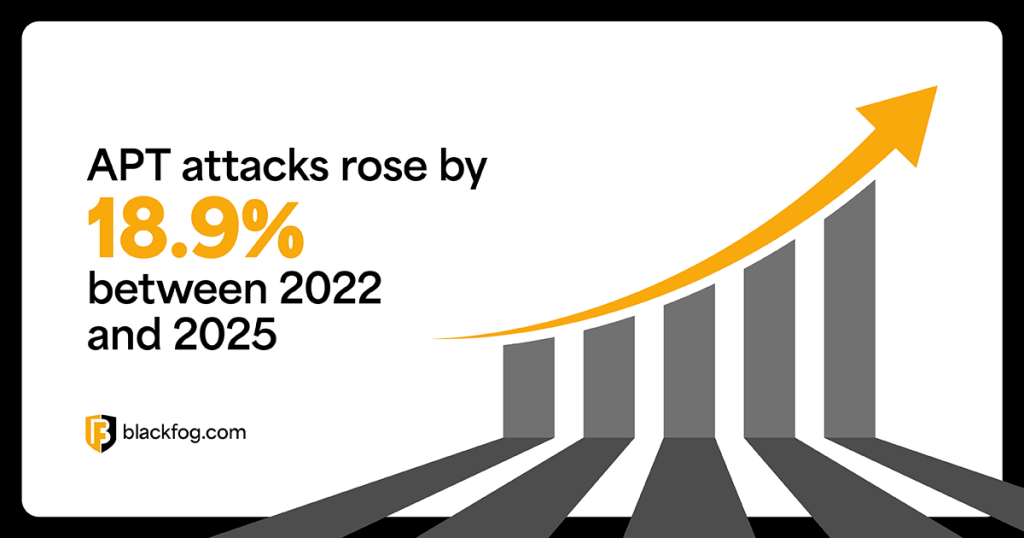
The threat posed by advanced persistent threat attacks has been growing in recent years. According to a study by the Bloomsbury Intelligence and Security Institute, the number of APTs detected increased by 18.9 percent between 2022 and 2025. This has been aided by the rise of AI, with tools such as ChatGPT enabling more frequent and sophisticated intrusions.
- Key features of APTs include:
- Stealthy, long-term access to systems.
- Targeted, often bespoke methods of attack.
- Manual control by experienced operators.
- A focus on data theft and espionage over disruption.
These campaigns are difficult to detect because they blend in with normal network activity. Attackers often use custom malware, zero-day exploits and legitimate credentials to avoid detection, as well as exploiting legitimate tools, in so-called ‘fileless’ attacks to evade detection.
“The misconception about advanced persistent threats is that they’re simply more sophisticated malware. In reality, they represent a different philosophy of attack; one centered on stealth, surveillance and long-term data theft. Organizations can no longer rely on perimeter defenses alone. To counter APTs effectively, security strategies must prioritize visibility and the prevention of data exfiltration at every layer of the infrastructure.”
– Dr Darren Williams, CEO and Founder, BlackFog
Recent advanced persistent threat examples include:
- Volt Typhoon: Uncovered by Microsoft in May 2023, this Chinese-linked group targeted critical infrastructure across the US, including power grids, communications and water systems. Volt Typhoon used living-off-the-land techniques, relying on legitimate system tools to avoid detection and is believed to be part of long-term espionage and sabotage planning.
- Sandworm: Active through 2022 and 2023, Sandworm launched attacks against Ukrainian infrastructure during the Russia-Ukraine conflict. It deployed custom malware like Industroyer2 to target power stations and used wiper malware to destroy data. The group has been linked to the GRU, Russia’s military intelligence agency.
- APT42: Identified by Mandiant in 2022, this group is thought to be backed by Iran and focuses on cyberespionage against dissidents, academics and healthcare organizations globally. APT42 is known for credential phishing and custom surveillance malware. Its campaigns highlight how APTs can extend beyond governments and target individuals linked to sensitive geopolitical issues.
The APT Lifecycle And Where Security Gets It Wrong
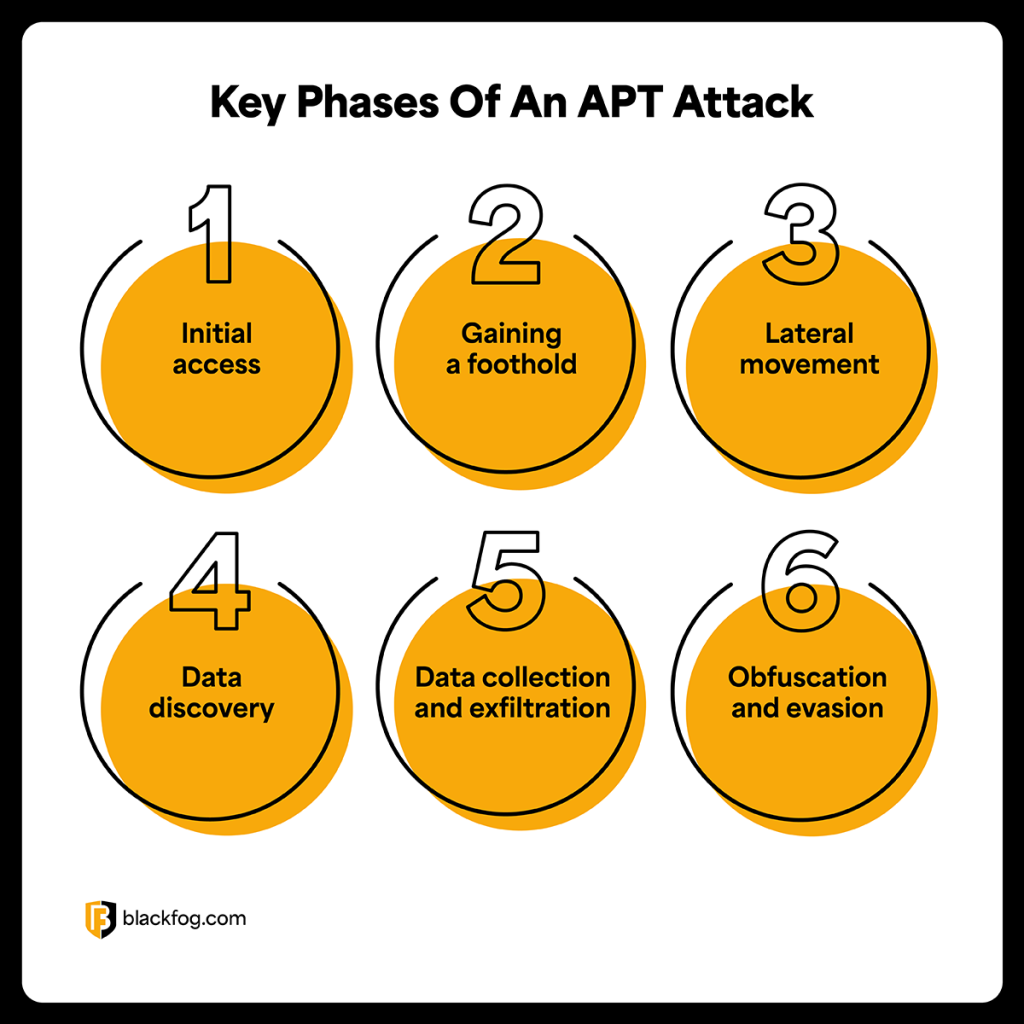
Advanced persistent threats are slow-moving, targeted campaigns designed to stay under the radar. While each attack is unique, most follow a similar process, with key stages of a typical attack including:
- Initial access and foothold: Attackers begin by gathering intel on their chosen target, identifying weaknesses that can be exploited by phishing, stolen credentials or software flaws. Once inside, they install backdoors or remote access tools to stay connected without triggering alarms.
- Lateral movement and discovery: With a foothold established, the attacker moves through the network to increase their level of access to sensitive materials. They escalate privileges, probe systems and map out where high-value data resides, while blending in with normal user activity.
- Data collection and exfiltration: Sensitive information is silently gathered, staged and sent out of the network gradually, often in encrypted or disguised traffic to avoid detection. ‘Low and slow’ principles may mean it takes weeks or months to build up a repository of stolen data in order to avoid triggering alerts.
- Persistence and evasion: To stay undetected, attackers clean up logs, rotate access methods and may return repeatedly for ongoing data theft as long as they remain undetected.
Traditional security often focuses on stopping attackers at the door. But APTs are designed to get through – and once in, they can have free rein. Without the ability to spot exfiltration and unusual behavior across endpoints, these threats can go unnoticed until the damage is done.
Why Traditional Security Tools Fail Against APTs
Most legacy cybersecurity solutions were never designed to deal with the stealth and complexity of modern APTs. These tools often focus on isolated events rather than the bigger picture of how threats operate over time.
Common limitations of traditional tools include:
- Perimeter security: Firewalls and intrusion prevention systems aim to block threats at the edge but can’t stop attackers who use phishing, stolen credentials or supply chain access to get in unnoticed.
- Endpoint detection and response tools: Endpoint and extended detection tools rely on known threat signatures or clear behavioral anomalies. APTs often use legitimate admin tools and processes, making malicious actions look like normal activity.
- SIEM and alert-driven models: Security information and event management (SIEM) tools generate large volumes of alerts. APTs exploit this noise by moving slowly and staying under alert thresholds, often using ‘low and slow’ tactics to avoid detection.
These attacks often exploit a range of common vulnerabilities that are frequently overlooked. For example, poor patch management leaves systems exposed to known flaws that remain unaddressed for weeks or months. Misconfigured cloud environments, open ports and overly permissive user privileges all create easy entry points. Unsecured third-party tools and supply chain software can be compromised to gain indirect access to target networks.
Once inside, attackers often rely on trusted tools already present in the system – a tactic known as living off the land. Utilities like PowerShell, WMI and remote desktop services allow threat actors to move laterally, gather intelligence and extract data without deploying obvious malware or triggering signature-based detection. Because these tools are legitimate and widely used, their malicious use is hard to distinguish from normal administrative activity.
To counter security vulnerabilities that leave businesses open to APTs, cybersecurity teams therefore need to shift from isolated alerting to continuous monitoring of data movement, user behavior and endpoint activity with a focus on detecting exfiltration, not just infiltration.
Why The Real Damage Happens At Data Exfiltration
For firms relying on legacy tools, the first sign of an advanced attack often comes too late, when data has already been stolen. These tools may not detect an intrusion at all, or only raise alarms once exfiltration is complete and the damage is irreversible.
In APT campaigns, success isn’t measured by how far attackers can move inside a network but by how much valuable information they can extract without being caught. Intellectual property, financial records, credentials and customer data are all high-value targets.
Exfiltration is often subtle and blends in with regular traffic.
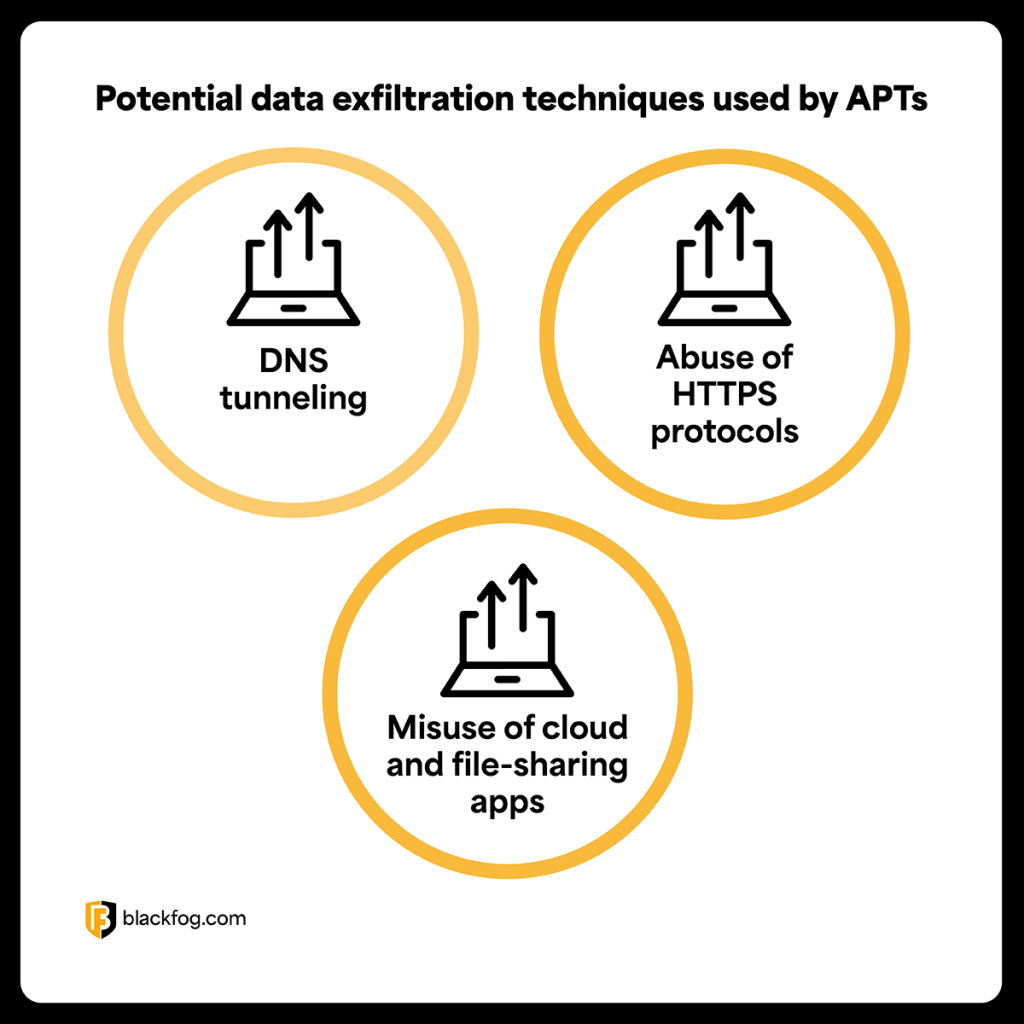
Common techniques include:
- DNS tunneling to hide data in domain requests.
- Abuse of HTTPS to encrypt and disguise outbound traffic.
- Misuse of cloud platforms and SaaS tools like file-sharing services.
The consequences of these breaches can be severe. As well as direct financial losses, the reputational and regulatory impact of a large-scale data exfiltration can last for years and even put the future of an organization in jeopardy.
How To Build An APT-Resilient Security Strategy
To defend against APTs, businesses need to move beyond reactive security and adopt a strategy that starts with a threat intelligence framework and is built around visibility, control and containment. An advanced threat management approach should prioritize early detection, containment and resilience against long-term, targeted attacks.
- Advanced threat protection: Rather than searching for malware files, tools should look for living off the land indicators within legitimate tools like PowerShell, such as running obfuscated scripts or downloading external code directly into a device’s memory.
- Data exfiltration prevention: Monitor outbound traffic for protocol anomalies. This identifies data being smuggled through low and slow transfers or hidden inside common traffic like DNS requests and HTTPS headers to bypass standard firewalls.
- Zero Trust architecture: Enforce identity-based micro-segmentation to ensure that even if an attacker steals an employee’s credentials to launch an APT attack, they are blocked from lateral movement.
- Continuous monitoring: Track for persistence and privilege escalation. This watches for accounts suddenly gaining administrative rights or the creation of new scheduled tasks that allow an attacker to remain in the system even after a reboot.
- Segmentation: Isolate high-value assets such as databases and industrial controls. By putting these behind air gaps or strictly controlled zones, an attacker will have to trigger multiple alarms before reaching the most sensitive data.
- Automated threat containment: Automated incident response tools should be able to step in as soon as suspicious behavior is detected – for example, a user logging in from two different countries simultaneously or transferring data to unknown destinations. The system can automatically isolate that device from the network to stop a breach in seconds.
Stopping APTs Where They Can’t Adapt: The Final Stage
Data exfiltration is the end goal of almost every advanced persistent threat, whether this is extracting sensitive data for profit, disruption or espionage. But with the right defenses in place, it’s also where attacks can be most effectively shut down.
Unlike infiltration or lateral movement, exfiltration requires data to leave the network. That action creates a detectable footprint. Dedicated anti data exfiltration (ADX) tools are designed to spot and block these attempts in real-time, stopping even advanced attacks before they can succeed.
These tools serve as a crucial last line of defense, preventing malware and attackers from achieving their objectives. Prevention is always better than response, and the ability to stop exfiltration before data is lost can be the difference between a security incident and a full-blown breach.
Advanced threat protection means continuous monitoring, combined with behavior-based detection, helps security teams identify signs of compromise early, long before data is moved. To implement such tools effectively and block APT threats, remember the following:
- Exfiltration is the most critical and detectable phase of an APT.
- Blocking data from leaving is the best way to limit impact.
- Anti data exfiltration tools are essential for stopping attacks in their final stage.
- Early detection and prevention are the most effective defense strategies.
Share This Story, Choose Your Platform!
Related Posts
The State of Ransomware: March 2026
BlackFog's state of ransomware March 2026 measures publicly disclosed and non-disclosed attacks globally.

Venom Stealer Turns ClickFix Into a Full Exfiltration Pipeline
BlackFog analyzes Venom Stealer, a new MaaS infostealer that uses ClickFix delivery to launch an automated exfiltration pipeline covering credential theft, wallet cracking, and fund sweeping.
What Enterprises Need To Know About Cyber Governance, Risk And Compliance
Learn all about cyber governance, risk and compliance in 2026 and why this must be a consideration at the highest levels of all organizations.

Navigating Essential Cybersecurity Compliance Standards: What To Know
There are a range of cybersecurity compliance standards firms of all sizes must deal with, including mandatory and voluntary frameworks. Here's what you need to know.

Understanding The Requirements Of Information Security Compliance
Learn precisely what information security compliance entails and the various steps that go into making this effective.

The Importance Of Effective Cybersecurity Services For Small Businesses
Find out why cybersecurity services for small businesses are more in-demand than ever as cybercriminals shift their focus to less-sizable enterprises.