 Skip to content

What Does Advanced Threat Protection Really Mean In 2026?
The modern enterprise network has changed hugely in recent years. Cloud-first strategies, hybrid work and remote access have broken down the traditional perimeter. A key consequence of this is that as users and data now move constantly between devices and environments, there are more opportunities for attackers.
At the same time, threat actors have grown more advanced. AI tools now allow them to move faster, stay hidden for longer and adapt in real-time. For defenders, this creates a clear reality they must adapt to. Breaches are no longer rare events. They are inevitable.
To deal with this, security teams need smarter, faster tools that can prevent threats before they cause damage. That’s where modern advanced threat protection comes in.
The Rise Of More Stealthy Threats: APTs And AI-Powered Ransomware
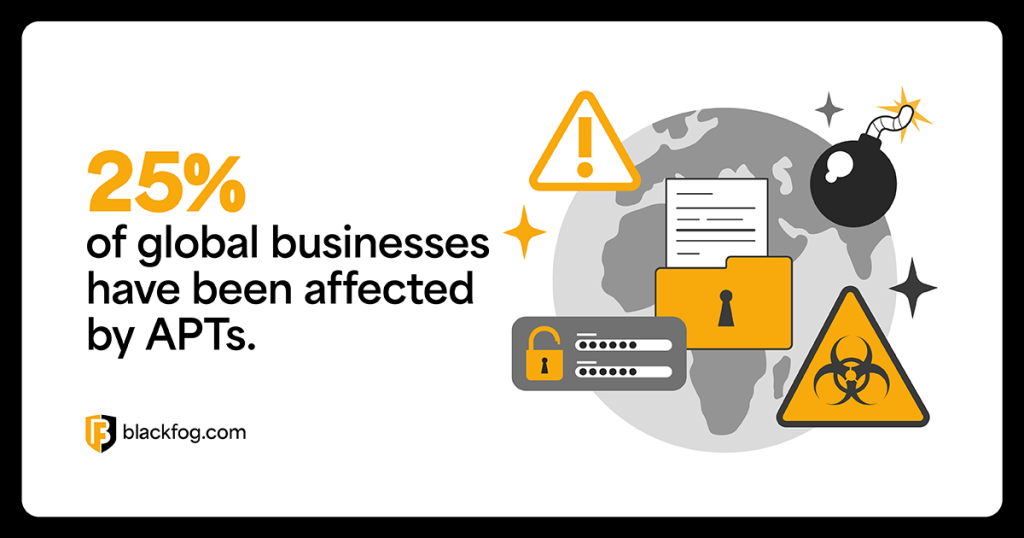
Threat actors in 2026 are more covert and adaptive than ever, with the growing use of advanced persistent threats (APTs) a key example. According to 2025 research by Kaspersky, for instance, 25 percent of companies worldwide had been affected by APTs in the previous 12 months. These attacks made up 43 percent of all high‑severity incidents.
Another challenge is the use of agentic AI. These are autonomous tools that can make decisions inside a network without human input, pivoting laterally, escalating privileges and exfiltrating data in ways that evade signature‑based tools. Once inside, threat actors increasingly stay hidden by using ‘Living off the Land’ techniques that harness legitimate system utilities such as PowerShell and WMI to avoid detection entirely, blending malicious activity with normal operations.
These stealth tactics make it harder for legacy cybersecurity tools to see or stop modern attacks before critical data is lost.
Why Legacy Cybersecurity Tools Can’t Keep Up
Most traditional cybersecurity tools were built for a different era, where threats were easier to spot, slower to evolve and largely known in advance. In today’s environment, these tools simply can’t keep pace with the latest adaptive threats and hard-to-spot security vulnerabilities. Here’s why:
- Signature-based detection is obsolete: Modern threats mutate rapidly. AI-driven ransomware and zero-day APTs rarely share code with past attacks, making tools that rely on comparing potential threats to known databases ineffective.
- Alert fatigue overwhelms teams: Legacy systems can generate thousands of false positives, especially in more fast-moving, sprawling environments. Security teams waste time chasing noise while real intrusions go unnoticed.
- Reactive models are too slow: These tools only respond once malicious behavior is flagged, which can often be days, weeks or months after the breach – by which time, large quantities of data may have been exfiltrated.
- No visibility into subtle behavior: Legacy tools struggle to detect tactics like Living off the Land, as these are designed to blend into normal system activity and not raise red flags on traditional behavioral analytics solutions.
- Static perimeter assumptions fail: With hybrid work and cloud sprawl, there is no single perimeter to defend anymore.
Anatomy Of An Attack In 2026: What Do Advanced Threats Look Like?
A modern APT attack is designed to look like normal business activity from start to finish. Initial access often comes from stolen cloud credentials, token theft or abused identity providers rather than obvious exploits. Once inside, attackers deliberately avoid deploying traditional malware.
Instead, they rely on techniques that abuse legitimate tools that already exist in the environment such as PowerShell, WMI, scheduled tasks, system binaries and native cloud APIs. Because these tools are trusted and commonly used by administrators, their activity blends into normal operations and bypasses signature-based detection.
Persistence is established through subtle methods like modifying OAuth permissions, creating hidden service accounts or abusing legitimate update processes. Privilege escalation happens slowly to avoid behavioral spikes.
Data discovery targets file shares, SaaS platforms and backups. Exfiltration is staged in small, encrypted transfers over HTTPS or cloud sync services, allowing sensitive data to leak over weeks or months without detection.
How Advanced Threat Protection Addresses These Challenges
As threats become more stealthy and persistent, organizations can no longer rely on reactive security models. Advanced threat management is critical because it shifts security from chasing alerts to actively preventing compromise. Rather than assuming threats can always be cleaned up after detection, modern technology is designed to stop malicious activity before data is stolen or systems are compromised.
Advanced threat protection enables a proactive approach to defending against APTs and AI-powered ransomware by focusing on behavior, context and automation. The goal is not just visibility but control.
Key pillars of modern ATP include:
- Behavioral analytics: Instead of relying on known signatures, advanced tools analyze how users, devices and data behave over time. This makes it possible to detect subtle anomalies that indicate Living off the Land activity or slow-moving APTs.
- Pre-execution prevention: Blocking malicious actions before they execute is critical. A cyber threat intelligence framework can help identify the latest tactics and, in turn, stop ransomware, credential abuse and data exfiltration at the earliest possible stage.
- Zero Trust enforcement: Every user, device and process is continuously verified. Compromised credentials or tokens cannot be freely reused to move laterally.
- Automated response: Reduce reliance on manual intervention by automatically isolating endpoints, blocking data movement and containing threats in real-time.
- Continuous visibility across endpoints and cloud: Full coverage ensures attackers cannot hide in unmanaged devices or SaaS platforms.
Together, these capabilities allow organizations to reduce dwell time, limit the impact of an intrusion and stay ahead of modern attackers.
Share This Story, Choose Your Platform!
Related Posts
The State of Ransomware: March 2026
BlackFog's state of ransomware March 2026 measures publicly disclosed and non-disclosed attacks globally.
Venom Stealer Turns ClickFix Into a Full Exfiltration Pipeline
BlackFog analyzes Venom Stealer, a new MaaS infostealer that uses ClickFix delivery to launch an automated exfiltration pipeline covering credential theft, wallet cracking, and fund sweeping.
What Enterprises Need To Know About Cyber Governance, Risk And Compliance
Learn all about cyber governance, risk and compliance in 2026 and why this must be a consideration at the highest levels of all organizations.
Navigating Essential Cybersecurity Compliance Standards: What To Know
There are a range of cybersecurity compliance standards firms of all sizes must deal with, including mandatory and voluntary frameworks. Here's what you need to know.

Understanding The Requirements Of Information Security Compliance
Learn precisely what information security compliance entails and the various steps that go into making this effective.

The Importance Of Effective Cybersecurity Services For Small Businesses
Find out why cybersecurity services for small businesses are more in-demand than ever as cybercriminals shift their focus to less-sizable enterprises.