 Skip to content


Rethinking Advanced Threat Management In 2026
The threat landscape facing organizations continues to evolve at speed. Changing technologies, new attack techniques and increasingly capable adversaries all contribute to a more dangerous environment for businesses of all sizes. Advanced persistent threats (APTs) now operate with clear intent, seeking to infiltrate environments quietly, maintain access and exfiltrate sensitive data over time. As a result, cybersecurity professionals must constantly adapt to an environment where threats are fluid rather than fixed.
In practice, this means that an effective advanced threat management plan cannot be treated as a one-time initiative or a single security layer. Instead, it must function as an ongoing process that spans the entire attack lifecycle. Effective approaches focus on continuous detection, informed analysis, rapid containment and structured recovery, ensuring threats are identified early and controlled before they can cause lasting damage.
The Lifecycle Of A Modern Attack
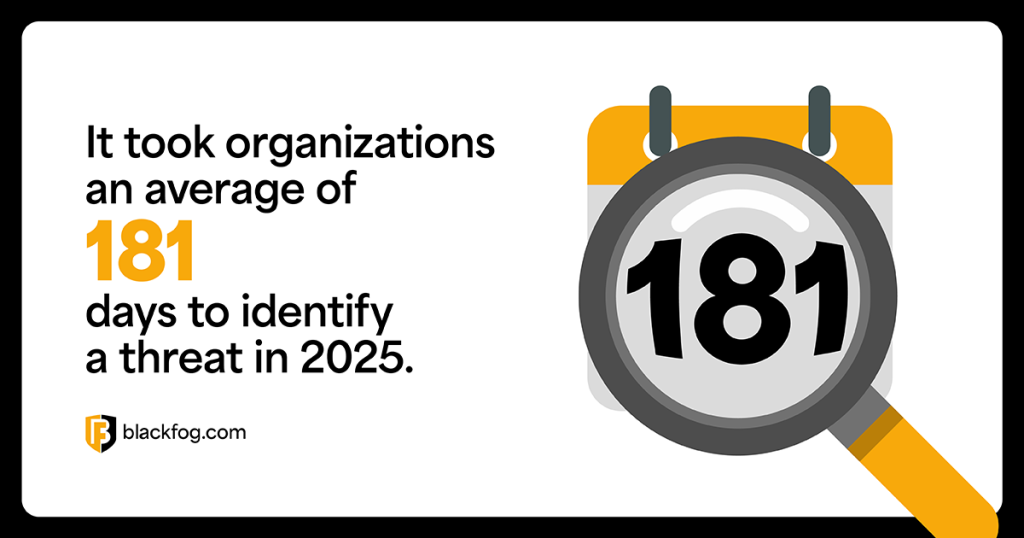
To address today’s threats, the first step is to understand what they now look like. Modern advanced attacks rarely unfold in a single moment. Instead, they progress through multiple phases, often over days or weeks. Threat actors prioritize stealth, persistence and low visibility to go deeper into networks and exfiltrate data. Understanding of these techniques can be greatly enhanced through the use of an effective cyber threat intelligence framework.
According to the IBM Cost of a Data Breach Report 2025, organizations take an average of 181 days to identify a cyberattack. While this is down slightly from 194 days the previous year, this lengthy dwell time still shows how long adversaries can remain active without detection.
Key phases within this include:
- Initial access: Attackers exploit security vulnerabilities, stolen credentials or phishing techniques to gain entry.
- Persistence: Malware establishes mechanisms to maintain access and survive reboots or updates.
- Lateral movement: Threat actors move through systems, escalating privileges and expanding control.
- Data discovery and staging: Sensitive data is identified, aggregated and prepared for removal.
- Exfiltration: Data is extracted gradually to avoid triggering security alerts.
While this extended lifecycle creates risk, it also presents opportunities. Each phase offers potential detection points where businesses can identify and stop attacks in progress, even after perimeter defenses have been breached.
Endpoint Visibility: The First And Last Line Of Defense
Strong visibility across the entire endpoint landscape is essential to effective advanced threat protection. Every modern attack ultimately interacts with endpoints, whether to gain initial access through a compromised device or to achieve its final objective of data exfiltration. If these are poorly monitored, attackers can operate freely, using legitimate processes and credentials to avoid detection.
True endpoint visibility means more than basic status reporting or alerts. It requires continuous insight into device behavior, user activity, process execution and data movement across laptops, servers and cloud workloads. With this level of coverage, organizations can detect abnormal actions such as unexpected privilege escalation, suspicious tool usage or unusual outbound data transfers.
Firms need consistent monitoring across all endpoints to address this, not just high-value systems. This includes centralized logging, behavioral analysis and the ability to correlate activity across the environment. When implemented correctly, endpoint visibility enables security teams to identify threats early, track attacker activity and intervene before data is lost.
Continuous Monitoring: What Should Businesses Really Be Looking For?
A key part of strong endpoint visibility is continuous monitoring. This plays a central role in advanced threat management, particularly as attackers focus on stealth rather than speed. APTs are designed to blend into normal activity, making periodic checks or static alerts ineffective.
However, effectiveness depends on what these tools are actually monitoring in practice. To identify sophisticated threats inside the network perimeter, behavioral monitoring tools should focus on specific indicators that signal malicious intent rather than isolated events.
- Unusual authentication patterns: Repeated login attempts, access at abnormal times or credential use across multiple systems.
- Abnormal process behavior: Legitimate tools or processes being used in unexpected ways or at unusual frequencies.
- Privilege escalation activity: Sudden changes in access levels or attempts to bypass standard permission controls.
- Lateral movement indicators: Systems accessing resources they do not normally interact with.
- Suspicious data movement: Large or irregular data transfers, especially to unfamiliar internal or external destinations.
By continuously tracking these behaviors, organizations can detect APT activity in progress and intervene before attackers achieve their objectives. The use of technologies such as AI can enhance this by analyzing large volumes of telemetry, identifying subtle anomalies and reducing the burden on security teams.
Automated Response And Containment At Speed
As advanced attacks continue to accelerate, the ability to respond quickly has become just as important as the ability to detect threats. APTs are designed to move faster than manual processes allow, exploiting delays between detection and action to escalate access and exfiltrate data. Automated response reduces time to containment, limiting how far attackers can progress once suspicious behavior is identified.
In practice, automation allows security teams to act immediately on high confidence indicators, containing threats before human intervention is possible. This is particularly important when dealing with stealthy malware that operates quietly and at scale. Important steps include:
- Process isolation: Suspend or terminate suspicious processes to prevent further execution.
- Device containment: Quarantine compromised endpoints to stop lateral movement.
- Access restriction: Revoke credentials or reduce privileges linked to anomalous activity.
- Data flow control: Block or interrupt abnormal outbound data transfers.
In 2026, the combination of faster attacks and persistent APT activity makes automated response essential. Advanced threat management must include the ability to detect, contain and disrupt attacks in real-time to prevent data loss and sustained compromise. Without this, firms will remain vulnerable to a wide range of consequences should threat actors successfully gain access to sensitive data.
Share This Story, Choose Your Platform!
Related Posts
The State of Ransomware: March 2026
BlackFog's state of ransomware March 2026 measures publicly disclosed and non-disclosed attacks globally.

Venom Stealer Turns ClickFix Into a Full Exfiltration Pipeline
BlackFog analyzes Venom Stealer, a new MaaS infostealer that uses ClickFix delivery to launch an automated exfiltration pipeline covering credential theft, wallet cracking, and fund sweeping.
What Enterprises Need To Know About Cyber Governance, Risk And Compliance
Learn all about cyber governance, risk and compliance in 2026 and why this must be a consideration at the highest levels of all organizations.
Navigating Essential Cybersecurity Compliance Standards: What To Know
There are a range of cybersecurity compliance standards firms of all sizes must deal with, including mandatory and voluntary frameworks. Here's what you need to know.

Understanding The Requirements Of Information Security Compliance
Learn precisely what information security compliance entails and the various steps that go into making this effective.

The Importance Of Effective Cybersecurity Services For Small Businesses
Find out why cybersecurity services for small businesses are more in-demand than ever as cybercriminals shift their focus to less-sizable enterprises.