 Skip to content


AI Security Risks Every Business Must Know About
AI is now embedded in a wide range of enterprise workflows, from customer support chatbots and fraud detection engines to automated code generation and document processing. But as these tools become more capable and connected, they also introduce a complex set of security risks.
Unlike traditional systems, AI models can behave unpredictably, or be exploited through subtle manipulation by outside actors. This can make it easy for companies to inadvertently expose sensitive data. AI risks don’t always fit neatly into existing cybersecurity strategies, making it essential for businesses to rethink how they secure their AI ecosystems. Having a clear, focused plan for AI is vital to prevent threats evolving into data breaches, AI compliance failures or long-term reputational damage.
Why AI Raises Unique Security Challenges
AI systems differ from traditional IT solutions in ways that make them inherently harder to secure. Unlike static software, AI models are dynamic, often learning from large volumes of data and producing outputs that are difficult to predict or audit. In many cases, even the IT teams developing AI models may be unsure exactly how data is being used within their systems to reach conclusions.
What’s more, AI tools may also rely on third-party models, APIs or training datasets, adding layers of opacity and risk. Internally, employees may introduce vulnerabilities by using unsanctioned generative tools without IT oversight, potentially exposing regulated or proprietary data. All this complexity makes it challenging to trace how sensitive data is used, stored or exposed throughout the AI lifecycle.
Threats don’t just originate inside the organization. Externally, threat actors are developing sophisticated techniques to exploit AI models, including model inversion, data poisoning and prompt injection attacks. These can bypass traditional defenses if AI-specific risks aren’t addressed.
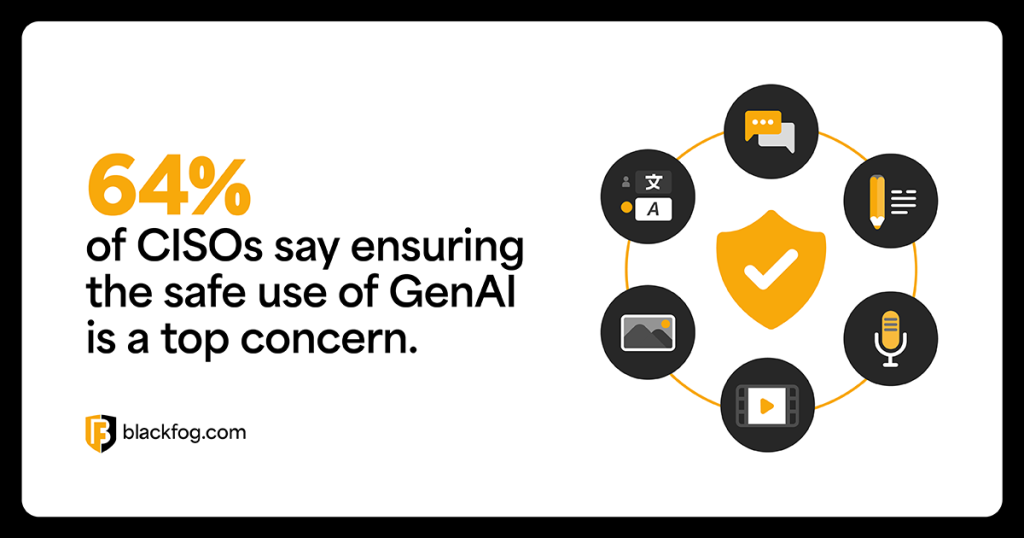
It’s no surprise, then, that according to Proofpoint, 64 percent of CISOs say enabling safe GenAI use is a top priority, with 67 percent having implemented usage guidelines in the last year, signalling a shift in focus from restriction to governance when it comes to AI.
Common AI Security Risks In The Enterprise
AI systems can introduce security vulnerabilities and privacy concerns at every stage, from data ingestion and model training to deployment and integration. These risks are often less visible than traditional threats, but can be just as dangerous, especially when AI is embedded across multiple business functions. Below are some of the most pressing risks organizations must monitor in order to ensure effective compliance and avoid threats like AI data exfiltration.
- Training data exposure: AI models are only as good as the data they’re trained on, so it’s essential they are provided with high-quality, real-world data. However, if training datasets include sensitive or unredacted information and aren’t properly protected, this data can be exposed, either through direct access or through unintended model outputs, creating compliance and reputational risk.
- Model inversion attacks: In this type of exploit, attackers use repeated queries to infer data the model was trained on and use this to reconstruct information or trick AI models into revealing it. For example, an AI trained on customer records might unintentionally leak names or other identifying information, turning the model into a data breach vector.
- Unsecured endpoints: AI tools often integrate with APIs, cloud services and user-facing interfaces. If these endpoints aren’t properly secured with authentication and monitoring, they can be exploited to gain unauthorized access or inject malicious commands into the system.
- Shadow AI usage: Employees may use generative AI tools like ChatGPT or image generators without IT approval. This creates blind spots where sensitive data can be fed into third-party models, violating data protection policies and creating uncontrolled exposure by allowing data to leave the security of the enterprise network.
- Over-permissive access controls: Many AI tools are granted wide-ranging permissions to access internal systems or datasets. Without proper restrictions, a compromised AI agent or user account could be exploited to exfiltrate data, manipulate systems or bypass internal controls.
- Third-party integrations: Organizations often use prebuilt AI services or plug-ins from external vendors. If these aren’t properly vetted for security standards, they can introduce vulnerabilities or serve as a backdoor for threat actors into the enterprise environment.
Building A Security-Conscious AI Culture
Technology alone can’t secure AI. People also play a critical role in AI management. As these tools become deeply embedded in business operations, it’s essential that every employee understands both the advantages and the risks these tools present. A strong security culture starts with awareness and is sustained through training, oversight and clear policy.
To start, employees must be taught how to use AI responsibly, including what data can be shared, which tools are approved and how to spot potential misuse. Without this, even well-meaning staff can become a security risk by using unvetted platforms or exposing sensitive information.
Monitoring how AI is used across the organization also helps reduce shadow AI and enforce accountability. Transparency about where and how AI is deployed not only supports data security but also reinforces compliance and trust. Embedding this culture is one of the most effective long-term defenses against AI-driven threats – without it, firms are likely to be exposed to emerging AI-based threats in the coming years.
Share This Story, Choose Your Platform!
Related Posts
LotAI: How Attackers Weaponize AI Assistants for Data Exfiltration
What happens when attackers use your approved AI tools as a data exfiltration channel? New research reveals how the LotAI technique turns Copilot and Grok into covert C2 relays.

The State of Ransomware: February 2026
BlackFog's state of ransomware February 2026 measures publicly disclosed and non-disclosed attacks globally.
Steaelite RAT Enables Double Extortion Attacks from a Single Panel
Steaelite is a newly emerging RAT that unifies credential theft, data exfiltration, and ransomware in a single web panel, accelerating double extortion attacks.

ClawdBot and OpenClaw: When Local AI Becomes A Data Exfiltration Goldmine
ClawdBot stores API keys, chat histories, and user memories in plaintext files, and infostealers like RedLine, Lumma, and Vidar are already targeting it.

West Harlem Group Assistance Stops Ransomware and Cryptojacking with BlackFog ADX
West Harlem Group Assistance secures its community mission by preventing ransomware and cryptojacking with BlackFog ADX.

Why Traditional Security Fails To Deal With Advanced Persistent Threats
Learn why advanced persistent threats remain a growing cybersecurity risk in 2026 and where organizations must focus to address them.