Skip to content

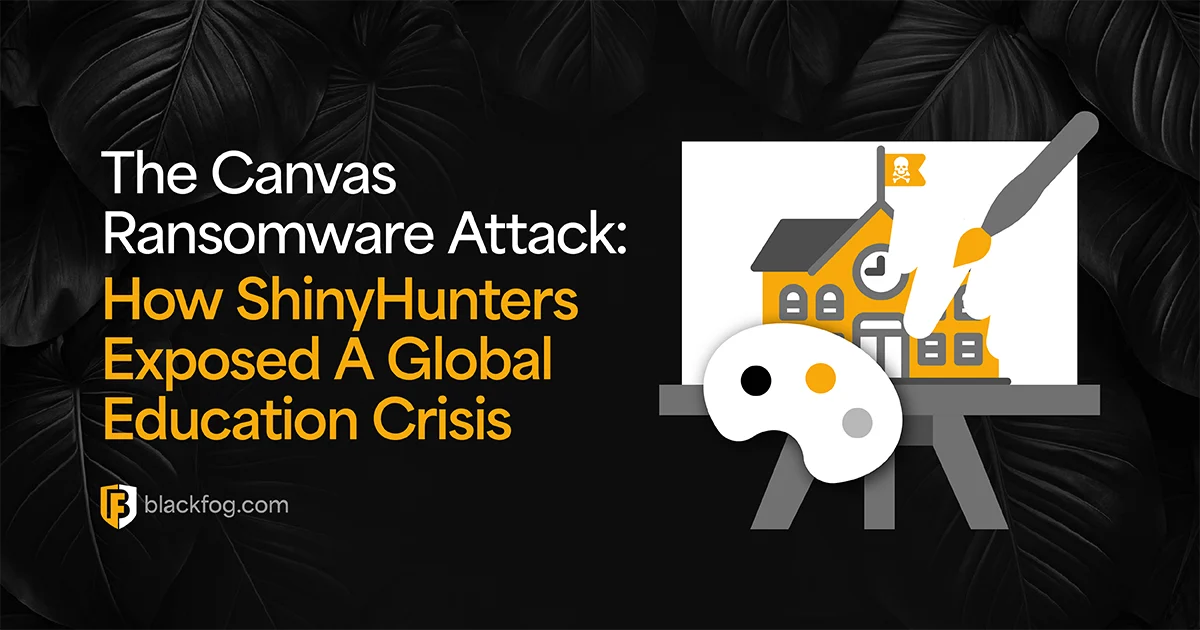
In late April 2026, threat actor group ShinyHunters breached Instructure’s Canvas learning management system, compromising one of the world’s most widely used educational platforms. What followed quickly became one of the most significant education sector cyber incidents in recent years, exposing the personal information of hundreds of millions of students, teachers, and staff worldwide.
The attack serves as a stark reminder that modern ransomware campaigns are no longer focused solely on encryption. Today’s threat actors prioritize data exfiltration, extortion, and reputational damage, often targeting organizations that manage large volumes of sensitive personal information.
For the education sector, the consequences could be felt for years.
How the Canvas Ransomware Attacks Unfolded
According to Instructure, unauthorized actors gained access to Canvas systems around April 25, 2026. The company detected suspicious activity on April 29, revoked access, and engaged third-party forensic investigators.
A public disclosure followed on May 1, with Instructure announcing that the incident had been contained by May 2.
That assurance proved short-lived.
On May 3, ShinyHunters publicly claimed responsibility for the attack and alleged that it had exfiltrated 3.65 terabytes of data from Canvas systems. Four days later, the group escalated the attack by defacing Canvas login pages with ransomware messages, demonstrating that the threat had not been fully neutralized.
The incident highlighted a growing challenge facing organizations worldwide. Detecting an intrusion is only the first step. Preventing data theft and ensuring attackers have been fully removed from the environment is often far more difficult.
The Largest Educational Breach on Record?
The scale of the breach is unprecedented.
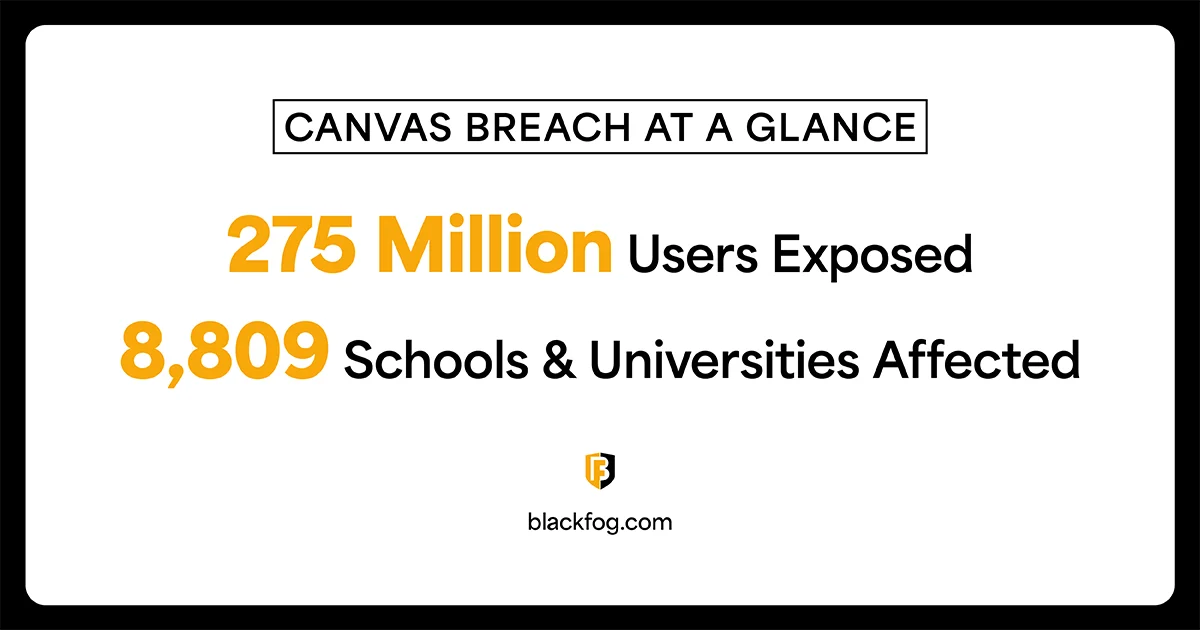
Reports indicate that approximately 8,809 educational institutions worldwide were affected, with an estimated 275 million users potentially exposed.
Among those impacted were:
- 2,514 higher education institutions, including all eight Ivy League universities, Oxford, Cambridge, the National University of Singapore, and the University of Melbourne
- 1,616 K-12 school districts
- Major public school systems including Clark County School District and Houston ISD
- Institutions across the United States, United Kingdom, Canada, Australia, New Zealand, Singapore, Hong Kong, Sweden, and the Netherlands
In the United States alone, Canvas is the leading learning management system in North American higher education, serving approximately 41% of colleges and universities, making it one of the most concentrated repositories of academic data in the world.
The compromised information reportedly included:
- Names
- Email addresses
- Student identification numbers
- Enrolment records
- Academic information
- Private communications between students and educators
For threat actors focused on extortion, this type of data is particularly valuable. Personal information, educational records, and private communications create significant leverage during ransom negotiations and can expose victims to long-term privacy risks.
The Rise of Data Exfiltration Extortion
The Canvas ransomware attack reflects a broader trend reshaping the ransomware landscape.
Cybercriminals are increasingly moving away from traditional encryption-only attacks and focusing on data theft and extortion. By stealing sensitive information before deploying ransomware, threat actors gain additional leverage over victims, even if systems can be restored from backups.
For educational institutions, the risks are particularly severe. Student records, academic histories, financial information, and private communications represent highly sensitive data that can remain valuable to criminals for years.
The Canvas ransomware attack demonstrates how data exfiltration has become the primary objective in many modern ransomware campaigns. While organizations can recover encrypted systems, they cannot recover data once it has been stolen.
By the Numbers: The Growing Data Exfiltration Threat
The Canvas breach is part of a much larger trend affecting organizations worldwide.
- According to BlackFog’s latest ransomware research, 97% of publicly disclosed ransomware attacks now involve data exfiltration, the highest level ever recorded.
- Education remains one of the most targeted sectors due to the vast amounts of personal and financial information maintained by schools, colleges, and universities.
- IBM’s Cost of a Data Breach Report estimates that the average cost of a breach in the education sector exceeds $3.7 million, excluding long-term reputational damage and legal costs.
- Ransomware attacks against educational institutions have increased significantly over the past several years as attackers recognize the operational pressure schools face during critical academic periods.
- Student records often contain a rich combination of personally identifiable information that can be used for identity theft, fraud, and future cybercrime.
The Canvas attack demonstrates how a single compromise of a widely used platform can have cascading effects across thousands of institutions and hundreds of millions of individuals.
Operational Disruption at the Worst Possible Time
The timing of the attack amplified its impact.
Late April and early May represent one of the most critical periods of the academic calendar, with universities and schools conducting final exams, assessments, capstone projects, and graduation preparation activities.
Many institutions experienced outages ranging from several hours to multiple days. Others reported prolonged disruptions affecting coursework access, assignment submissions, grading systems, and communication channels.
Millions of students and educators suddenly found themselves unable to access essential academic resources during one of the most important periods of the year.
The incident demonstrates how cyberattacks against critical digital infrastructure can rapidly evolve into operational crises.
The Controversial Ransom Payment
On May 11, one day before ShinyHunters threatened to release the stolen data publicly, Instructure announced that it had reached an agreement with the attackers and that the compromised information had been destroyed.
Subsequent reporting suggested that the company may have paid a ransom reportedly valued at approximately $10 million, although the exact figure has not been officially confirmed.
The decision reignited a longstanding debate within the cybersecurity community.
Law enforcement agencies and security experts generally discourage ransom payments because they provide no guarantee that stolen data has actually been deleted. Payments also help fund future criminal operations and encourage additional attacks against similar organizations.
Recent industry research has repeatedly shown that organizations that pay ransoms may still experience data leaks, secondary extortion attempts, or future targeting.
Why Data Exfiltration Prevention Matters
The Canvas attack highlights a critical reality facing organizations today: stopping malware is no longer enough.
Many security strategies focus on detecting threats, preventing ransomware execution, and recovering systems after an attack. However, when attackers successfully exfiltrate sensitive data, the damage often extends far beyond operational disruption.
Once data leaves the network, organizations lose control over how it is distributed, sold, or used for future extortion attempts.
For educational institutions, the consequences can be particularly severe. Exposure of student records and private communications can create regulatory obligations, legal liability, reputational harm, and long-term privacy concerns for affected individuals.
This is why organizations must shift their focus beyond detection and recovery and prioritize preventing unauthorized data movement before information leaves the network.
The Canvas breach serves as a reminder that a ransomware attack should not be measured solely by whether systems were encrypted. If attackers are able to steal terabytes of sensitive information, the damage may already be done.
Legal, Regulatory, and Reputational Fallout
The aftermath of the attack continues to grow.
Multiple class-action lawsuits have already been filed against Instructure, alleging failures to adequately safeguard sensitive user data and provide timely notification to affected individuals.
Federal scrutiny is also increasing.
The U.S. House Homeland Security Committee has launched an investigation into the company’s handling of the incident, while federal education and privacy regulators are examining potential compliance issues involving student data protections under FERPA.
For organizations operating globally, additional concerns may arise under privacy frameworks such as GDPR and other regional data protection regulations.
Yet the most significant damage may be reputational.
Educational institutions place enormous trust in learning management platforms. These systems manage academic records, communications, assessments, and personal information for millions of users.
The fact that attackers were reportedly able to reassert their presence after initial containment efforts raises difficult questions about incident response readiness, security controls, and long-term resilience.
Three Lessons from the Canvas Attack
1. Data Theft Is Now the Primary Threat
Organizations should assume that attackers will attempt to exfiltrate sensitive information before deploying ransomware. Security strategies focused solely on preventing encryption are no longer sufficient.
2. Visibility Into Outbound Data Matters
Many organizations have mature defenses against inbound threats but limited visibility into outbound communications. Monitoring and controlling unauthorized data transfers can help identify and stop exfiltration before sensitive information leaves the network.
3. Incident Containment Must Include Data Protection
Detecting an intrusion is only the first step. Effective containment requires understanding what information was accessed, whether data was exfiltrated, and how future theft attempts can be prevented. Without this visibility, organizations risk declaring victory while attackers continue to profit from stolen information.
What Happens Next
The immediate crisis may be over, but the long-term consequences are only beginning.
Schools and universities now face the challenge of notifying affected individuals, assessing regulatory exposure, and rebuilding trust among students, parents, faculty, and staff. Instructure must navigate multiple lawsuits, regulatory investigations, and ongoing scrutiny surrounding its response to the attack.
More broadly, the incident should serve as a warning to the entire education sector.
Learning management systems hold some of the most sensitive information in any organization. They contain student records, private communications, academic histories, and personal information that cybercriminals increasingly view as valuable targets.
The lesson from Canvas is clear: organizations can no longer focus exclusively on preventing system disruption. They must also prioritize preventing data exfiltration.
With 97% of ransomware attacks now involving data theft, protecting sensitive information has become just as important as protecting systems themselves. Organizations that fail to address both risks will continue to face growing financial, operational, regulatory, and reputational consequences in an increasingly data-driven threat landscape.
For the education sector, the Canvas attack may ultimately be remembered not just for its scale, but for what it revealed about the future of ransomware. In today’s threat landscape, data theft is no longer a secondary outcome of an attack. It is often the primary objective. Organizations that fail to recognize that shift risk learning the lesson the hard way.