 Skip to content

Does ChatGPT Store Your Data? What Every Business Needs To Know
As generative AI tools like ChatGPT become embedded in business operations, data governance and privacy are under increasing scrutiny. These platforms offer powerful capabilities, but they also raise serious questions about what happens to the data users input.
For enterprises handling sensitive, proprietary or regulated data in particular, the stakes are high. Whether it’s legal content, proprietary information, internal communications or customer details, uploading the wrong data could result in lasting security or compliance consequences.
As adoption continues to rise, every cybersecurity and compliance professional must understand exactly how these services process, retain and use submitted data – starting with the question: does ChatGPT store your data?
Understanding How ChatGPT Handles Your Data
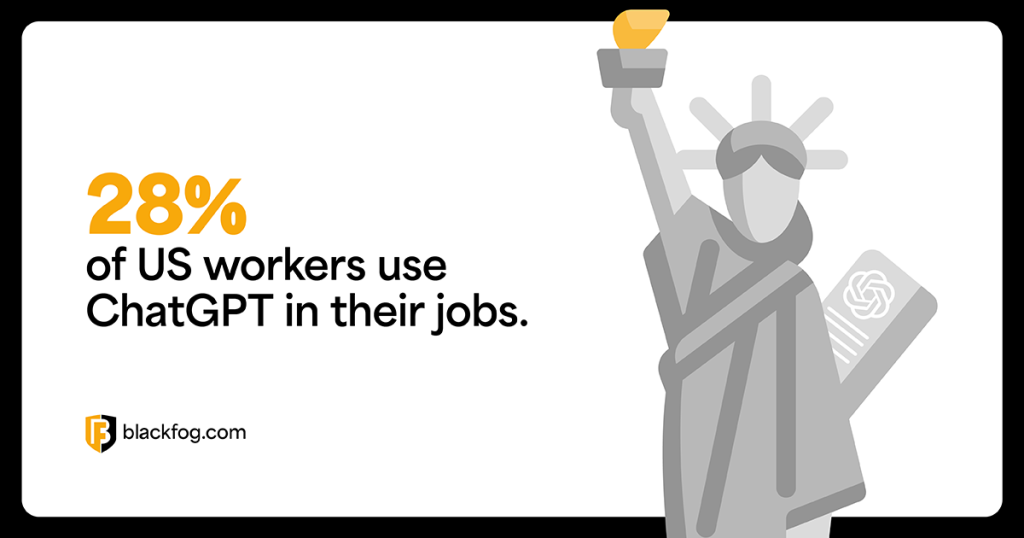
The use of generative AI tools is now a key part of many people’s day-to-day work. According to OpenAI’s own figures, More than a quarter of the US workforce now use ChatGPT for their jobs (28 percent). This means vast quantities of business data being ingested into the platform every day – so it’s vital firms understand exactly how this is used.
When a user enters a prompt into ChatGPT, that data is transmitted over the internet to OpenAI’s servers, where it’s processed by a large language model to generate a response. This means every interaction involves cloud-based infrastructure – nothing happens locally. Similar processing methods are used by most generative AI platforms.
Behind the scenes, inputs are temporarily stored as part of standard operations like system performance, abuse detection and quality assurance. Depending on the version in use, this data may also be reviewed or retained for longer.
Importantly, even brief interactions can contain sensitive information, especially when used for business tasks. That’s why understanding how ChatGPT handles, stores and processes this data is essential. From the moment information is submitted, it enters systems beyond the user’s direct control, making it critical that businesses know which version is being used and what protections are in place.
Is Your Data Used To Train ChatGPT?
OpenAI reviews user-submitted data to improve and train its models, but only in certain cases. Individuals using the free or ChatGPT Plus tiers may have their conversations reviewed and used for training unless they explicitly opt out. Even then, data may be retained temporarily for safety purposes.
By contrast, Enterprise ChatGPT and API users are excluded from training by default. These tiers include contractual assurances that user data remains private and won’t influence model behavior.
This distinction is critical and highlights why companies must enforce only the use of business-grade products like Enterprise ChatGPT. If employees use personal accounts or unapproved tools, sensitive business data such as client details, legal text or intellectual property could unintentionally end up in future outputs.
Storage, Retention And Deletion Policies Explained
Understanding how ChatGPT stores and deletes data is essential for maintaining compliance with internal privacy requirements and external regulations like GDPR. In the free and Plus versions, OpenAI may retain chat data for up to 30 days, even if chat history is disabled. Deleting a conversation from your account does not immediately erase it from OpenAI’s backend systems.
For enterprise users, retention policies are stricter and more transparent, with customer data excluded from training and stored with encryption. However, even in these tiers, organizations must verify how long data persists and where it’s held.
This matters for regulated industries or firms working with sensitive information. Businesses must align platform use with their own data governance frameworks, especially if users expect full deletion or immediate removal of proprietary content.
Why Businesses Must Stay Cautious With Any GenAI Tool
As with many emerging technologies, employees are likely to adopt generative AI tools on their own, whether or not IT has sanctioned them, as evidenced in a recent research project by BlackFog which found that 49 percent of employees admitted to using unsanctioned AI tools at work. This makes it essential for cybersecurity teams to get ahead of the curve by building clear, enforceable frameworks around their use.
Even with enterprise-grade tools, the risks don’t disappear. If employees don’t understand what data can be shared or how these platforms operate, sensitive information could still be exposed. Every organization therefore must take a proactive approach that sets out clear usage policies and provides practical training to ensure users know the privacy implications of their actions.
Generative AI can be a powerful business asset, but only when used responsibly. In today’s environment, these tools are part of the enterprise technology stack and must be treated accordingly. That means applying the same level of security, visibility and governance as any other third-party system that interacts with company data.
Share This Story, Choose Your Platform!
Related Posts
2025 Q4 Ransomware Report
BlackFog’s 2025 Q4 Ransomware Report - The Unrelenting Surge: Ransomware Closes Q4 at Record Levels
Data Breach Prevention: Practical Ways To Stop Data Loss
Data breaches are costly cyberthreats. Learn how data breach prevention strategies reduce risk and stop the most common causes in our guide.

How A Clear Data Loss Prevention Policy Reduces Risk
Find out what's needed to create a strong data loss prevention policy and why this matters in a complex environment.

Getting A Data Loss Prevention Strategy Right
A strong data loss prevention strategy can be the difference between stopping a potential breach early or a costly mistake. Here's what firms need to know when creating one.

How MCP Could Become a Covert Channel for Data Theft
Find out how Model Context Protocol (MCP) could be abused as a covert channel for data theft: five real risks, examples, and mitigations.
Why do Businesses Need Advanced Enterprise DLP Solutions?
Enterprise DLP systems play a key role in protecting businesses from both deliberate cyberattacks and accidental data breaches. Here's why all firms need one.