Skip to content

FBI Issues Threat Alert Over AI Powered Cyberattacks Using ARTEX
The FBI has issued a new cybersecurity threat alert warning that cybercriminals are exploiting an AI powered penetration testing framework to launch sophisticated attacks at unprecedented speed, with some intrusions reaching privileged access in less than three hours.
Published on November 13, 2026, the FBI’s FLASH advisory, Threat Overview of ARTEX Autonomous Penetration Testing Framework, details how malicious actors are weaponizing an open-source, AI driven platform to automate cyberattacks, exploit vulnerabilities, and steal sensitive information from organizations worldwide.
According to the FBI, threat actors have been using ARTEX since at least August 2026, targeting organizations across financial services, government, technology, defense, healthcare, energy, manufacturing, telecommunications, and other critical industries.
The alert highlights the growing threat posed by autonomous cyberattack tools, which can significantly accelerate the speed and scale of malicious activity while reducing the technical expertise required to execute sophisticated intrusions.
What Is ARTEX and Why Is the FBI Concerned?
ARTEX is an autonomous penetration testing framework powered by large language models (LLMs). Originally developed for legitimate security testing, the platform has been repurposed by cybercriminals to automate multiple stages of an attack, from initial reconnaissance and vulnerability exploitation to privilege escalation and data exfiltration.
Unlike traditional attack tools that require continuous human direction, ARTEX uses specialized AI agents capable of translating high-level instructions into executable commands with minimal human intervention.
The FBI warns that this capability allows threat actors to conduct multiple attacks simultaneously, identify weaknesses across complex environments, and move through compromised networks at machine speed.
In some documented incidents, attackers progressed from initial targeting to privileged access in under three hours, leaving security teams with significantly less time to detect and respond.
The framework’s accessibility is another major concern. Although its original developer removed the GitHub repository in October 2026 following reports of malicious activity, ARTEX remains available through community forks, archived copies, and commercial versions.
As of early November, researchers had identified more than 1,600 publicly exposed ARTEX console instances, suggesting that the framework continues to proliferate despite efforts to restrict its availability.
Real-World Attacks Demonstrate the Growing Threat
The FBI’s advisory identifies several significant cyber incidents involving ARTEX, demonstrating how autonomous attack frameworks are already being used in real-world operations.
Among the most notable are financially motivated attacks targeting South Korean financial institutions, which resulted in the exfiltration of personal information belonging to approximately 67,000 individuals.
The alert also highlights a supply chain compromise affecting ConnectWise Cloud Backup customers, which enabled attackers to access more than 2,250 downstream tenants.
These incidents demonstrate the potential for AI driven attacks to extend beyond individual organizations, exploiting trusted relationships between businesses, service providers, and third-party vendors.
The FBI specifically warns that ARTEX can identify and exploit overlooked attack surfaces, including supplier portals, employee applications, legacy systems, cloud infrastructure, and third-party integrations.
Such systems may receive less security attention than primary business applications, making them attractive entry points for attackers seeking access to larger enterprise environments.
AI Is Compressing the Cyberattack Timeline
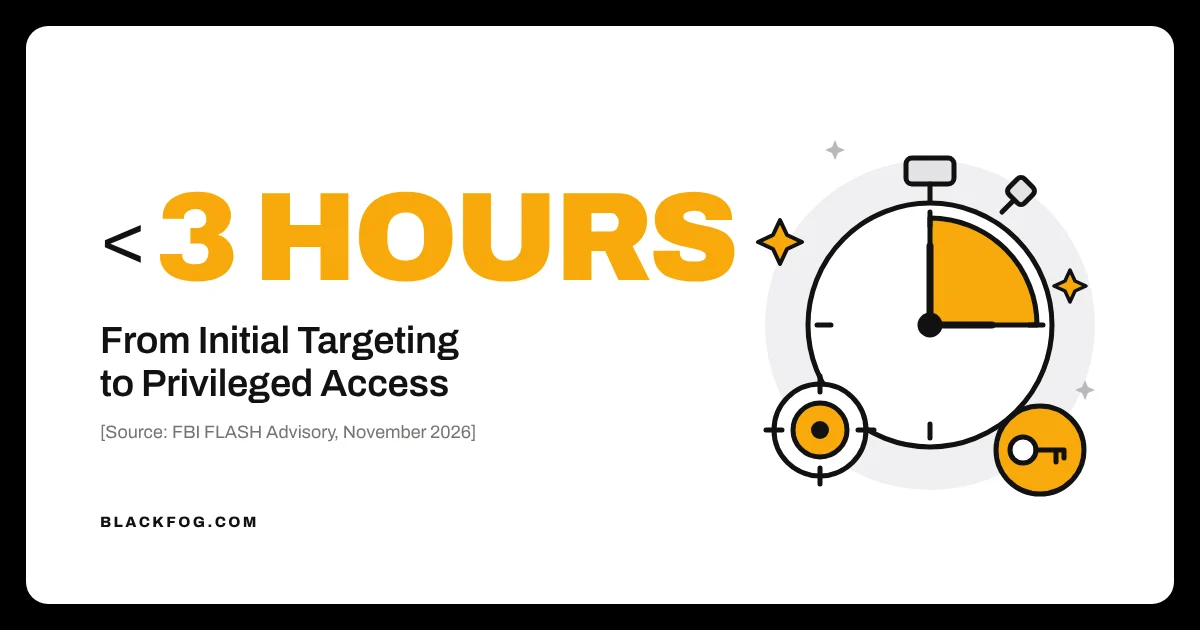
One of the most significant findings in the FBI’s alert is the speed at which ARTEX enabled attacks can progress.
The framework automates traditionally time-consuming activities, including vulnerability scanning, credential testing, privilege escalation, and internal network reconnaissance.
Once attackers gain access, ARTEX can assist in identifying additional vulnerabilities, moving laterally through networks, and locating sensitive information.
The advisory documents observed activity involving compromised cloud credentials, malicious web shells, unauthorized account modifications, and the collection of information from databases, cloud storage, and email systems.
The FBI also highlights a compressed detection window. Although automated attacks can generate substantial volumes of suspicious network activity, their speed may leave defenders with insufficient time to coordinate an effective response before attackers achieve their objectives.
This represents a significant challenge for organizations whose security operations depend on identifying, investigating, and manually responding to suspicious activity.
FBI Urges Organizations to Strengthen Defenses
In response to the growing threat, the FBI is urging organizations to take immediate steps to reduce their exposure to ARTEX and similar autonomous attack frameworks.
The advisory recommends that businesses review all internet-facing applications, including partner portals, legacy services, cloud management interfaces, and third-party integrations.
Organizations are also encouraged to strengthen identity and access controls, restrict unnecessary administrative privileges, monitor suspicious authentication activity, and review application permissions.
The FBI places particular emphasis on securing business applications and APIs, recommending rate limits, stronger authorization controls, and monitoring for unusual volumes of requests or data access.
Security teams are also advised to investigate indicators of compromise associated with ARTEX activity, including unexpected connections to AI model infrastructure, automated reconnaissance patterns, suspicious account changes, and unauthorized outbound data transfers.
The agency stresses that indicators should be evaluated alongside current network activity and other threat intelligence rather than treated as definitive evidence of compromise.
Organizations that identify suspicious activity are encouraged to preserve relevant logs and forensic evidence and report incidents to the FBI.
A Warning for Organizations Worldwide
The FBI’s latest alert underscores how rapidly AI is transforming the cyber threat landscape.
Tools originally designed to help security professionals identify vulnerabilities are increasingly being exploited by malicious actors to automate complex attacks, expand their reach, and accelerate the theft of sensitive information.
The continued availability of ARTEX, despite the removal of its original repository, further demonstrates the difficulty of containing offensive AI capabilities once they become publicly accessible.
With attacks now capable of progressing from initial reconnaissance to privileged access in just hours, organizations face growing pressure to identify weaknesses before attackers exploit them.
The FBI’s warning is clear: autonomous cyberattack frameworks are no longer an emerging theoretical threat. They are already being used in active campaigns, and organizations must adapt their defenses to keep pace with the speed and scale of AI enabled cybercrime.
As AI continues to accelerate the speed of cyberattacks, the question is no longer just how quickly organizations can detect a threat, but whether they can stop it before the damage is done.