Skip to content


October 30, 2026 | Developing Story
Cryptocurrency exchange Binance has suffered a major cyberattack involving approximately $6.3 billion in digital assets, potentially making it the largest cryptocurrency theft in history.
The world’s largest cryptocurrency exchange confirmed the security incident on October 29, 2026, revealing that attackers had gained unauthorized access to its systems and transferred billions of dollars in cryptocurrency.
Approximately $3 billion in affected assets have been frozen through coordinated efforts with blockchain partners. However, billions remain unaccounted for as investigators work to trace the stolen funds.
Binance temporarily suspended withdrawals while security teams investigated the breach and has pledged to cover all losses.
How Did the Binance Cyberattack Happen?
Early findings suggest that the attack may have originated from a compromised laptop belonging to a Binance DevOps engineer. A follow up statement from Binance has now confirmed that it’s “uncovering additional points of breach”.
According to Binance’s initial investigation, the compromised device may have enabled attackers to access an internal service container and initiate unauthorized cryptocurrency withdrawals.
However, subsequent investigations have uncovered additional potential breach points, suggesting a more complex attack. Binance has stated that there is currently no evidence that cryptocurrency wallet private keys were exposed.
The precise attack method has not yet been confirmed.
North Korean Hackers Suspected
Blockchain intelligence firms TRM Labs and Chainalysis have linked the attack to TraderTraitor, a North Korean state-sponsored hacking group.
The group has previously been associated with several high-profile cryptocurrency thefts, including the $1.5 billion Bybit attack in February 2025.
Investigators estimate that approximately $6.36 billion was transferred from Binance wallets across 10 blockchains, with most of the activity taking place within just 20 minutes.
Binance is working with law enforcement and blockchain investigators to identify those responsible and recover the stolen assets.
What Does the Attack Mean for Cybersecurity?
While the full technical details remain unclear, the possibility that the breach began with a compromised employee laptop highlights the significant risks associated with endpoint compromise and privileged access.
If confirmed, the attack would demonstrate how a compromised device could potentially provide attackers with access to critical infrastructure and enable the rapid theft of billions of dollars in digital assets.
The incident also reinforces the importance of preventing unauthorized access, detecting suspicious activity, and stopping attackers from moving laterally or exfiltrating valuable data and assets.
Latest Developments
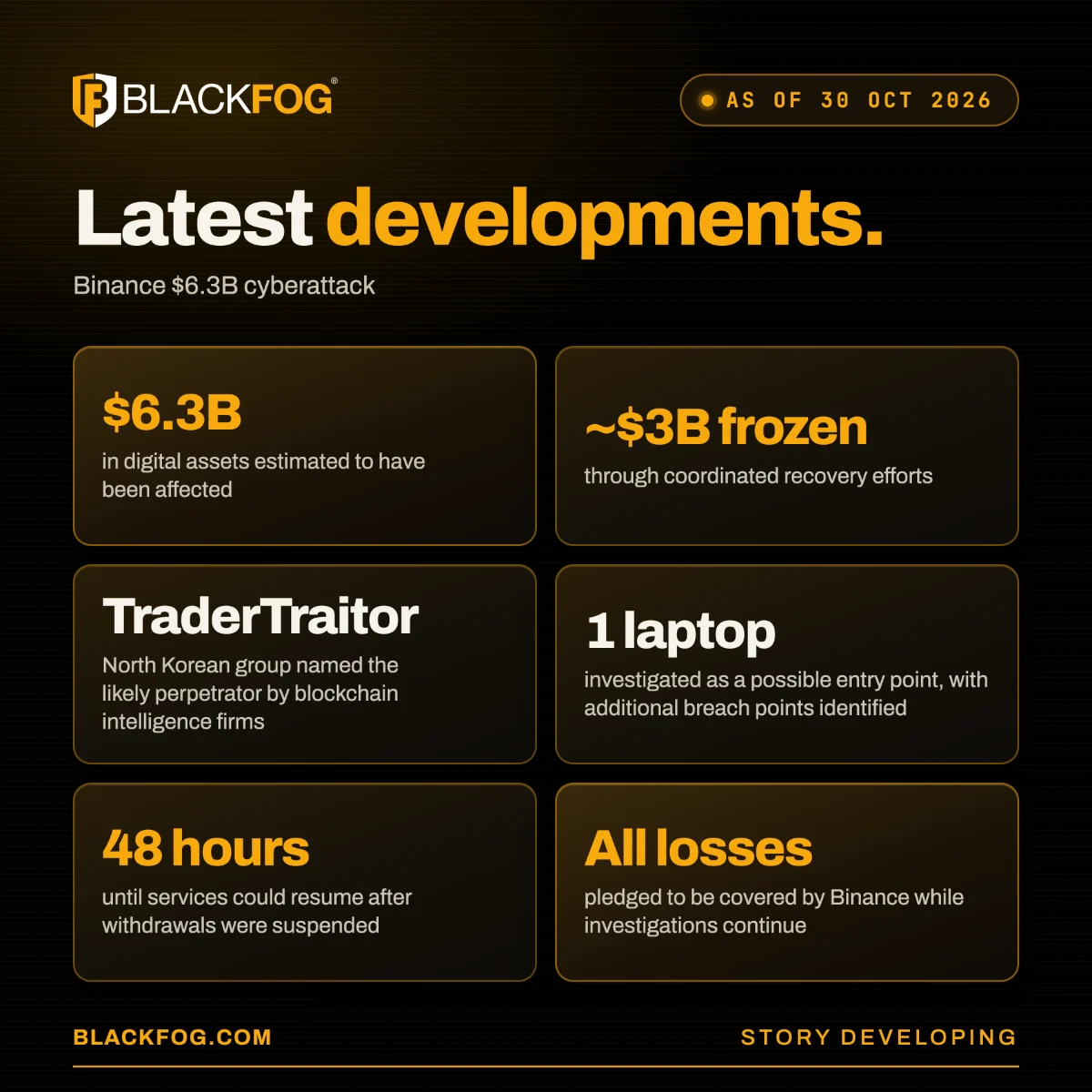
As of October 30, 2026:
- $6.3 billion in digital assets is estimated to have been affected.
- Approximately $3 billion has been frozen through coordinated recovery efforts.
- North Korean hacking group TraderTraitor has been identified as the likely perpetrator by blockchain intelligence firms.
- A compromised employee laptop is being investigated as a possible initial entry point, although additional breach points have been identified.
- Withdrawals have been temporarily suspended, with Binance indicating that services could resume within 48 hours.
- Binance has pledged to cover all losses while investigations continue.
This is a developing story. BlackFog will continue to update this article as new information becomes available.
Latest Developments – November 2, 2026
Several significant developments have emerged following the $6.3 billion Binance cyberattack, including the restoration of withdrawal services, progress in replacing stolen assets, and confirmation from US authorities regarding those responsible.
FBI Attributes Attack to North Korean Hackers
The FBI has officially attributed the attack to TraderTraitor, a North Korean state-sponsored hacking group previously linked to several major cryptocurrency thefts, including the $1.5 billion Bybit attack in February 2025.
The attribution confirms earlier assessments from blockchain intelligence firms TRM Labs and Chainalysis, which identified North Korean involvement shortly after the breach was discovered.
The FBI has also identified hundreds of cryptocurrency addresses associated with the stolen funds and warned that attackers are converting assets into Ethereum before potentially laundering them through decentralized finance platforms and cryptocurrency exchange services.
US authorities are urging cryptocurrency exchanges and other digital asset providers to block transactions associated with the identified addresses.
Binance Replaces 95% of Stolen Assets
Binance has announced that it has replaced approximately 95% of the $6.3 billion in stolen cryptocurrency, using company funds to replenish affected assets.
The exchange has reportedly allocated approximately $6.34 billion to cover the financial impact of the attack, drawing on its Secure Asset Fund for Users (SAFU), Futures Insurance Fund, and corporate treasury.
The remaining 5% consists of less liquid cryptocurrencies that may take longer to replace.
Importantly, the replacement of these assets does not mean the stolen funds have been recovered from the attackers. Binance has committed to absorbing the financial losses rather than passing them on to customers.
Withdrawals Resume Following Security Checks
Binance began restoring cryptocurrency withdrawals on November 1, following a temporary suspension introduced in response to the attack.
The reopening prompted significant customer activity, with the exchange reporting approximately $3.64 billion in net withdrawals during the initial hours after services resumed.
This represented approximately 2.1% of Binance’s total assets.
Despite the initial surge, Binance reported that withdrawal activity was stabilizing and deposit volumes remained substantial.
Multiple Breach Points Under Investigation
While initial findings suggested that attackers may have gained access through a compromised employee laptop, Binance has since confirmed that investigators identified additional potential breach points.
The exchange has described the incident as a complex attack involving multiple stages rather than a single compromised device or isolated security failure.
Binance has also reported evidence of malicious software designed to erase traces of attacker activity, potentially complicating forensic investigations.
The precise methods used to compromise the exchange’s infrastructure remain under investigation.
What Does This Mean for Cybersecurity?
The Binance attack highlights the speed and sophistication of modern cyber threats, particularly when attackers gain access to critical financial infrastructure.
With billions of dollars in digital assets reportedly transferred in approximately 20 minutes, the incident demonstrates how rapidly attackers can exploit compromised systems and move valuable assets beyond an organization’s immediate control.
The discovery of multiple potential breach points also reinforces the importance of layered security, continuous monitoring, and preventing unauthorized activity across endpoints and critical infrastructure.
As investigations continue, the incident serves as a reminder that detecting suspicious activity is only part of the challenge. Organizations must also be able to prevent attackers from moving laterally and transferring valuable assets once access has been gained.
This remains a developing story. BlackFog will continue updating this article as further details emerge.