 Skip to content

6 Hidden Consequences Of Data Breach Incidents Businesses Must Prepare For
When a data breach occurs, the immediate consequences are well understood. Lost revenue from operational downtime, ransomware payments, regulatory penalties and the reputational fallout that follows a public disclosure are all well-documented outcomes that most businesses should be aware of. But for many organizations, these initial impacts are just the beginning.
The full consequences of a data breach can take months or even years to fully materialize. They may include legal proceedings, ongoing financial pressures and internal disruption that compound long after the incident itself has been resolved. Understanding this broader picture is essential, while having a robust data breach response plan in place before an incident occurs is one of the most effective ways to limit the damage and ensure a faster, more complete recovery.
Here are six often-overlooked issues that can cause long-term harm following a serious data breach.
1. Civil Litigation And Class Action Exposure
Regulatory fines represent only one aspect of the legal consequences businesses face following a breach. Civil litigation brought by affected individuals can be equally damaging, as well as considerably harder to draw a line under.
Class action lawsuits and compensation claims can take years to resolve, consuming legal resources, generating sustained negative press coverage and keeping the incident in the public eye long after the organization would prefer to have moved on. For instance, Capital One’s 2019 breach resulted in a $190 million consumer settlement, but this was reached only after more than two years of litigation.
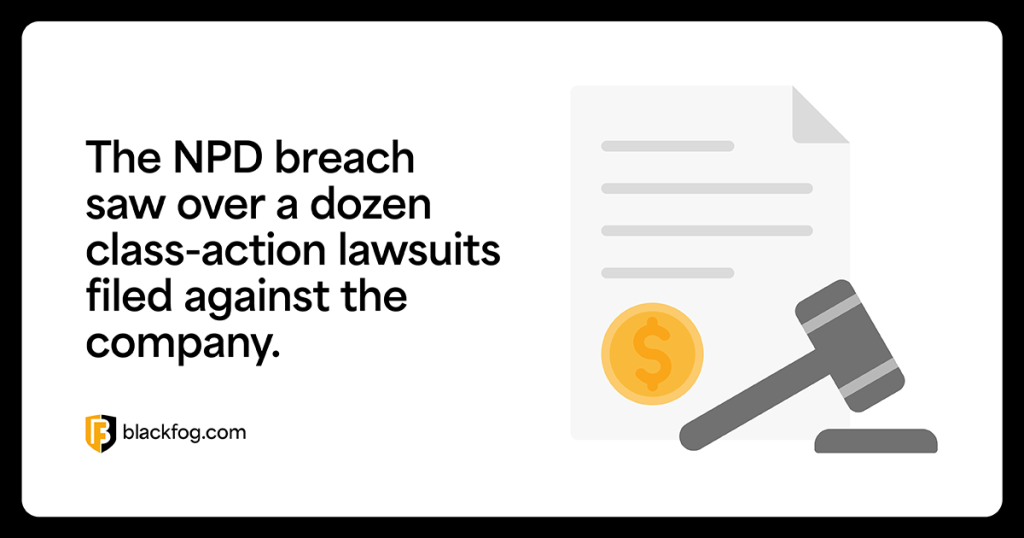
For smaller organizations, the consequences can be terminal. Following the NPD breach in 2024, for instance, parent company Jerico Pictures was reported to have faced over a dozen class-action lawsuits, which proved financially unsurvivable, contributing directly to the company’s bankruptcy and eventual closure within months of the incident becoming public.
2. Lost Contracts And Exclusion From Future Opportunities
For businesses operating in B2B markets, the commercial fallout from a data breach can be especially severe. Enterprise clients and public sector bodies increasingly have cybersecurity requirements directly in their contracts. A confirmed breach can therefore trigger termination clauses, resulting in immediate lost revenue and ending relationships that may have taken years to build.
The risk does not stop with existing contracts. Many procurement frameworks, particularly in the public sector and regulated industries such as financial services and healthcare, require demonstrable evidence of robust security practices. This is especially the case for partners expected to process or store sensitive data on their behalf. A breach can disqualify a business from future bidding processes entirely, effectively blacklisting it from significant revenue opportunities.
3. Long-Term Financial Health Consequences
The financial damage from a breach extends well beyond immediate recovery costs. For example, credit rating agencies now treat major incidents as material financial events. Following the 2023 MGM Resorts cyberattack, Moody’s Investors Service formally designated the incident as ‘credit negative‘, citing issues including potential loss of revenue, reputational risk and direct costs for remediation and investigation. A reduced credit outlook raises borrowing costs and makes the business less attractive to investors, damaging long-term growth and harming proposed mergers and acquisitions.
Other longer-term financial costs include expenses related to cyber insurance. An incident can lead directly to higher premiums, reduced levels of coverage or stricter underwriting requirements upon renewal.
4. Ongoing Regulatory Attention
Paying a fine does not mark the end of a business’ regulatory exposure following a breach. In many cases it signals the beginning of a prolonged period of intense scrutiny. Regulators increasingly impose ongoing obligations in the aftermath of significant incidents, including mandatory security audits, strict compliance certifications and regular reporting requirements that can persist for years.
These obligations consume internal resources, require ongoing investment in compliance infrastructure and keep the organization under a stricter level of oversight.
5. Reduced Competitive Advantage
Not all data breaches target personal information. For many businesses, the more damaging long-term consequence is the theft of intellectual property, trade secrets, product roadmaps or strategic plans. This is data that can hand competitors a significant and lasting advantage, whether by purchasing it illicitly from threat actors or if it is revealed publicly.
When proprietary R&D data is exfiltrated, years of investment can be undermined overnight. A competitor with access to unreleased product plans, pricing strategies or merger and acquisition activity can move to undercut, replicate or outmaneuver the affected business before it has even finished dealing with the immediate fallout of the breach.
Unlike direct financial losses, which can be quantified and potentially recovered, the erosion of competitive advantage is often difficult to detect, harder to prove and almost impossible to fully reverse.
6. The Human Cost Inside The Business
Finally, it’s important to remember that the consequences of a data breach are not limited to systems and balance sheets. The internal impact on people and culture can be equally damaging.
For starters, high-profile incidents can make recruitment difficult, particularly for skilled security and technical roles where candidates scrutinize an employer’s security culture closely. Retaining existing talent also becomes harder as employees grow uncertain about the organization’s stability and leadership.
A poorly handled breach can foster a culture of blame and paranoia that undermines morale, affects long-term collaboration and leaves employees worried about how data, including their own, is being handled.
The Right Steps To Avoid These Issues
The good news is that many of these consequences are not inevitable. Organizations that invest in strong cybersecurity controls, deploy proactive monitoring tools and maintain a well-defined, regularly tested breach response plan that learns from previous data breach examples are significantly better positioned to limit the damage when an incident occurs. Preparation cannot eliminate risk entirely, but it can mean the difference between a manageable disruption and a threat to the long-term survival of the business.
Frequently Asked Questions About Data Breach Consequences
What are the most common consequences of a data breach?
Operational downtime, regulatory fines, legal costs and reputational damage are the most immediate impacts. Longer-term consequences include civil litigation, lost contracts and higher insurance premiums.
How do data breaches affect a company’s reputation?
Significantly and often lastingly. Delayed or poor disclosure accelerates the damage. Research consistently shows a material proportion of consumers will stop using a company’s services following a breach.
What financial losses can businesses face after a data breach?
IBM’s 2025 report puts the average US breach cost at $10.22 million. Indirect expenses, such as lost contracts, higher insurance premiums and increased borrowing costs can push the total considerably higher.
Can a company recover from a major data breach?
Most can, but recovery depends on response quality. Businesses with tested plans and cyber insurance fare better. A significant proportion of small firms hit by a serious breach fail within six months.
How long do the effects of a data breach typically last?
Immediate disruption may resolve within weeks, but litigation, regulatory investigations and reputational damage can persist for years. Class-action lawsuits routinely take several years to reach settlement.
What steps can businesses take to minimize breach consequences?
Invest in preventive controls, staff training and proactive monitoring. Have a tested response plan, cyber insurance and pre-drafted notification templates ready before an incident occurs.
Share This Story, Choose Your Platform!
Related Posts
American Alarm Moves From Reactive Security To Proactive Data Protection With BlackFog
Discover how American Alarm strengthened cybersecurity with BlackFog, preventing data exfiltration, improving AI governance, and reducing cyber risk.
What Are Recommended Best Practices For Implementing AI Assurance In Organizations?
Discover best practices for implementing AI assurance to build secure, transparent and trustworthy AI usage across your organization.
What Are The Latest Trends In AI Assurance Standards And Regulations?
Explore the latest AI assurance standards, regulations and governance trends shaping transparent, compliant and trustworthy AI.
How Can AI Be Used to Improve Cybersecurity Measures?
Learn how AI improves cybersecurity through faster threat detection, incident response, AI monitoring, behavioral analysis and security automation.
What Should I Look For In An AI Security App To Ensure My Device Is Protected?
Learn what to look for in an AI security app, from real-time visibility and data protection to defense against AI-powered threats, to keep your device secure.
What Are The Main Safety Concerns Associated With AI Development?
Explore the Main Safety Concerns Associated With AI Development, from security and privacy to bias and oversight, and why responsible AI governance matters.