 Skip to content

Key Things Businesses Must Know About Data Breach Compensation
When a data breach occurs, the immediate focus tends to fall on containment, recovery and regulatory compliance. But the financial consequences extend well beyond operational downtime and regulatory fines. Compensation claims from affected individuals represent a significant and often underestimated liability. This is an issue that can persist long after the incident itself has been resolved.
Data breach litigation is now increasingly common, especially in the US. As such, businesses face the very real prospect of civil claims running alongside regulatory investigations, each compounding the overall financial and reputational damage. For organizations handling sensitive personal data, the potential for compensation claims is a central risk that must be understood, planned for and directly addressed within any data breach response plan.
When Can Customers File Claims After A Data Breach?
Not every breach will automatically result in a valid compensation claim. Whether a legal case is likely to succeed generally depends on a range of factors, including whether the organization was negligent in protecting data or failed to meet its security and regulatory obligations.
Claims become significantly more likely when a breach results in demonstrable consequences such as financial fraud, identity theft or the misuse of personal data. Delayed disclosure can often be an aggravating factor. While many firms may feel a temptation to keep incidents quiet for fear of negative media coverage, the longer individuals are left unaware, the greater the potential harm and the stronger the case against the organization responsible.
What Types Of Harm Can Be Claimed For?
Claimants do not always need to demonstrate direct financial loss to pursue compensation. The exposure of sensitive data such as financial details, login credentials and health data may also pose other issues for victims they can claim for. Some of the reasons why people may seek compensation include:
- Direct financial losses from fraud or unauthorized transactions
- Costs of protective measures such as credit monitoring
- Emotional distress and anxiety
- Loss of privacy
- Time and inconvenience spent resolving identity theft issues
How Compensation Differs From Regulatory Fines
Regulatory fines and civil compensation claims are distinct but closely related data breach consequences that can arise simultaneously from the same incident. Fines are imposed by regulatory bodies – such as the US Federal Trade Commission, the UK’s Information Commissioner’s Office or state attorneys general – for failing to meet legal obligations. It’s important to note that these penalties cannot be used to directly compensate victims.
Compensation claims, on the other hand, are brought by affected consumers seeking damages for the harm they have suffered, either as individuals or as part of a class-action suit.
The two are not mutually exclusive and regulatory outcomes can directly influence civil proceedings. A formal finding of negligence, an enforcement notice or a regulatory reprimand can significantly strengthen the position of claimants in a civil case, as it provides independent validation that the organization failed in its obligations.
Businesses should therefore anticipate that regulatory action will not mark the end of their legal exposure but may instead signal the beginning of a second wave of liability.
Class Actions And Group Claims: Why They Can Become So Costly
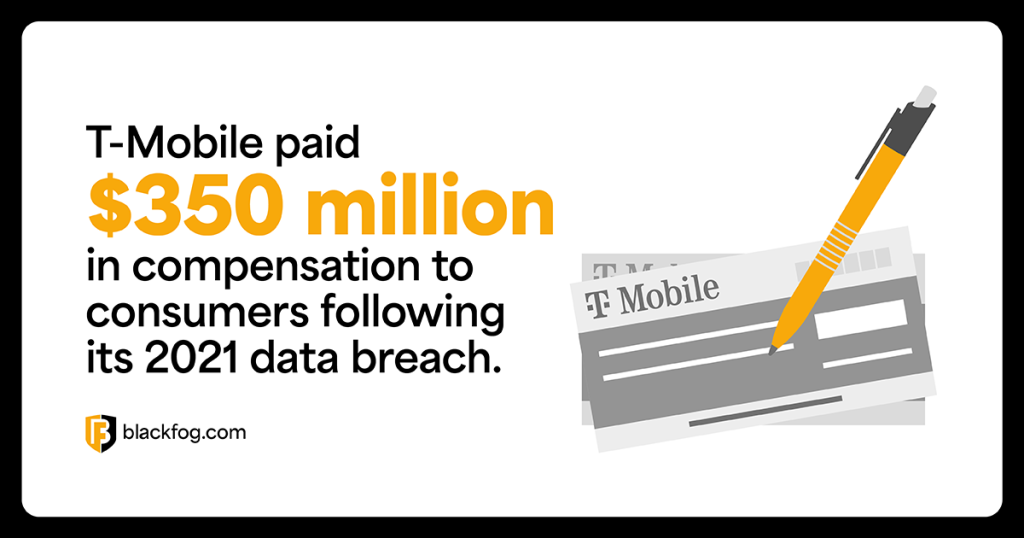
When a data breach affects large numbers of individuals, class action lawsuits allow those affected to pursue compensation collectively, rather than filing individual claims. With thousands or even millions of people joining a single legal action, total liability for the breached organization can increase dramatically.
The financial consequences can be significant. For example, T-Mobile agreed to pay $350 million to resolve claims it failed to prevent a 2021 breach affecting 76 million Americans. Elsewhere, Capital One paid $190 million to settle consumer claims arising from its 2019 breach, on top of an $80 million regulatory penalty paid separately.
These cases illustrate how civil and regulatory liability can stack up simultaneously. For smaller organizations, the stakes can even be existential. The 2024 NPD breach generated over a dozen class action lawsuits before the company had even publicly acknowledged the incident. As a result, its parent company Jerico Pictures filed for bankruptcy within months and NPD ceased operations entirely. This makes it a clear example of how compensation liability can completely overwhelm a business.
How A Strong Response Plan Reduces Compensation Liability
The strength of a business’ response to a breach directly influences its legal exposure. Courts and claimants alike consider whether an organization took reasonable steps both before and after an incident. A well-documented response plan is one of the most effective ways to demonstrate that it did.
Key steps that can reduce compensation liability include:
- Invest in preventive security measures: Encryption, access controls and regular vulnerability assessments demonstrate a proactive security posture.
- Document everything: Maintaining clear records of security policies, training and response actions provides critical evidence of reasonable conduct.
- Notify affected individuals promptly: Swift, transparent notification limits harm to those impacted and reduces the grounds for negligence claims.
- Preserve forensic evidence: A documented chain of evidence supports the organization’s legal position throughout any subsequent proceedings.
- Test and rehearse the response plan: Regular tabletop exercises demonstrate organizational preparedness and a genuine commitment to data security.
Data breach compensation claims represent a growing and potentially existential threat to businesses of all sizes. Organizations that invest in strong defenses, maintain clear documentation and respond to incidents swiftly and transparently are significantly better placed to limit their exposure, both in the courtroom and in the court of public opinion.
Data Breach Compensation FAQs
Can consumers receive compensation after a data breach?
Yes, if an organization failed to adequately protect their data. Claimants may be entitled to compensation for financial losses, identity theft risks, emotional distress and time spent resolving issues arising from the breach.
How much compensation can victims receive for a data breach?
It varies significantly depending on the harm suffered and the scale of the breach. Individual payouts in major class action settlements have ranged from modest flat payments to tens of thousands of dollars for documented financial losses.
What proof is needed to claim data breach compensation?
Claimants typically need to demonstrate that their data was compromised and that they suffered harm as a result. Documented financial losses strengthen a claim, though emotional distress and risk of harm may also be recognized without direct financial evidence.
How long do data breach compensation claims take?
Timelines vary considerably. Large class action cases can take several years to resolve. For example, the Capital One settlement took nearly three years from breach to approval, with payments following years later.
Do all data breaches lead to compensation claims?
No. Claims are most likely when negligence can be demonstrated or harm has resulted. Breaches where reasonable security measures were in place and notification was handled promptly are less likely to generate successful claims.
Share This Story, Choose Your Platform!
Related Posts
American Alarm Moves From Reactive Security To Proactive Data Protection With BlackFog
Discover how American Alarm strengthened cybersecurity with BlackFog, preventing data exfiltration, improving AI governance, and reducing cyber risk.
What Are Recommended Best Practices For Implementing AI Assurance In Organizations?
Discover best practices for implementing AI assurance to build secure, transparent and trustworthy AI usage across your organization.
What Are The Latest Trends In AI Assurance Standards And Regulations?
Explore the latest AI assurance standards, regulations and governance trends shaping transparent, compliant and trustworthy AI.
How Can AI Be Used to Improve Cybersecurity Measures?
Learn how AI improves cybersecurity through faster threat detection, incident response, AI monitoring, behavioral analysis and security automation.
What Should I Look For In An AI Security App To Ensure My Device Is Protected?
Learn what to look for in an AI security app, from real-time visibility and data protection to defense against AI-powered threats, to keep your device secure.
What Are The Main Safety Concerns Associated With AI Development?
Explore the Main Safety Concerns Associated With AI Development, from security and privacy to bias and oversight, and why responsible AI governance matters.