Skip to content

Attack Surface Management: An Essential Step In Reducing Cyber Risk
As businesses accelerate digital transformations, their networks, applications, cloud services and connected devices all continue to expand at pace. This growth unlocks new opportunities for productivity and innovation, but it also creates potential security problems. With so many connections, this means many more entry points for cybercriminals looking to gain access to systems, exfiltrate sensitive data and deploy ransomware or other malicious campaigns. Every new endpoint, SaaS tool, API or remote worker represents another potential weakness for attackers to exploit.
To stay secure and minimize cyber risk in this environment, effective attack surface management is now foundational to modern cybersecurity. Organizations can no longer afford to wait until threats materialize before acting. Instead, they must adopt a proactive rather than reactive approach that covers every endpoint, delivering continuous monitoring and complete visibility into every corner of a network.
Without this foundation in place, security teams are left defending assets they cannot see against threats they cannot anticipate. Here’s what you need to know to protect yourself from these threats across growing network environments.
What Is Attack Surface Management?
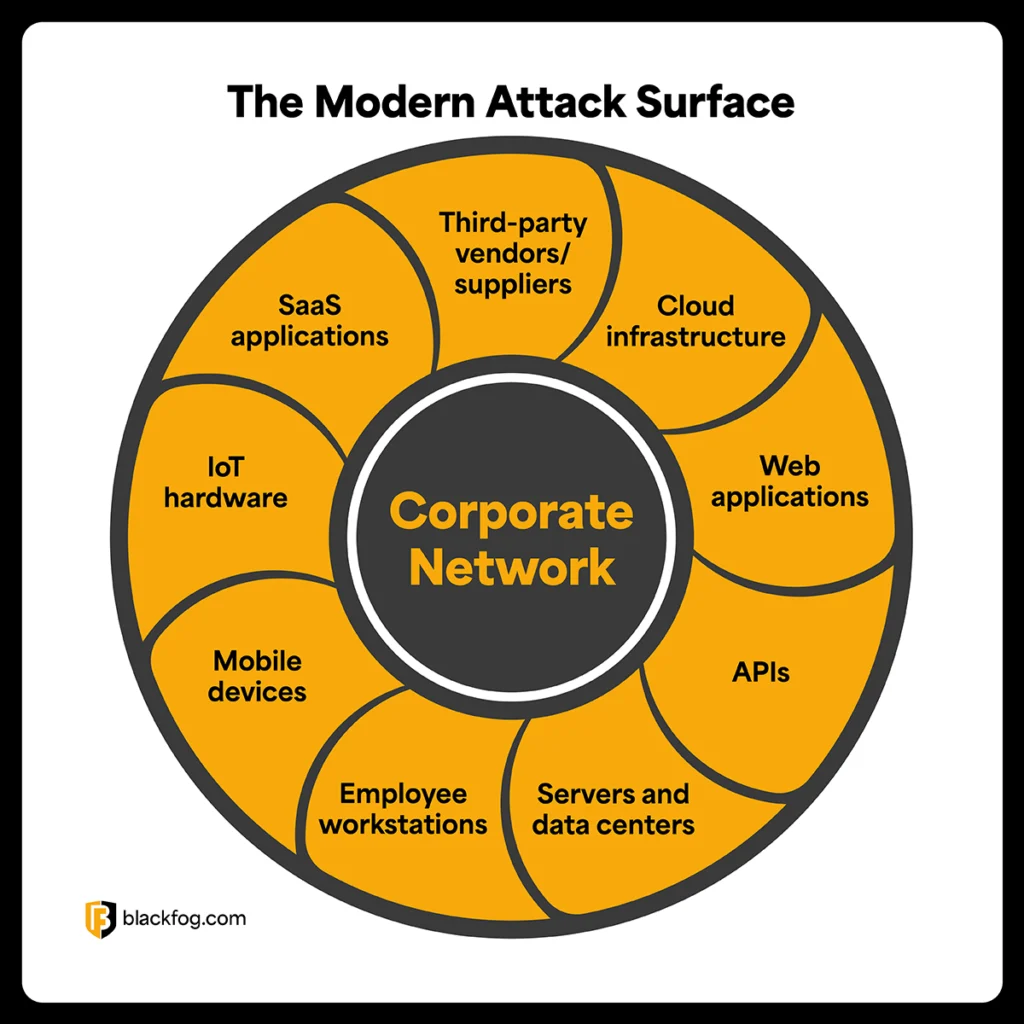
Attack surface management (ASM) refers to the process of discovering, inventorying, classifying and monitoring all digital assets an organization owns that could be targeted by cyberattackers. The attack surface itself covers every possible entry point through which an unauthorized user could attempt to access systems or data.
In modern businesses, the attack surface will typically include:
- On-premises servers, workstations and networking equipment
- Cloud infrastructure, storage buckets and Software-as-a-Service (SaaS) applications
- Web applications, APIs and customer-facing portals
- Employee endpoints, mobile devices and Internet of Things (IoT) hardware
- Third-party integrations and supply chain connections
- Shadow IT and forgotten or unmanaged assets
By maintaining real-time visibility across all these elements, ASM helps security teams identify vulnerabilities and potential breaches before attackers can exploit them. These activities can be extended through cyber asset attack surface management, which focuses specifically on cataloging and securing every digital asset connected to the organization, not just those on the perimeter.
ASM differs from traditional vulnerability management in scope and mindset. Where vulnerability scanning looks inward at known assets to find patchable flaws, ASM takes an outside-in view, continuously mapping what attackers can actually see and reach from the public internet.
“Attack surface management has become essential as organizations continue expanding across cloud, SaaS and remote environments. Every unmanaged device, exposed service or overlooked connection increases the risk of compromise and data exfiltration.
The challenge for security teams is visibility. You can’t secure what you can’t see. Effective attack surface management gives organizations the ability to continuously identify and reduce exposures before cybercriminals can exploit them, helping minimize cyber risk across increasingly complex networks.”
– Darren Williams, CEO and Founder, BlackFog
Why Attack Surfaces Are Expanding Rapidly
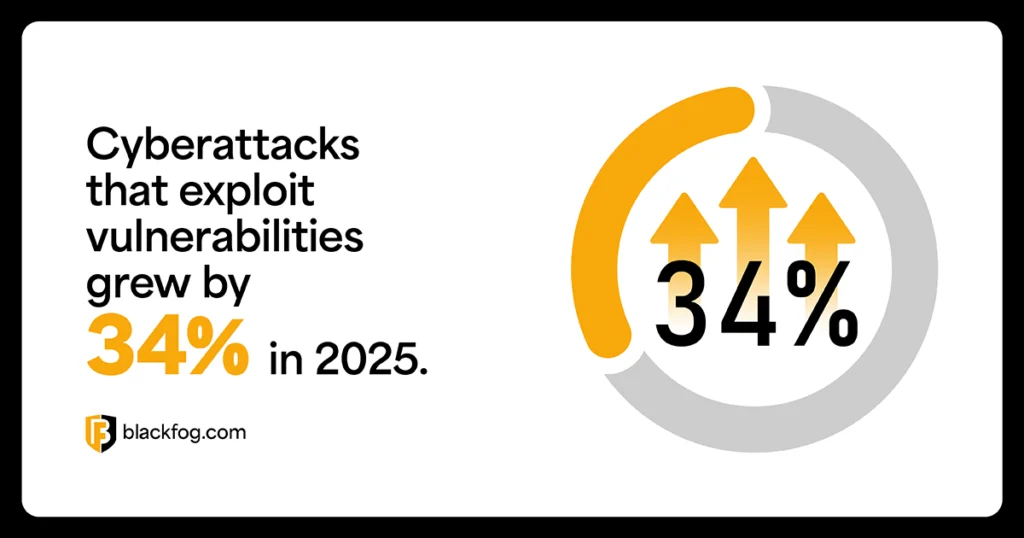
The need for robust attack surface management is being driven by major changes in the way many firms operate. This ranges from closer integration with suppliers and other partners to greater use of unsecured, web-based tools by employees. In turn, this opens many new doors for attackers. For example, according to the Verizon 2025 Data Breach Investigations Report, the number of breaches with third-party involvement doubled in the last 12 months, while exploitation of vulnerabilities grew by 34 percent over the same period.
Among the key trends impacting the attack surface that businesses must be aware of are:
- Cloud adoption and SaaS sprawl: As organizations migrate workloads across multi-cloud environments, keeping track of every asset becomes exponentially harder, especially as departments and even individual employees adopt a range of SaaS tools. Misconfiguration of these assets remains one of the leading causes of security incidents, often exposing resources to the public internet without IT teams realizing.
- Remote and hybrid work: Distributed workforces mean corporate data is increasingly accessed from beyond traditional network perimeters. Employees connecting from personal devices and home networks introduce endpoints that security teams struggle to monitor consistently.
- Shadow IT: When employees adopt unsanctioned tools without IT approval, they create dangerous blind spots. Unauthorized apps, file-sharing services and AI tools all expand the attack surface in ways invisible to security teams, especially when employees are relying on consumer-grade tools that IT and security teams have no visibility into.
- Third-party integrations: Every vendor connection, API and partner portal extends the attack surface into environments the organization does not directly control, making supply chain risk a growing concern.
The Real Risks Of An Unmanaged Attack Surface
When attack surfaces are left unmanaged, the consequences can be severe. Every unknown or unmonitored asset represents a potential entry point for attackers, and without clear visibility into what exists across the network, threats can go undetected for weeks or even months.
The most immediate risks include ransomware breaches that lead to data exfiltration, where sensitive information is quietly extracted from the network for use in extortion or sold on dark web marketplaces.
Traditional endpoint security tools may not detect such activity until it’s too late. When there are so many unmonitored endpoints, it can be easy for cybercriminals to locate an exfiltration point that does not attract attention. Organizations with fragmented security tooling may also suffer from alert fatigue, where the sheer volume of notifications causes genuine threats to be lost in the noise.
Real-world consequences of these failures can be devastating. Beyond the immediate financial costs of remediation and potential ransom payments, businesses face regulatory penalties for failing to protect sensitive data, as well as lasting reputational harm. If customers and partners lose confidence in an organization’s ability to keep their information safe, they will quickly take their business elsewhere.
Key Components Of Effective Attack Surface Management
Effective attack surface management solutions are not a single tool or process, but a combination of multiple moving parts that must work together. Each component plays a distinct role, but it is only when they complement one another that organizations can achieve truly comprehensive protection.
Asset Discovery And Visibility
Businesses cannot protect what they cannot see. Asset discovery involves continuously identifying every device, application and service connected to the network across all environments, including cloud, on-premises and remote. Rather than relying on periodic audits, effective ASM requires real-time detection that flags new connections the moment they appear.
Risk Prioritization
Not all vulnerabilities pose the same level of threat. Effective ASM requires the ability to analyze endpoints and assess which carry the highest likelihood of being exploited by attackers. By scoring and ranking risks based on factors such as exposure level, asset criticality and known threat activity, security teams can focus their limited resources on areas where they will have the greatest impact.
Continuous Attack Surface Monitoring
In a rapidly evolving threat landscape, point-in-time assessments are no longer sufficient. Continuous attack surface monitoring provides real-time insight into changes across the network, from newly connected devices to shifting configurations. This proactive approach ensures security teams can identify and respond to emerging exposures before attackers have the opportunity to exploit them.
Attack Surface Reduction Strategies
Identifying and monitoring risks is only part of the solution. Organizations must also actively pursue attack surface reduction by removing unnecessary assets, closing unused ports, enforcing least-privilege access controls and retiring legacy systems. The goal is to shrink the number of potential entry points without disrupting the workflows and tools that employees depend on daily.
Attack Surface Management Vs Traditional Security Approaches
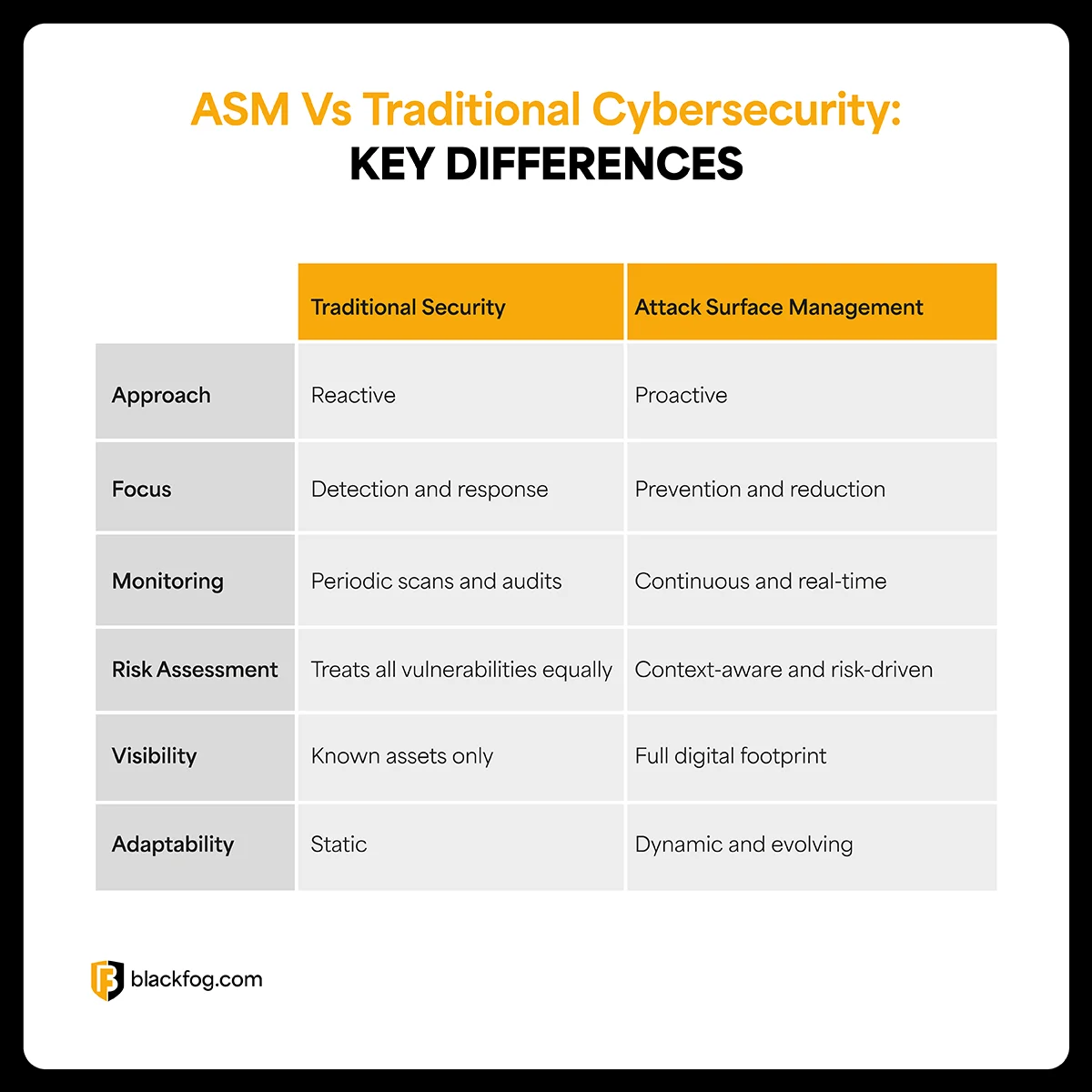
Traditional security strategies may have served organizations well for many years, but they were not designed for today’s always-on, hyperconnected environments. Therefore, they often struggle to keep up with the pace of modern threats.
Conventional approaches tend to be reactive, focusing on detecting and responding to incidents after they have already breached the perimeter. They also rely heavily on periodic vulnerability scans and scheduled audits, which provide only a snapshot of the security posture at a single point in time.
An effective attack surface management strategy, on the other hand, comes with a major change of mindset. It is a fundamentally more proactive approach where, rather than waiting for threats to materialize, the tools continuously map and monitor every asset across the organization’s digital footprint. They look for anomalies and evaluate every interaction and traffic movement. Where traditional tools focus on detection after the fact, ASM emphasizes prevention by identifying and addressing exposures before they can be exploited.
This approach is also inherently more context-aware. Instead of treating every vulnerability equally, ASM evaluates risk in relation to the specific asset, its exposure level and its importance to the business. This risk-driven methodology ensures security teams are not simply chasing alerts but making informed decisions about where to direct their limited resources for maximum effect.
How To Choose The Right Attack Surface Management Approach
Selecting the right ASM solution requires careful evaluation. Organizations need to ensure it aligns with their security needs and existing infrastructure so it does not create blind spots or require extensive reworking of a network environment. When assessing potential options, here are some key considerations to keep in mind:
- Continuous monitoring capability: Effective ASM demands always-on visibility that can detect changes to the attack surface the moment they occur, not hours or days later. A good solution must offer genuine real-time monitoring rather than periodic scans.
- Visibility across all assets: Full discovery and tracking across every environment is essential, as any gaps in coverage represent potential blind spots that attackers can exploit. Firms should ensure their chosen solution covers cloud, on-premises and remote endpoints, as well as third-party connections.
- Integration with existing security stack: The technology should work seamlessly alongside current tools such as SIEM platforms, endpoint protection and threat intelligence feeds. Strong integration reduces complexity and ensures security teams can act on insights without switching between disconnected systems.
- Prevention-first capability: The best ASM tools go beyond identifying risks to actively reduce the attack surface. This includes supporting proactive measures such as automated remediation and policy enforcement rather than simply flagging issues for manual review.
The Future Of Attack Surface Management In Cybersecurity
The threat landscape is evolving rapidly and ASM must evolve with it. Several emerging trends will shape how organizations protect themselves in the years ahead, including:
- AI-driven threat detection: Artificial intelligence will play an increasingly central role in ASM, delivering intelligent analysis that can identify patterns, predict emerging threats and flag anomalies across vast environments far faster than human analysts.
- Automated remediation: As attack speeds accelerate, manual response is becoming unsustainable. Next-generation ASM solutions will move beyond identifying risks to automatically remediating them, from closing exposed ports to revoking excessive access permissions.
- Deep integration with threat intelligence: Real-time threat intelligence feeds will become embedded directly into ASM workflows, ensuring decisions are based on the latest information about active threats rather than outdated data.
- AI as part of the attack surface: As organizations deploy AI agents and tools across their operations, these assets themselves become part of the attack surface. They must therefore be accounted for within ASM strategies.
As the attack surface continues to grow in complexity, organizations cannot afford to rely on reactive strategies. The businesses best positioned to manage cyber risk will be those investing in technologies that monitor the entire attack surface in real-time and take proactive steps to prevent issues such as data exfiltration before they occur. This means that attack surface management will be a critical part of modern cybersecurity.
Attack Surface Management FAQs
What is included in an organization’s attack surface?
An organization’s attack surface encompasses every digital asset that could potentially be accessed by an attacker. This includes servers, endpoints, cloud instances, web applications, APIs, IoT devices, SaaS tools, third-party integrations and any shadow IT assets operating outside the visibility of security teams.
How is attack surface management different from vulnerability scanning?
Vulnerability scanning focuses on identifying known weaknesses within recognized assets. Attack surface management takes a broader approach, continuously discovering all assets across the organization’s digital footprint, including those that are unknown or unmanaged, then assessing and prioritizing risk across the entire environment.
What is external attack surface management?
External attack surface management (EASM) focuses specifically on assets that are visible and accessible from the public internet. This includes websites, exposed servers, DNS records, cloud resources and any other externally facing infrastructure that an attacker could discover and target.
How does continuous attack surface management improve security?
Continuous ASM replaces point-in-time assessments with real-time monitoring that detects changes as they happen. This means new assets, misconfigurations and emerging exposures are identified immediately rather than remaining undetected until the next scheduled scan, significantly reducing the window of opportunity for attackers.