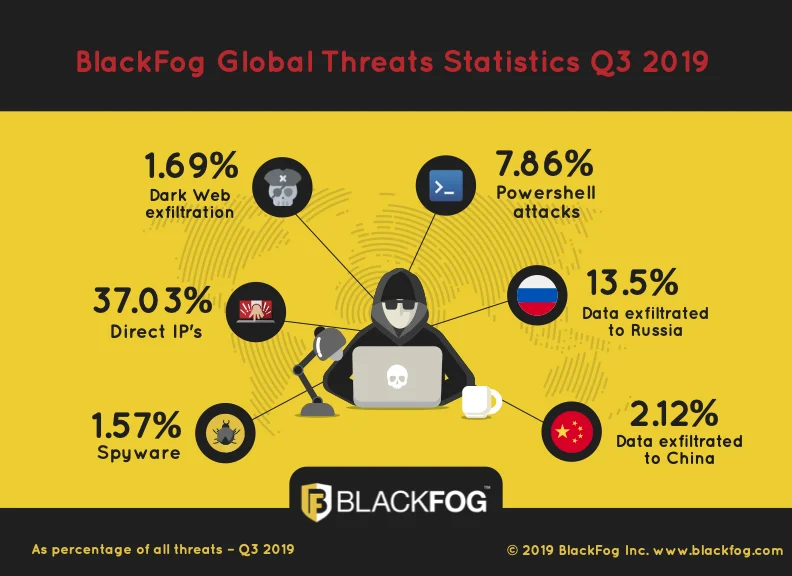
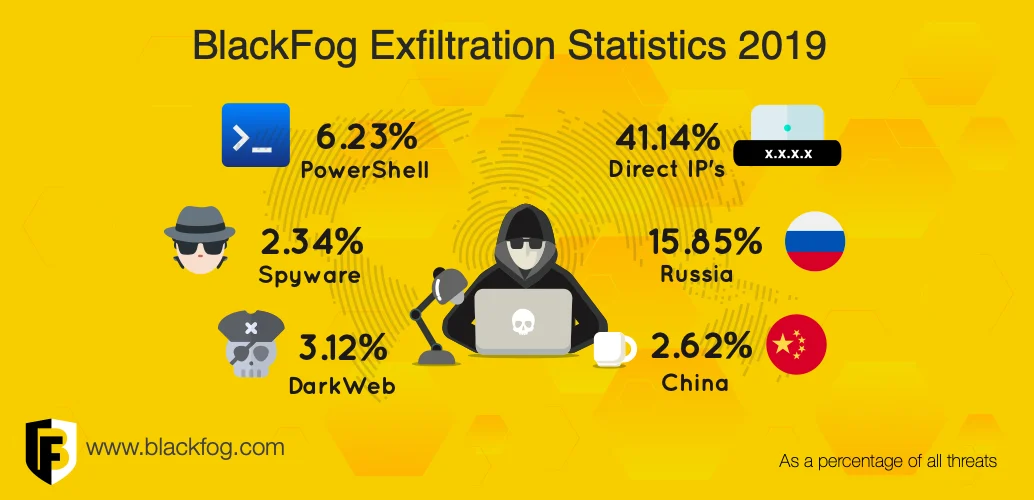
BlackFog collected threat statistics on a global basis for the first 9 months of 2019 (threat statistics Q3 2019). What follows is a summary of the data exfiltration across all endpoints including Windows, Mac, Android and iOS devices.
Dark Web
BlackFog saw a steady decline in Dark Web exfiltration over the quarter representing 1.69% of traffic, a decrease from both Q1 and Q2. However, BlackFog saw a dramatic increase in PowerShell attacks in Q3 at 7.86%, which is the highest we have seen for the year, up from 3.51% in the previous quarter. This reflects the increased use of the PowerShell for fileless attacks and the increase in the number of ransomware attacks globally.
Geographic Exfiltration
BlackFog reported a decrease in data exfiltrated to Russia this quarter, totaling 13.5% compared to 19.43% in the previous quarter. Exfiltration to China remained relatively stable at 2.13% compared with 2.62% in the previous quarter.
Direct IP’s and Spyware
No significant changes were found with other core statistics. Spyware represented 1.57%, and the use of direct IP’s for communicating with servers represented 37.03% of all attacks.

Major Threat Vectors
Share This Story, Choose Your Platform!
Related Posts
RAG Poisoning: How Hidden Prompts Steal Corporate Data
RAG poisoning lets attackers hijack AI assistants like Copilot to exfiltrate corporate data. Here is how the attack works and how to defend against it.
What Are Attack Surface Reduction Rules And How Should Firms Implement Them?
What are attack surface reduction rules? Learn what this process involves and how it can be used to block common cyberattack behavior.
How To Measure A Reduction In Attack Surface Over Time
What must firms keep in mind in order to ensure they're seeing progress in their attack surface reduction efforts?
What Is Attack Surface Management In Cybersecurity?
Learn what attack surface management in cybersecurity is, how it works and why it's essential for identifying and reducing security risks.
How Privilege Management Reduces Attack Surfaces
Discover how privilege management reduces attack surfaces by limiting access, enforcing least privilege and preventing unauthorised system access.
How Exposure Management Platforms Reduce Attack Surface
Learn how exposure management platforms reduce attack surface through continuous visibility, risk prioritisation and proactive security.