Skip to content

Pioneered by BlackFog, ADX or Anti Data Exfiltration is a technique used to prevent unauthorized data from leaving a device. By targeting multiple parts of the kill chain, ADX effectively blocks the activation and spread of cyberattacks. Since cyberattacks, especially ransomware focuses on data theft for extortion this has become an important technique to thwart modern polymorphic attacks that cannot be stopped by traditional Endpoint Detection and Response (EDR) or anti-virus (AV) solutions.
ADX monitors all outgoing data from endpoint devices. This gives it a markedly smaller footprint than other solutions, such as firewalls or DLP, which examines incoming and outgoing traffic at the edge of the network. ADX solutions are lightweight enough to run on mobile devices and do not need to work on the corporate network. Instead of comparing traffic to a dictionary of attack signatures, ADX solutions use AI to identify unusual behaviors on a user-centric basis. ADX limits the ability for users – including privileged users and administrators – to send sensitive data outside the network.
Navigation
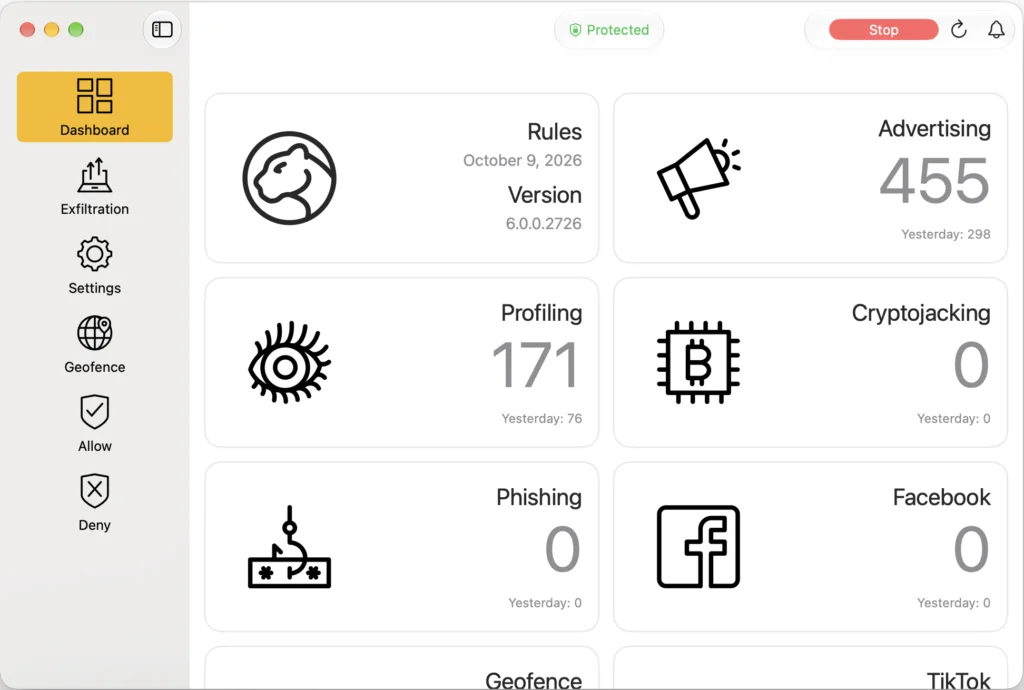
BlackFog’s main dashboard provides a quick overview of the state of the application organized across various tiles. These include statistics about the types of blockings, product version and current rules.
Dashboard tiles often have drill-downs to show additional detail such as the source of the block, process and IP address.
Clicking on any tile brings up further information about the blocked events to reveal further information. These events can be filtered using the search option in the top right of the window.
Exfiltration
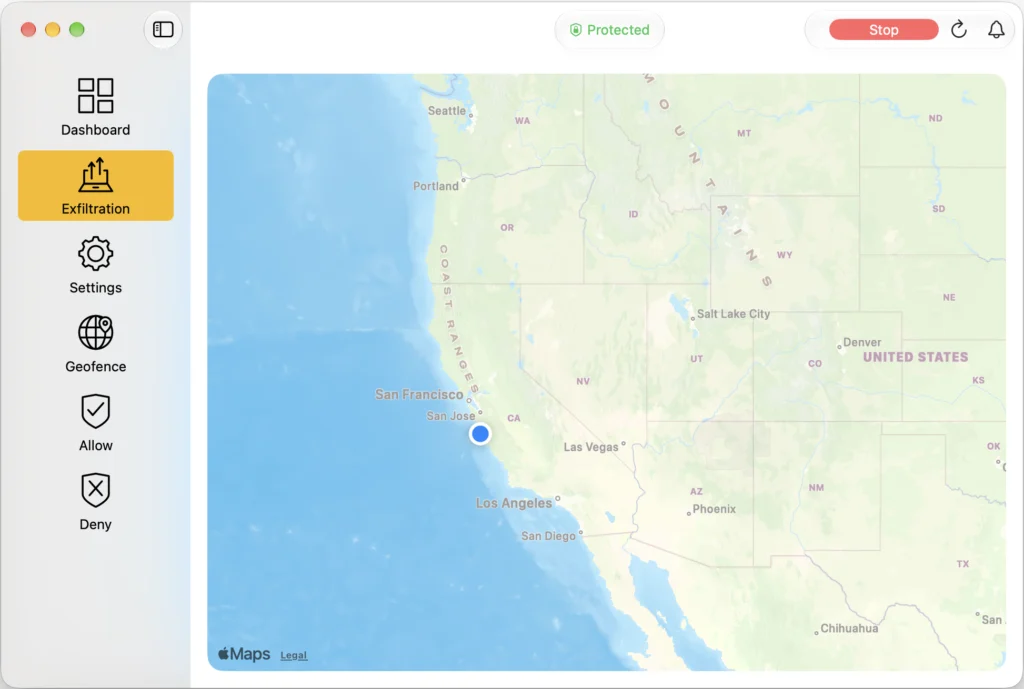
BlackFog monitors all outbound traffic by default and blocks based upon restricted geographies in the Geofence settings. These blocks can be seen on a global map with the BlackFog logo.
Clicking on the icon will also reveal the IPv4 or IPv6 address that was blocked in that region.
Geofence
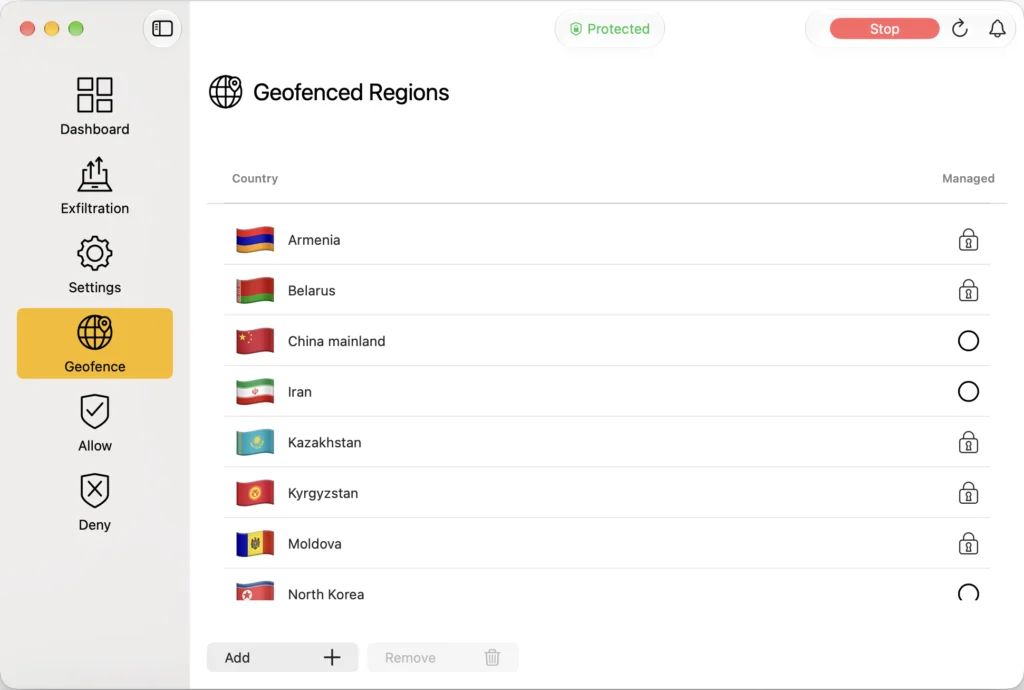
Geofence defines which countries are blocked by default. They consist of both locally defined regions with the circle icon (selectable), and managed regions, with the lock icon, defined by your administrator.
Locally defined regions can be managed within the application using the Add and Remove buttons, whereas managed regions are defined in the BlackFog Console.
Settings
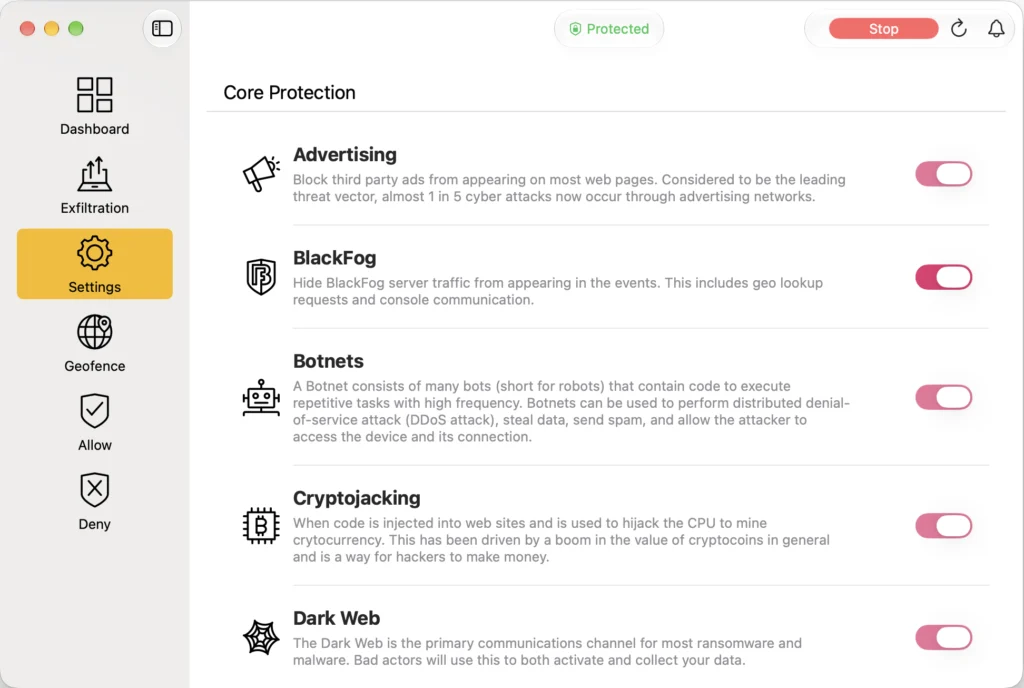
BlackFog provides a comprehensive list of blocking categories and techniques used by cyber criminals. These can be turned on and off using the right handle toggle switch in the list.
If a toggle is greyed out, it is not available locally. Instead this option is managed remotely by an administrator using the BlackFog Console.
Allow Deny
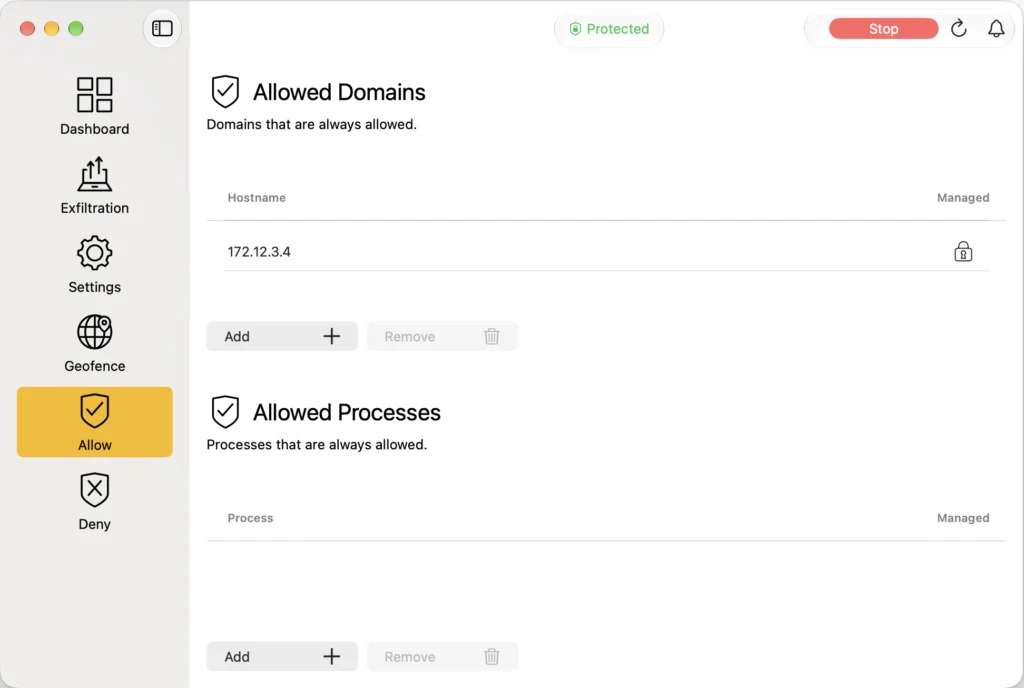
Allow and Deny lists provide the ability to include or exclude various domains and/or processes from the default blocking algorithms. While the system defaults are usually adequate to provide the best protection, there are some situations where users or organizations may want to restrict various site access, or specifically allow them.
Examples include development machines that often use direct IP addresses to access local servers rather than domains, or foreign servers in restricted regions that may need specific allow rules, rather than opening up an entire region.