 Skip to content

Addressing The AI Cybersecurity Risks Lurking Beneath Everyday Activities
Generative AI is now embedded in everyday business operations, but many organizations lack clear visibility into how these systems actually handle data. While shadow AI is a significant concern, it represents only one part of a much broader risk landscape. Even when employees are using approved AI tools, data can still be processed, stored and reused in ways that are opaque and difficult to track.
AI systems often operate as black boxes, making it challenging for security teams to understand how inputs influence outputs or where information ultimately resides. This lack of transparency creates new cybersecurity risks, particularly when sensitive or regulated data is involved. Poor visibility into AI operations means organizations may struggle to enforce governance, monitor behavior or identify issues before data exposure or compliance problems occur. As a result, tackling these blind spots must be a top priority.
Why Visibility Matters In AI-Driven Environments
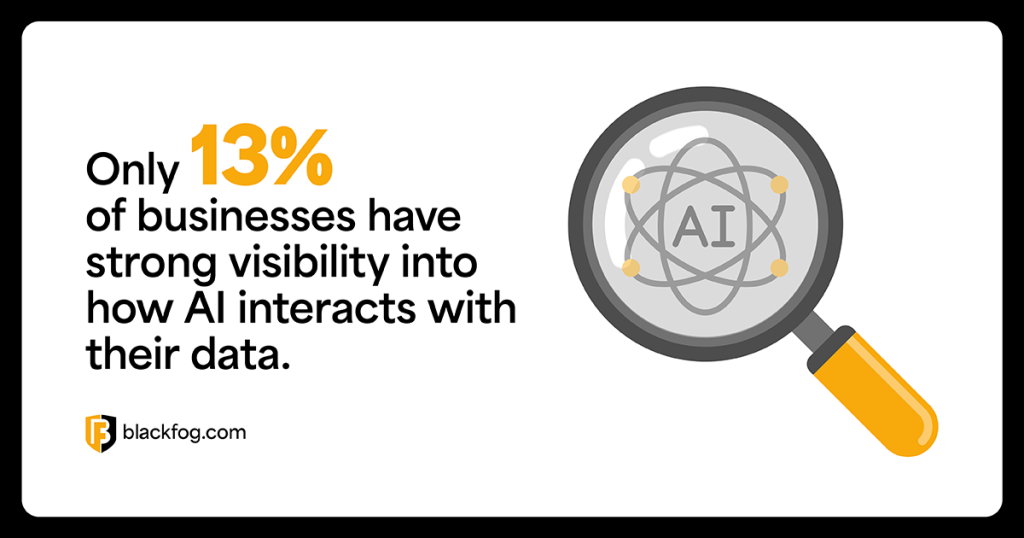
Enterprise adoption of AI continues to outpace security readiness. This can create significant visibility challenges. According to one report from Cyera, for example, 83 percent of enterprises use AI, yet only 13 percent have strong visibility into how it touches their data and just nine percent monitor AI activity in real-time.
Because AI systems often process and store data in opaque ways, they can create blind spots that traditional tools cannot monitor or control. Without clear insight into their company’s AI interactions, cybersecurity teams struggle to enforce data privacy and data protection policies, which are essential for safeguarding sensitive information. Limited visibility also makes it difficult to detect early indicators of issues like data exfiltration that take advantage of vulnerabilities in platforms, allowing AI cybersecurity threats like ransomware to develop unnoticed.
The Data Security Risks Created By Limited AI Visibility
When organizations lack clear visibility into how generative AI tools handle enterprise data, they expose themselves to a range of data security and operational risks. These risks can exist even when AI tools are formally approved and used with good intent. Potential dangers firms may face as a result of this include:
- Unclear data storage and processing paths: Many generative AI platforms process data across multiple systems and locations, often involving third-party infrastructure. Organizations may not know where data is stored, how long it is retained or whether it is processed in different regions. This lack of clarity increases the risk of data residency issues, policy violations and unintended exposure of sensitive information.
- Lack of transparency into decision-making: Generative AI systems rely on complex models that weigh multiple inputs, contextual signals and historical data when producing outputs. In many cases, even the developers of these platforms can struggle to explain the decision-making of the systems. However, without insight into these processes, businesses cannot easily determine whether sensitive or regulated data is influencing outcomes, raising concerns around privacy, fairness and compliance.
- Difficulty monitoring AI behavior over time: AI systems are not static. Model updates, changes in training data and evolving usage patterns can alter how systems behave over time. Without continuous visibility, organizations may fail to detect emerging risks, model drift or unintended data usage that develops gradually.
- Limited ability to audit AI interactions: Many AI tools provide limited logging capabilities or incomplete audit trails. This makes it difficult for security teams to investigate incidents, reconstruct data flows or demonstrate compliance during audits and is especially risky if employees are using their own, consumer-grade solutions rather than approved tools. When issues arise, organizations may struggle to prove how data was used or whether policies were followed.
The Compliance And Regulatory Risks Of AI Visibility Gaps
Limited visibility into AI usage creates particular risk for organizations operating in regulated sectors or handling highly sensitive information. Industries such as healthcare, finance and government are subject to strict requirements around how data is accessed, processed, stored and shared, so must therefore monitor their use of AI particularly closely.
Regulations like HIPAA impose clear obligations to protect personal and medical data and to maintain detailed records of how that data is handled. The use of AI tools, particularly when they are adopted as shadow AI, can undermine these requirements if organizations cannot clearly demonstrate where data has gone or how it has been used.
Even broader regulations such as GDPR require enterprises to maintain transparency and control over personal data. Businesses must be able to explain data flows, retention periods and who is able to access information. When AI systems operate without sufficient visibility, meeting these obligations becomes far more difficult. In this context, AI visibility gaps can translate directly into compliance failures, regulatory penalties and long-term reputational damage.
Ensuring AI Visibility Risks Are Not Overlooked
AI protection is overlooked because many organizations focus their security efforts on user behavior and external threats. Preventing misuse, phishing and ransomware understandably takes priority, particularly as attack volumes continue to rise. In this context, the operational risks introduced by AI systems themselves can appear less urgent.
These risks are compounded when AI adoption outpaces governance and security review processes. New tools and use cases are introduced quickly, while oversight, monitoring and policy enforcement lag behind. As a result, gaps in visibility can persist unnoticed.
To address this, businesses need clear insight into how data moves through AI systems, where it is processed and how AI behavior evolves over time. Without proactive oversight of these activities, organizations may only become aware of AI-related risks after data has already been exposed. Visibility is therefore a foundational requirement for safe and sustainable AI adoption in an era of ever-evolving cybersecurity and data privacy threats.
Share This Story, Choose Your Platform!
Related Posts
What Enterprises Need To Know About Cyber Governance, Risk And Compliance
Learn all about cyber governance, risk and compliance in 2026 and why this must be a consideration at the highest levels of all organizations.
Navigating Essential Cybersecurity Compliance Standards: What To Know
There are a range of cybersecurity compliance standards firms of all sizes must deal with, including mandatory and voluntary frameworks. Here's what you need to know.

Understanding The Requirements Of Information Security Compliance
Learn precisely what information security compliance entails and the various steps that go into making this effective.

The Importance Of Effective Cybersecurity Services For Small Businesses
Find out why cybersecurity services for small businesses are more in-demand than ever as cybercriminals shift their focus to less-sizable enterprises.
Cybersecurity Compliance: What You Need Without Hiring A CISO
Find out what's required to ensure cybersecurity compliance and how this can be achieved without the need for a full-time CISO.

How Cybersecurity Startups Manage Compliance And Security Certifications
For cybersecurity startups, prioritizing compliance early builds trust, accelerates growth, and ensures security standards align with evolving threats and customer expectations.