 Skip to content

Putting AI Protection Into Practice Across The Enterprise
AI adoption is accelerating across enterprises. While this brings new productivity gains, it also creates a range of security challenges. As organizations integrate AI into everyday workflows, this means AI protection must become an essential part of a holistic cybersecurity strategy in 2026 and beyond.
Protecting data against AI misuse, shadow AI and AI-driven attacks cannot be treated as a standalone initiative. Instead, it represents an evolution of traditional data protection, extending existing security principles to cover how data is accessed, processed and transferred by AI systems.
Effective AI protection requires a coordinated approach that combines governance, visibility and real-time controls across the entire enterprise. It’s only by embedding AI protection into broader cybersecurity frameworks that businesses can reduce risk while continuing to adopt AI at scale.
What AI Protection Means for Modern Enterprises
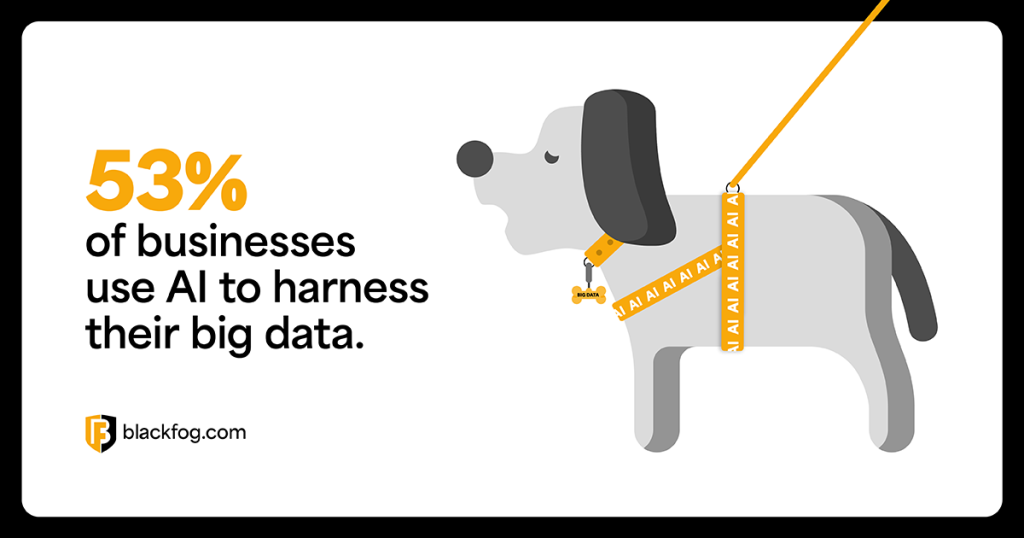
AI adoption across businesses has accelerated rapidly in recent years. According to one study by IDCA, 87 percent of companies identify AI as a top priority in their future plans, with 69 percent of organizations using generative AI in at least one business function and 53 percent adopting the technology to harness big data effectively.
This will see AI increasingly embedded into workflows such as data analysis, software development and customer engagement. In turn, AI protection that secures sensitive data across AI-driven workflows, regardless of where or how the technology is used, is essential to safeguarding these activities.
These steps must guard against AI cybersecurity risks covering both unintentional misuse and malicious activity, as employees may inadvertently expose data through AI tools, while attackers increasingly exploit AI-enabled environments to move faster and at greater scale.
Effective AI protection should be applied consistently across all users, devices and environments. Fragmented or partial controls create exploitable gaps, leaving organizations exposed even when some safeguards are in place.
Establishing Strong Policy And Governance Foundations
Creating and enforcing clear policies around AI usage is a critical first step in any effective protection strategy against AI cybersecurity threats. Strong governance foundations provide the structure needed to safely scale AI adoption while maintaining control over enterprise data.
Without defined governance, organizations risk inconsistent adoption, unmanaged data exposure and security gaps that undermine broader cybersecurity efforts. Essential activities include:
- Defining acceptable AI use: Organizations must clearly specify which AI tools are approved, how they may be used and what types of data are permitted. This helps remove ambiguity and reduces reliance on shadow AI.
- Establishing data handling rules for AI workflows: Policies should outline how sensitive, regulated and proprietary data can be accessed, processed and shared within AI-driven processes.
- Assigning ownership and accountability: Clear responsibility for AI governance should be established across IT, security, legal and compliance teams to ensure consistent oversight.
- Embedding governance into business processes: AI policies must be integrated into existing workflows, procurement and onboarding processes rather than treated as standalone guidelines.
Implementing Technical Safeguards To Protect Data
Strong policies and governance must be reinforced with technical controls that directly address how AI tools access, process and transfer enterprise data. Without the following safeguards and technologies, organizations will lack the ability to enforce policy or prevent misuse in practice.
- Real-time data exfiltration prevention for AI interactions: Technical controls must monitor and block unauthorized inputs of sensitive data as it is being sent to AI tools, browsers and cloud services.
- Endpoint-level visibility into AI activity: Since most AI interactions occur at the endpoint, security solutions must provide visibility into how data is accessed and transmitted from user devices at the device layer, without degrading performance or productivity.
- Behavior-based detection for AI usage: Traditional rule-based controls struggle with dynamic AI workflows as they are often unable to detect and analyze this traffic. Behavior-based protections can identify abnormal data access or outbound activity linked to AI use, even when the tool itself is approved.
- Coverage across all environments: AI safeguards must be applied consistently across devices, locations and AI platforms. Gaps in coverage allow sensitive data to bypass controls and increase overall risk.
The Importance Of Real-Time AI Protection
In an AI-first environment, reactive security tools are no longer enough. Employees frequently interact with AI tools by entering sensitive data directly into prompts, uploading files, or giving AI direct access to workflows. Once that data leaves the organization’s perimeter, it is too late to address any issues. Post-incident alerts or post-incident reporting offer little practical value if data has already been added to opaque AI platforms, where it may be impossible to track or safeguard.
Real-time AI protection is therefore a core requirement. Security controls must be able to detect and prevent unauthorized data movement at the moment it occurs, before sensitive information is exposed or exfiltrated. This applies equally to accidental misuse and deliberate attacks, where speed and automation give threat actors a clear advantage.
By stopping data loss as it happens, real-time controls significantly reduce the impact of AI-related incidents and limit their scope. This approach should not mean restricting AI adoption. Strong, real-time AI protection enables businesses to innovate safely, allowing employees to benefit from authorized AI tools while keeping sensitive data secure and under control.
Share This Story, Choose Your Platform!
Related Posts
EtherHiding: How Ransomware Groups Use the Blockchain to Resist Takedowns
Learn how EtherHiding works and how The Gentlemen, DeadLock, and Cry0 use blockchain infrastructure to update malware server addresses, maintain victim communications, and support ransom negotiations and data extortion.
Gunra Ransomware: Why Stopping Data Exfiltration Matters Before Encryption Begins
Gunra ransomware steals critical data before encryption. Learn how to stop this emerging double extortion threat with anti data exfiltration.
Claude Coding Jailbreak: Latest Risks And Enterprise Impact
Claude coding jailbreaks: recent research, how enterprises can reduce artificial intelligence (AI) security risks with better monitoring and governance.
What Are The Advantages Of Using AI In Intrusion Detection?
Explore the advantages of AI in intrusion detection, from faster analysis and greater scale to identifying previously unseen attack patterns.
How Can Cybersecurity Professionals Defend Against Threats Posed By Malicious AI Tools?
Learn how cybersecurity professionals can defend against malicious AI tools with AI-specific monitoring, least-privilege access and outbound visibility.
Are There Any Government Policies On Using AI For Cybersecurity?
Learn how the EU AI Act and US NIST frameworks address the use of AI in cybersecurity and what their different approaches mean for businesses.