 Skip to content

Managing The Risks Of AI Poisoning In Agentic AI
AI has evolved at remarkable speed in the last couple of years. It has moved rapidly from a passive assistant whose primary role is to answer questions to an autonomous actor capable of making decisions and executing tasks without direct human input. Agentic AI solutions are now appearing across enterprise environments, handling everything from customer service workflows and data analysis to security operations and software development.
The appeal of such tools is clear. The speed and level of automation enables businesses to scale complex work, eliminate tedious manual tasks such as data entry and spot new opportunities more quickly. However, this autonomy brings a new set of risks.
When AI systems act on their own, any compromise in how they think or what they know can quickly translate into poor decisions, data loss or serious operational errors. AI poisoning is one of the most significant threats in this space, so is something every business should be paying attention to when developing agentic AI systems.
What Makes Agentic AI Different?
Agentic AI refers to systems that go beyond responding to prompts. Instead, they have clearly defined goals they aim to achieve by making decisions, calling tools and chaining multiple actions together with limited human input. This sets them apart from commonly used large language models, which generate outputs but do not act on them. As a result, securing agents demands a broader approach than ChatGPT security alone.
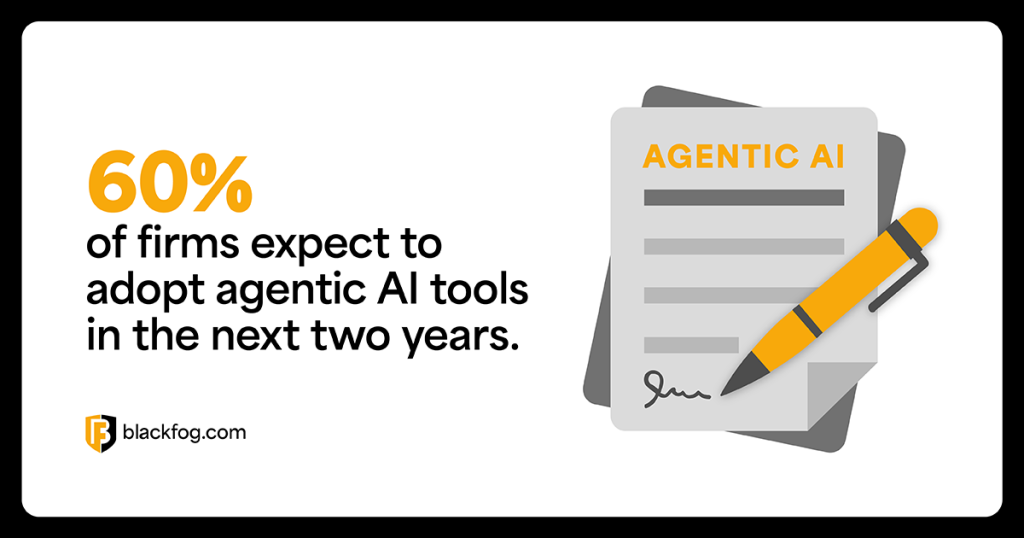
Although still relatively nascent, adoption of these tools is growing fast. According to Gartner, only 17 percent of organizations have deployed AI agents to date, but more than 60 percent expect to do so within the next two years.
This may introduce risk as these AI tools have several characteristics that make them particularly vulnerable to data poisoning. Agents act directly on the data they ingest, meaning a single corrupted input can trigger real-world consequences rather than just a flawed response. They often draw on multiple sources, tools and APIs in a single workflow, multiplying the points where manipulation can occur.
What’s more, because they operate at speed and scale without human oversight, poisoned behavior can affect hundreds or even thousands of actions before anyone notices.
How AI Poisoning Targets Agentic Systems
Threat actors have a growing range of techniques for poisoning agentic AI, each exploiting a different point in how these systems gather information, reason and act. Such attacks are hard to spot because agents work across many systems at speed, leaving fragmented logs that rarely reveal the original source of compromise. Common attack vectors include:
- Poisoned training and fine-tuning data: Corrupted records skew how an agent interprets goals or evaluates the options in front of it.
- Compromised reference sources: Tampered knowledge bases, documents or live data feeds can add misleading context into the agent’s reasoning.
- Tool and plugin manipulation: Attackers tamper with the external services agents call to complete tasks, returning false results.
- Memory poisoning: False context planted in an agent’s persistent memory carries the manipulation into future decisions.
The Key Challenges Of Securing Agentic AI
As autonomous AI takes on more critical work, the need for strong governance and oversight is becoming impossible to ignore. Frameworks like the EU AI Act are already setting expectations around documented data governance, risk management and human oversight, with high-risk AI obligations applying from December 2027. Meeting those standards while keeping agents secure is far from straightforward, with key challenges including:
- Verifying data provenance: Agents pull from many sources at speed, making it hard to confirm the integrity of every input before it shapes a decision.
- Monitoring autonomous behavior: Traditional logging captures outcomes but rarely the reasoning behind them, leaving security teams blind to how an agent reached a given action.
- Limited human oversight: Speed and scale mean humans cannot realistically review every step an agent takes.
- Expanding attack surface: Every connected tool, API and data source is another potential entry point for compromise.
Practical Strategies To Reduce AI Poisoning Risks
Defending agentic AI against poisoning requires visibility into how these systems behave and proactive detection of anything that looks off. Essential steps to take include:
- Establish AI governance controls: Set clear policies on what data agents can access, what actions they can take and where human approval is mandatory.
- Invest in AI observability: Deploy solutions that capture agent reasoning, data inputs and decision-making in detail, enabling forensic review when issues arise.
- Identify unsanctioned tools: Use shadow AI detection to surface agents and AI services operating outside IT oversight before they introduce unmanaged risk.
- Validate data provenance continuously: Treat every external source as untrusted by default and verify integrity at the point of ingestion.
- Apply least-privilege access to AI: The principle of least privilege shouldn’t just apply to human employees. Limit agent permissions and segment access to sensitive systems to contain any compromise.
Agentic AI offers enormous potential, but only for businesses that tackle threats like data poisoning early. Building these controls in from the start is essential to deploying autonomous systems with confidence.
AI Poisoning FAQs
What is AI poisoning in agentic AI systems?
AI poisoning is a type of attack where threat actors corrupt the data an agent learns from, references or acts on, distorting its decisions and the actions it takes. In agentic systems, this can mean manipulated outcomes carried out autonomously across multiple connected tools and workflows.
Why are autonomous AI systems more vulnerable to poisoning attacks?
Agentic AI acts on the data it ingests rather than just generating a response, so any corruption translates directly into real-world actions. Agents also pull from many sources at speed and operate with limited human oversight, giving attackers more entry points and more time before manipulation is noticed.
How can organizations verify AI data provenance?
By maintaining a clear inventory of every data source feeding an agent, logging changes, validating integrity at ingestion and treating all external inputs as untrusted by default. AI observability tools can also help confirm where data originated and how it was used in a given decision.
Can AI poisoning affect AI agents without direct hacking?
Yes. Attackers can plant manipulated content in public datasets, open repositories, third-party plugins or shared documents an agent later ingests, without ever breaching the organization’s network.
What are the best ways to reduce AI poisoning risks in enterprise environments?
Combine strong AI governance, continuous data validation, behavioral monitoring, shadow AI detection and least-privilege access controls to limit exposure and contain any compromise quickly.
Share This Story, Choose Your Platform!
Related Posts
QTFY: Industrializing Cyber Exploitation Against Critical Infrastructure
QTFY: Industrializing Cyber Exploitation Against Critical Infrastructure
Stopping Data Exfiltration Through LLM Prompts And Responses
Data can leave through LLM prompts, responses or agent actions. Learn how each path works and what actually stops it.
The 7 Layers Of Prompt Poisoning Protection Every AI Application Needs
Discover the seven layers of prompt poisoning protection every AI application needs, from input validation to endpoint monitoring.
What Is Zero Trust In Cybersecurity And How Does It Apply To Shadow AI?
Zero Trust means never trust, always verify. Learn how this principle applies to shadow AI and closes the gaps legacy security misses.
What Are The Main Features Of Shadow AI Applications?
Shadow AI applications share five distinct traits, from unapproved access to free-text input. Learn what to look for and why it matters.
How To Avoid Shadow AI In Enterprises
Learn how to avoid shadow AI in enterprises through continuous discovery, fast-tracked approvals and endpoint-level monitoring.