Skip to content

Shadow AI Management Best Practices For The Enterprise
Quick summary
Shadow AI management is the practice of identifying, monitoring and controlling the unapproved AI tools employees use without IT oversight. It turns policy into active protection, giving security teams visibility over AI use and the data moving through it. Key practices for this include:
- Building a live AI inventory
- Sorting AI tools into tiers
- Providing sanctioned, easy-to-use options
- Enforcing access controls and privilege restrictions
- Deploying DLP and endpoint-native monitoring
- Training employees on real risks
- Reviewing and reassessing quarterly
Enterprise adoption of generative AI is no longer experimental. It’s now a daily habit for millions of employers, who reach for AI tools to draft emails, summarize documents and accelerate routine tasks.
However, this can lead to a range of potential cybersecurity issues, especially when individuals are using unapproved tools. This is a common occurrence, with our research finding that 49 percent of employees use AI tools not sanctioned by their employer.
Firms may think a simple solution to this is to ban such practices, but in reality, this doesn’t work. For instance, one study by security training provider Anagram found that 45 percent of workers have used banned AI tools at work, with 40 percent willing to knowingly break policy to finish a task faster.
Tackling this demands an effective shadow AI management plan built on proven best practices. This is essential in boosting visibility, educating employees and protecting systems and data from potential threats.
“Shadow AI isn’t a problem you can solve with policy alone. If you can’t see what data is leaving the organization, through which applications and where it’s going, you can’t effectively manage the risk. Enterprises need visibility and control at the endpoint to stop sensitive data from being exposed before it becomes a breach.”
– Dr. Darren Williams, Founder and CEO, BlackFog
What Is Shadow AI Management?
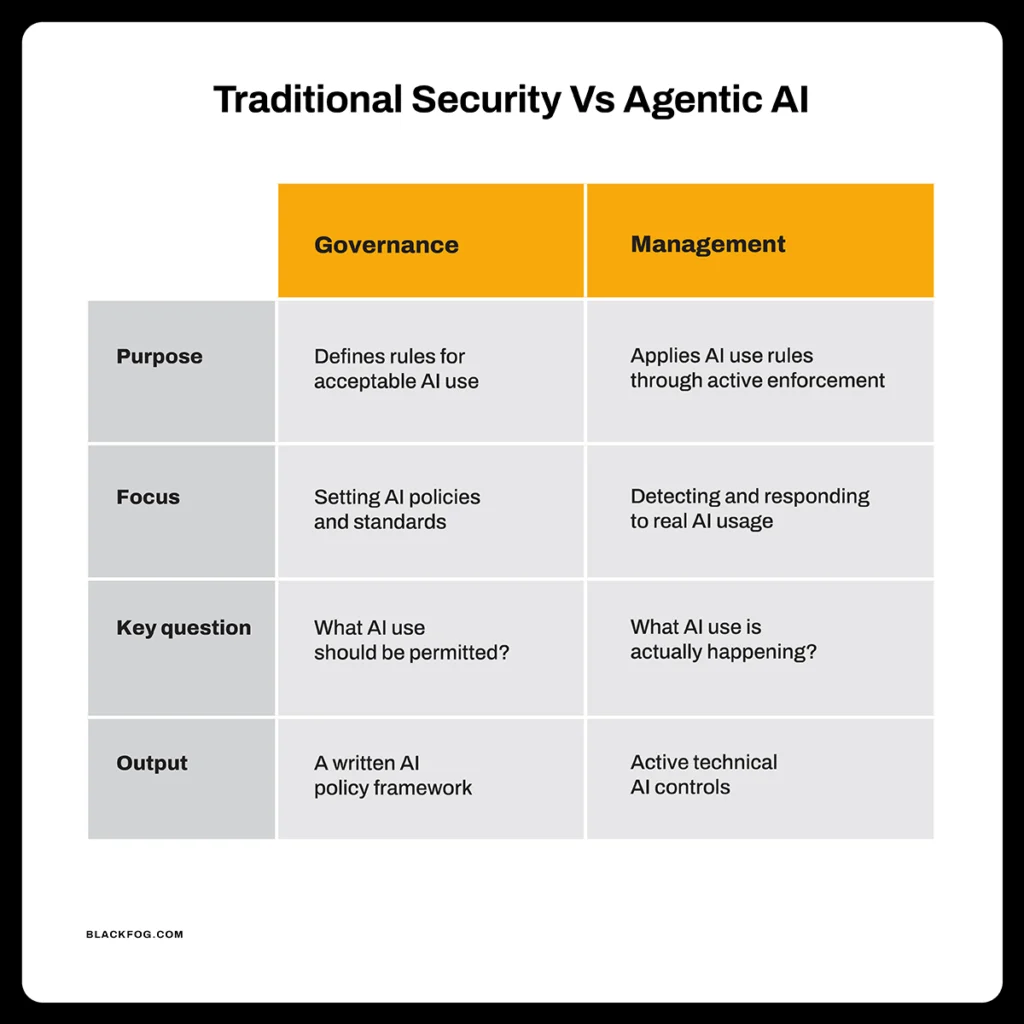
Shadow AI management refers to the steps firms take to identify, monitor and control the use of unapproved AI tools that employees may adopt without the knowledge of IT or security teams. It aims to give organizations visibility over where AI is being used and how corporate data moves through it, as well as take action to prevent risky behavior that could compromise sensitive assets.
This distinguishes it from AI governance, which defines the policies, standards and accountability structures that dictate acceptable use. While governance writes the rules, management puts those rules into practice, translating written intent into working controls that detect actual usage across the business and respond to the risks each unsanctioned tool introduces, thereby improving shadow AI security.
Why Shadow AI Management Matters Now
The scale of unsanctioned AI use has turned visibility into a pressing enterprise problem. Employees routinely paste sensitive information into public tools that were never assessed for business use, leaving security teams with no record of what was shared or where it went.
For example, recent shadow AI statistics gathered from our research found that among staff using unapproved AI tools, 58 percent rely on free versions that typically lack enterprise-grade security, data governance and privacy protections. Many consumer platforms may retain inputs employees enter, which could lead to them being incorporated into model training or even surfaced in outputs to other users. In other words, confidential data leaves the organization permanently the moment it is entered, resulting in potentially harmful data breaches.
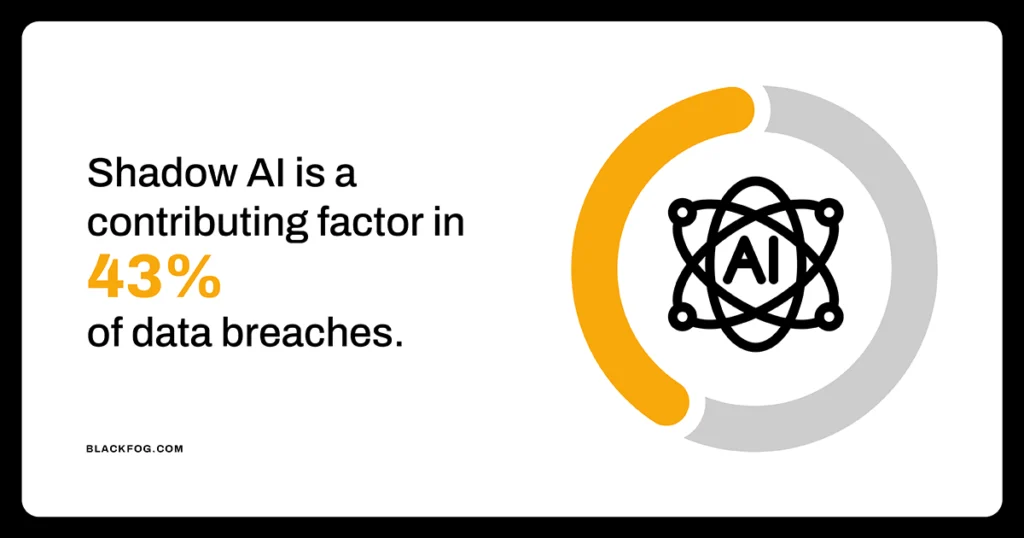
This leads directly to financial consequences. According to IBM’s 2026 Cost of a Data Breach Report, shadow AI is now a contributing factor in 43 percent of incidents, adding an average of $400,000 to the cost of an incident.
The governance gap compounds the problem. The same IBM research found that 68 percent of organizations have no AI governance policies in place to manage AI or prevent employees from using shadow AI. Without active shadow AI management, firms cannot see, control or account for how AI is used across the business. The consequences of this are clear, as 92 percent of organizations that reported an AI-related security incident lacked proper AI access controls.
7 Essential Shadow AI Management Best Practices
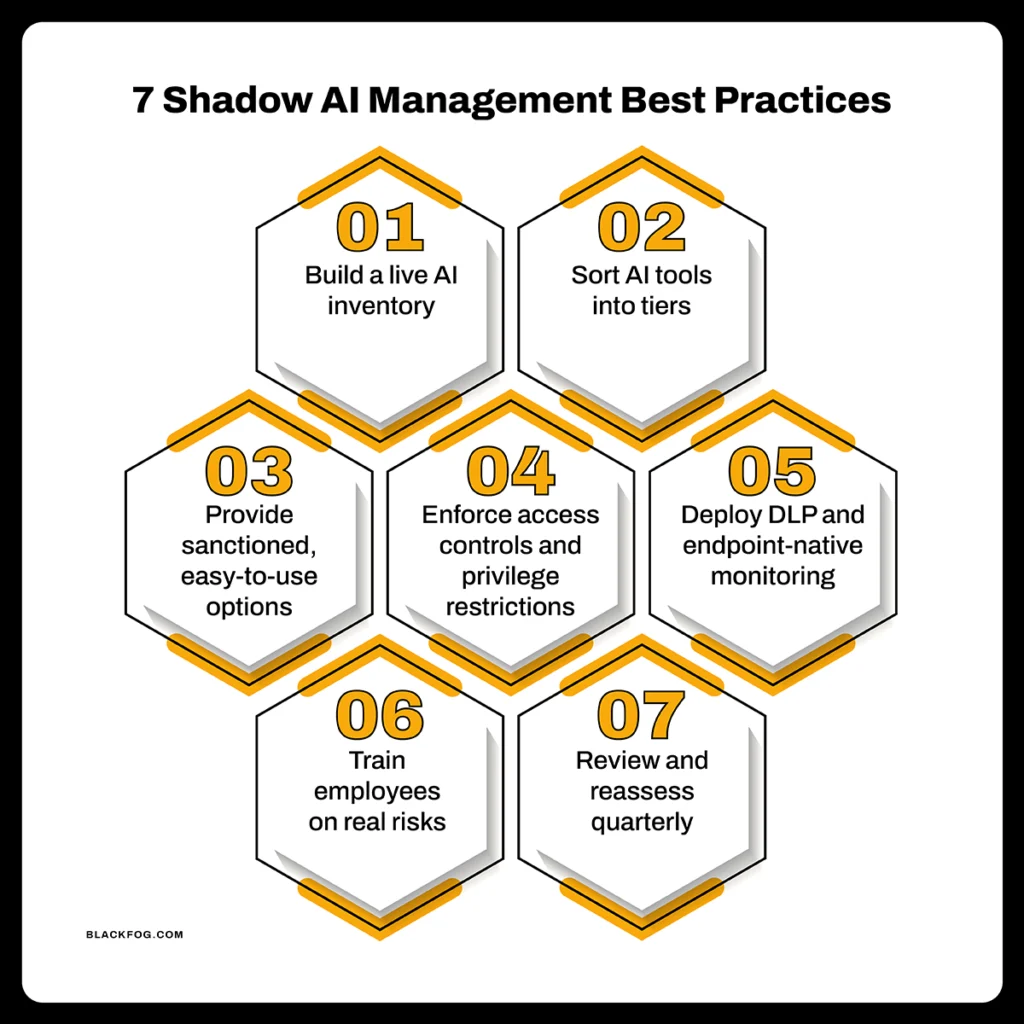
Shadow AI is not a problem that will solve itself, so enterprises need a deliberate plan rather than a reactive one. A structured approach turns scattered restrictions into practical, complete oversight, giving security teams the visibility and control to manage AI use safely. The following seven best practices set out how to achieve this.
1. Build A Live AI Inventory
An AI inventory is a continuously updated record of every AI tool active across the organization. This must span sanctioned platforms, unapproved consumer apps and any AI features embedded within existing software.
Policies written without this picture are guesswork. Traditional discovery methods miss much of the problem, because browser-based solutions and AI baked into approved software tools leave little trace in network logs. A one-off audit ages quickly too, given how quickly new tools enter the workplace. Visibility has to be ongoing to stay useful.
Start by combining network monitoring, browser and endpoint telemetry and a review of AI features in platforms already in use. Treat the resulting inventory as a living document, revisited on a regular cycle, so that every policy and control that follows rests on an accurate view of reality.
2. Sort AI Tools Into Tiers
Tiering is the practice of sorting discovered AI tools into clear categories for usage. Typical segments include tools that are approved for general use, restricted to certain teams or data types, and prohibited outright.
A blanket ban pushes usage underground, while unrestricted freedom invites data loss. Tiering strikes the balance, matching each tool to the sensitivity of the work it touches. A consumer chatbot might be fine for drafting internal notes yet wholly unsuitable for customer records or source code. Clear tiers also give employees a straightforward answer to the question they actually ask: which tools am I allowed to use, and for what?
Base your tiers on data sensitivity and business need rather than gut feel, document the reasoning behind each decision, and publish the categories somewhere staff will see them.
3. Provide Sanctioned, Easy-To-Use Options
This practice means giving employees capable, approved AI tools that meet their real needs, so the sanctioned route is also the easiest one to take.
People turn to shadow AI because it helps them work faster, not to cause harm. They are also quick to justify such usage if nothing official is on offer. Our research found that 63 percent of employees consider it acceptable to use AI tools without IT oversight if no company-approved option is provided. Addressing this gap removes much of the incentive to use prohibited tools..
To implement this, identify the tasks driving unsanctioned use, then supply approved tools that match them for quality and convenience. Make access quick and requesting new tools painless, so staying compliant never feels like the slower option.
4. Enforce Access Controls And Privilege Restrictions
Access controls determine who can use which AI tools and what data those tools can touch. Established practices like the principles of least privilege and role-based access control apply as readily to AI as to any other enterprise system.
These standards apply even for individuals using sanctioned solutions – and to the tools themselves, as well as employees. An approved AI assistant wired into company systems can often reach far more data than any single user requires, so a compromised account or a manipulated prompt can expose information well beyond the task at hand. Granting each user and platform only the access their role demands keeps that blast radius small and helps protect systems from risks such as prompt injection.
Map AI tools to roles and restrict each one to the minimum data and systems it needs. Extend the same principles to AI agents, which act autonomously and can accumulate access over time.
5. Deploy DLP, ADX And Endpoint-Native Monitoring
Data loss prevention (DLP) and endpoint monitoring track what leaves the organization, flagging or blocking sensitive information the moment it moves toward an AI tool. Dedicated anti data exfiltration (ADX) tools also have a key role to play here, as they go deeper than traditional solutions by analyzing behavior at every endpoint.
Knowing exactly what data is being exfiltrated matters whether the cause is malicious or entirely innocent. An employee pasting a client list into a chatbot to save time does as much damage as a deliberate leak. Modern environments make this hard to police from the network alone, because browser-based and embedded AI generate little distinguishable traffic.
The endpoint is the one place every interaction is visible before data departs, which is why monitoring at that level, paired with automated responses, is the only reliable way to catch exposure as it happens rather than long after.
Deploy ADX tuned to AI-bound data flows and monitor at the endpoint, so automated blocking can stop risky transfers in real-time.
6. Train Employees On Real Risks
Effective training teaches employees about the actual shadow AI risks their choices create. This should go well beyond a generic policy reminder to show what actually goes wrong and why.
Most people have no idea that a pasted document might be retained by a consumer-grade AI, fed into model training or surfaced in outputs to another user. Spelling out these shadow AI risks in plain terms, from data exposure and compliance breaches to intellectual property loss, turns an abstract rule into something staff understand and act on. Training also works best when it points somewhere useful, reinforcing which approved tools to reach for and what to do when none seems to fit.
Run short, frequent sessions grounded in real scenarios rather than annual box-ticking. Pair every warning with the sanctioned alternative so employees leave knowing exactly what to do differently.
7. Review And Reassess Quarterly
A quarterly review is a scheduled recheck of the whole shadow AI management program, confirming that inventories, tiers, controls and training still match how the platforms are actually being used.
The AI landscape never sits still. New tools launch constantly, familiar platforms bolt on AI features overnight and the balance of what is safe shifts with every update. A policy written even six months ago was drafted for a landscape that no longer exists. Treating shadow AI management as a one-off project guarantees it falls behind, because the problem keeps moving after the work is declared finished, creating fresh gaps that must be closed.
Set a fixed quarterly cadence to revisit each practice in turn, refreshing the inventory, retesting controls and updating training. Build in a faster trigger for major shifts, so a significant new tool prompts action without waiting for the calendar.
The Future Of Enterprise AI
AI is now woven into the working day. Its presence will only deepen as tools multiply and capabilities grow. Shadow AI is not a passing problem that tighter rules will eventually solve. It’s a permanent feature of enterprise life that demands active, ongoing management.
Visibility is what makes that management possible. Without a clear view of every tool in use and every piece of data moving through it, security teams are guessing. Strong endpoint-level visibility reveals exactly what is happening across the business and allows teams to step in the moment a policy violation appears, containing exposure before it becomes a breach. The enterprises that thrive with AI will be those that can see it clearly and respond fast.
Shadow AI Management FAQs
What is the difference between shadow AI and shadow IT?
Shadow IT covers any unapproved technology employees use without IT’s knowledge. Shadow AI is a subset of this, referring specifically to unsanctioned AI tools. Its risks are sharper, because these tools can absorb and expose sensitive data.
How do you detect shadow AI in an organization?
Detection combines network monitoring, endpoint telemetry and browser activity with a review of AI features inside approved software. Endpoint-native monitoring is the most reliable method, since browser-based and embedded AI leave little trace in network logs alone.
Is shadow AI illegal or against compliance regulations?
Using shadow AI is not illegal in itself. However, feeding regulated data into unsanctioned tools can breach obligations under frameworks like GDPR or the EU AI Act, exposing organizations to penalties, contractual violations and loss of control over protected information.
How often should you review shadow AI policies?
Review policies at least quarterly, given how quickly new tools and features appear. Supplement this fixed cadence with event-driven checks, so a major new AI tool or regulatory change triggers reassessment without waiting for the next scheduled review.