 Skip to content

Why Generative AI Security Is Now A Business-Critical Issue
Generative AI is being adopted across enterprises at an unprecedented pace. It’s now used in everything from content creation and software development to data analysis and customer support. However, while generative AI delivers clear productivity gains, it also introduces a new and expanding threat surface that many organizations are not fully prepared to secure.
Sensitive data can be entered, processed or exposed in ways that bypass traditional controls and visibility. What’s more, this adoption often happens through unapproved, consumer-grade tools, giving rise to shadow AI threats alongside sanctioned use.
Despite these risks, generative AI is not a trend businesses can ignore. In an environment where cyberthreats are more widespread and sophisticated than ever, generative AI security must be treated as a critical component of any modern cybersecurity strategy.
How Generative AI Handles Enterprise Data
GenAI systems process data entered through typed prompts, uploaded files and connected data sources. Common inputs include customer records, financial forecasts, internal documents, intellectual property and source code. Because generative models analyze and retain data to produce outputs, this creates unique security challenges.
Enterprises can often lose visibility into where data is sent, how it’s processed and whether it’s stored or reused by AI providers. These blind spots make it difficult for cybersecurity teams to enforce governance or prevent inadvertent exposure of sensitive information.
Why The Growth Of Generative AI Magnifies Business Risks
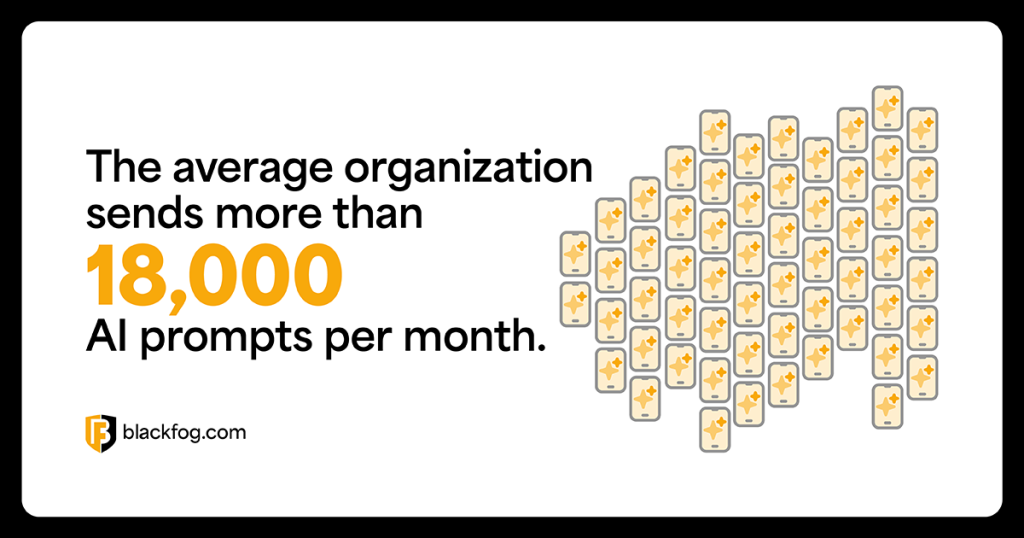
Generative AI use within enterprises is rapidly evolving. According to one study by Netskope, for example, the number of users of these tools has tripled in the last 12 months. What’s more, the average organization now sends more than 18,000 AI prompts per month, a sixfold increase over the previous year. This reflects how deeply GenAI is embedded into everyday work.
This rapid growth increases business risk not simply because more data is involved, but because adoption is often decentralized and difficult to monitor. AI tools are now used across multiple teams, devices and environments, frequently without consistent oversight from IT or security.
As AI becomes embedded into core workflows, traditional security models struggle to keep pace. Limited visibility into how and where AI is used makes it harder to enforce policies, detect issues early or understand the true scale of risk as adoption accelerates.
Core Generative AI Security Risks Businesses Must Understand
As genAI adoption accelerates across enterprises, organizations face a consistent set of AI cybersecurity risks, regardless of whether AI use is formally approved or occurring through shadow AI. These stem from how generative AI platforms handle data and how easily sensitive information can be exposed during normal use. Common issues to be aware of include:
- Prompt handling and sensitive inputs: Employees frequently enter business data directly into prompts to improve output quality. Once submitted, this information is processed outside the organization’s security perimeter, often without clear visibility or control, creating risk of exposure or misuse.
- Unclear data retention and storage policies: Many generative AI platforms retain prompt data for varying periods of time, depending on service tier and provider policies. Enterprises often lack clarity on how long data is stored, where it is hosted and whether it is accessible to third parties. This uncertainty complicates data governance and increases regulatory and compliance risk.
- Use of sensitive data in model training: Some AI providers use submitted data to improve or train models unless customers explicitly opt out. This raises concerns that proprietary or regulated data could influence future model behavior, or be exposed – directly or indirectly – in responses to other user prompts.
- Limited auditability and monitoring: Generative AI interactions often lack the detailed logging and audit trails required for effective security monitoring. This makes it difficult for cybersecurity teams to investigate incidents, confirm policy compliance or demonstrate regulatory adherence.
Why Every Business Must Address Generative AI Security Now
Generative AI has become a mission-critical technology for modern businesses, but it also introduces significant data security risk. As adoption accelerates, sensitive information is increasingly being processed in ways that fall outside traditional security visibility and control.
Organizations that take a reactive approach to AI protection may not realize gaps exist until data has already left the business. At that point, remediation is difficult or impossible. This is why complete visibility into the role of AI in cybersecurity, including usage, data handling and system behavior, is essential. By implementing proactive controls that prevent exposure in real-time, businesses can reduce risk while continuing to benefit from generative AI innovation.
Share This Story, Choose Your Platform!
Related Posts
What Enterprises Need To Know About Cyber Governance, Risk And Compliance
Learn all about cyber governance, risk and compliance in 2026 and why this must be a consideration at the highest levels of all organizations.
Navigating Essential Cybersecurity Compliance Standards: What To Know
There are a range of cybersecurity compliance standards firms of all sizes must deal with, including mandatory and voluntary frameworks. Here's what you need to know.

Understanding The Requirements Of Information Security Compliance
Learn precisely what information security compliance entails and the various steps that go into making this effective.
The Importance Of Effective Cybersecurity Services For Small Businesses
Find out why cybersecurity services for small businesses are more in-demand than ever as cybercriminals shift their focus to less-sizable enterprises.
Cybersecurity Compliance: What You Need Without Hiring A CISO
Find out what's required to ensure cybersecurity compliance and how this can be achieved without the need for a full-time CISO.
How Cybersecurity Startups Manage Compliance And Security Certifications
For cybersecurity startups, prioritizing compliance early builds trust, accelerates growth, and ensures security standards align with evolving threats and customer expectations.