 Skip to content

Building An Agentic AI Governance And Risk Management Strategy For Enterprises
Enterprise AI is entering a new phase. While earlier tools waited for a prompt and returned an answer, autonomous agents now make decisions and act across business systems on their own. Adoption is already moving fast, but with it come new challenges.
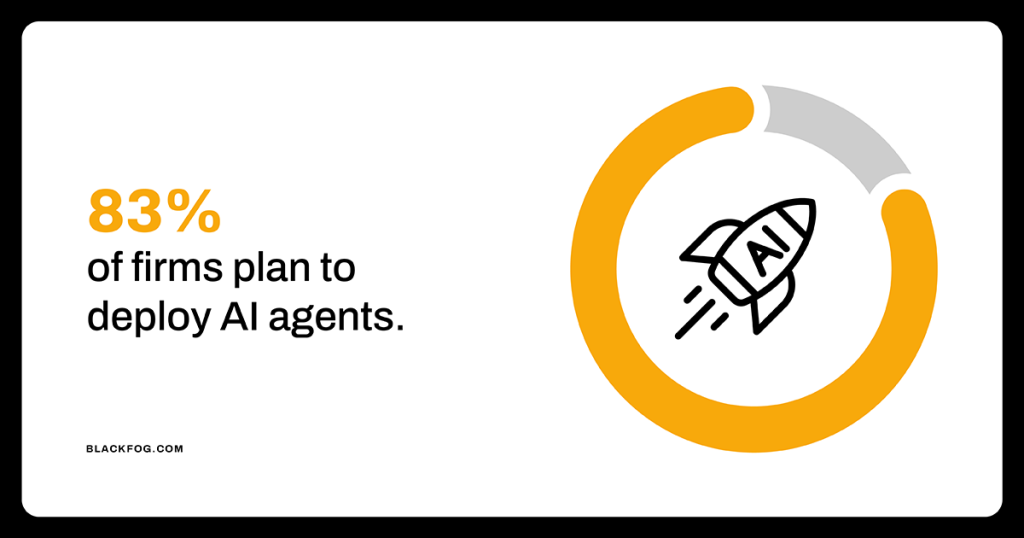
For instance, Cisco’s 2025 AI Readiness Index report found that more than four out of five organizations (83 percent) plan to deploy AI agents, with 40 percent expecting these to work alongside employees before the end of 2026. However, only a third say they are fully equipped to secure and control these tools.
This leaves many companies vulnerable. Agentic AI security is now a must-have for managing the new attack surfaces these systems create. On its own, though, it is not enough. Technical controls cannot answer who approved an agent, what it may do or who is accountable when it goes wrong. A clear governance and risk management strategy underpins an effective response.
Why Agent Autonomy Demands A New Governance Approach
Traditional IT systems are intended to be predictable. They follow fixed rules, act when a person triggers them and produce repeatable results. Autonomous agents work differently. They interpret goals, choose their own steps and act across systems without a human approving each one.
This autonomy breaks the assumptions typical approaches to governance are built on. An agent can reach a decision no one signed off, take an action no policy anticipated and do so in ways that cannot always be explained after the fact. For compliance and data protection teams, this is a serious problem. While regulations demand accountability and a clear audit trail, an agent’s reasoning is often opaque, especially when using so-called ‘black box’ AIs.
Governance for these systems therefore means more than managing data and access. It demands solutions that can control behavior, setting boundaries on what an agent may decide and do, and ensuring every action can be traced to an accountable owner.
The Cost Of Ungoverned Agent Adoption
Left uncontrolled, AI agents may drift. Over time they can shift how they interpret goals or data, making choices that no longer match what the business intended. If tools have unfettered access to key systems, a single flawed or manipulated agent can act far beyond its remit. That exposure widens further under external threats such as adversarial AI attacks and jailbreaking, which turn an agent against its owner.
Consider, for example, a procurement agent granted broad access to approve orders. A drift in how it reads supplier data, or a jailbreak that removes its limits, could see it approve fraudulent payments for weeks before anyone notices.
Other risks may include a ‘domino effect’, where faulty reasoning from one AI agent propagates to others throughout a business. What’s more, if something unexpected does occur, there may be few audit trails to determine exactly what went wrong and why.
The consequences can be severe, with risks such as financial loss, data breaches, regulatory penalties and lasting reputational damage all awaiting businesses that fail to adopt effective risk management for their AI tools. Because ungoverned agents operate with little oversight, the harm often compounds quietly, surfacing only once it is significant enough to force attention.
The Building Blocks Of Agentic AI Governance
Effective governance rests on several connected building blocks. Together, the following elements help create a comprehensive risk management framework that keeps the use of autonomous AIs under control:
- Governance framework: A defined structure sets out how agents are approved, deployed and overseen, ideally aligned to recognized standards such as the NIST AI Risk Management Framework and ISO/IEC 42001. Without it, oversight becomes inconsistent and ad hoc.
- Compliance mapping: Agent use must be mapped to legal and industry obligations, such as those set by the EU AI Act, so deployments meet regulatory standards from the outset rather than being retrofitted after a problem.
- Policy enforcement: Written rules must be turned into technical controls that constrain what agents can actually do, since policy alone cannot restrain an autonomous system acting at machine speed.
- Risk assessment: Each agent’s potential impact should be evaluated before deployment and reviewed at regular intervals afterward, focusing the heaviest oversight on the agents whose reach and autonomy pose the greatest risk.
- Ownership and accountability: Every agent needs a named owner responsible for its behavior, so that when a decision or action causes harm, it can always be traced back to an accountable person.
Building these controls in as early as possible is what separates safe adoption from costly disruption. Businesses that embed governance into their AI security posture before agents scale can grow their use of AI with confidence, knowing each new agent is approved, constrained and accountable from day one. Those that delay will be left reacting after the fact, discovering gaps only once the damage is done. By then the consequences can be severe, from breached data and regulatory penalties to financial loss and lasting damage to customer trust.
Agentic AI Governance FAQs
What is agentic AI governance?
Agentic AI governance is the set of frameworks, policies and controls that determine how autonomous agents are approved, deployed and overseen. It governs not just data and access but agent behavior and accountability.
Why do enterprises need an AI governance strategy?
Because agents act autonomously and at speed, they can make unapproved or unexplainable decisions. A governance strategy keeps their behavior accountable, compliant and aligned with what the business actually intended.
How can organizations manage risks associated with autonomous AI agents?
Risk is managed by assessing each agent’s impact before deployment, enforcing least-privilege access, monitoring behavior continuously and assigning a named owner accountable for every agent in use.
What policies should be included in an agentic AI governance framework?
Key policies cover which agents may be deployed and for what purpose, the data and actions each may access, where human approval is required and how compliance obligations are met.
How does shadow AI affect AI governance?
Shadow AI undermines governance because unsanctioned agents operate outside oversight. They cannot be assessed, monitored or controlled, creating blind spots where risk builds unseen until an incident forces it into view.
Share This Story, Choose Your Platform!
Related Posts
QTFY: Industrializing Cyber Exploitation Against Critical Infrastructure
QTFY: Industrializing Cyber Exploitation Against Critical Infrastructure
Stopping Data Exfiltration Through LLM Prompts And Responses
Data can leave through LLM prompts, responses or agent actions. Learn how each path works and what actually stops it.
The 7 Layers Of Prompt Poisoning Protection Every AI Application Needs
Discover the seven layers of prompt poisoning protection every AI application needs, from input validation to endpoint monitoring.
What Is Zero Trust In Cybersecurity And How Does It Apply To Shadow AI?
Zero Trust means never trust, always verify. Learn how this principle applies to shadow AI and closes the gaps legacy security misses.
What Are The Main Features Of Shadow AI Applications?
Shadow AI applications share five distinct traits, from unapproved access to free-text input. Learn what to look for and why it matters.
How To Avoid Shadow AI In Enterprises
Learn how to avoid shadow AI in enterprises through continuous discovery, fast-tracked approvals and endpoint-level monitoring.