 Skip to content

The Importance Of AI Security Posture Management In The Enterprise
AI is becoming embedded in everyday business operations, from customer service to data analysis and decision-making. As it does, it introduces new data security challenges that most organizations have never had to manage before. AI tools ingest, process and generate vast quantities of information, often reaching across systems and handling sensitive data at a scale and speed no human team could match.
Legacy data security solutions struggle to keep up with this. They were designed to protect predictable, human-driven activity, so it’s difficult for them to see or control how AI systems behave. To address this, firms must deploy AI security posture management (AI-SPM) solutions – a dedicated approach to modern security that is specifically designed to address the risks AI tools create as they spread across the enterprise.
What Is AI Security Posture Management?
AI security posture management is the continuous assessment, monitoring and improvement of an organization’s AI security. In simple terms, it gives businesses a live view of how secure their AI systems are, across their entire AI environment.
This starts with discovery for every large language model, agentic AI system and tool in use across the business, including both approved and unsanctioned platforms. It then requires clear risk assessments and management of data and behavior, monitoring activity for anomalies and governing who or what can access each system. It also checks that AI use stays aligned with policy and regulation.
Such activities must be an ongoing process, not a one-time audit. AI systems change constantly as they learn and take on tasks, so posture management must constantly review systems as they adapt.
Why AI Security Posture Management Is Necessary
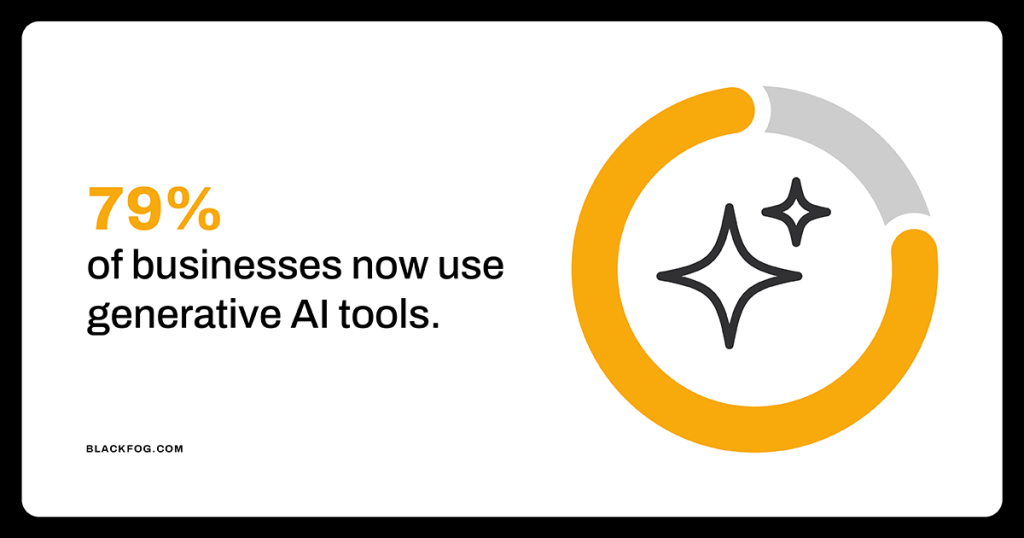
AI is now ubiquitous, with adoption happening at a pace few security teams were prepared for. For example, 2025 research from McKinsey found that in 2023, just one in three businesses (33 percent) had adopted generative AI tools. By 2025, this had grown to 79 percent. Over the same period, overall use of AI tools climbed from 55 percent to 88 percent.
This rapid, often unplanned rollout is the core driver of risk. Tools are adopted faster than they can be cataloged, especially when many deployments are shadow AI tools that are beyond the view of IT. Each new model or agent widens the attack surface. The result is that security teams lack a reliable picture of what is running or what AI can access.
That gap leaves businesses exposed to a range of AI-specific threats, including data leakage, aversarial AI attacks, model manipulation, prompt injection and the misuse of over-permissioned systems. Managing AI therefore demands better visibility and control.
Key Components Of AI Security Posture Management
Legacy security tools assume static systems and human users following clear patterns. They struggle to manage software that learns, acts on its own and reaches across the business. AI-SPM is built around how AI behaves and must combine several core elements to be effective, including:
- AI asset discovery: This finds and inventories every model, agent and tool in use, including unsanctioned ones. Without it, shadow AI stays invisible and unprotected.
- Data and model risk assessment: These tools evaluate how sensitive an AI system’s data is and how exposed its models are to manipulation. It identifies the specific vulnerabilities attackers exploit so they can be addressed before they are used.
- Continuous monitoring: Tracking AI activity in real-time rather than at intervals flags anomalies as they occur. Because agents act much more quickly than humans, periodic checks miss threats until the damage is done.
- Access and identity management: Least-privilege rules limit what each model and agent can reach. This ensures threats are contained when an AI system is compromised or manipulated.
- Governance and compliance tools: Mapping AI use against regulatory and internal policy requirements keeps deployments accountable and closes governance gaps as adoption scales.
Best Practices For Implementing AI Security Posture Management
Effective AI-SPM is more than a stack of technical controls. It depends just as much on the people, processes and governance that surround those tools, giving clear structure to how AI is adopted and overseen. The following best practices all need to be considered when deploying such an initiative to ensure enterprise data remains protected in an increasingly hostile AI environment:
- Assign clear ownership: Name senior leaders accountable for AI security so decisions are not left to chance across scattered teams.
- Set usage policies: Define which tools staff may use and for what, giving employees clear rules that reduce risky, unsanctioned adoption.
- Involve the whole business: Bring security, IT, legal and data teams together, since AI risk cuts across functions no single department can manage alone.
- Train employees: Educate staff on the risks of AI tools and their responsibilities, turning the workforce into a first line of defense.
- Review continuously: Treat implementation as an ongoing cycle, reassessing policies and posture as AI tools evolve and new risks emerge.
AI security posture management will be essential in giving businesses the visibility, governance and continuous oversight that legacy tools cannot provide. Organizations that put these controls in place now, treating AI security as an ongoing discipline rather than a one-off project, will be best positioned to adopt new capabilities safely and manage the evolving threats the technology brings.
AI Security Posture Management FAQs
How does AI improve cloud security posture management?
AI strengthens cloud security posture management by automatically detecting misconfigurations, prioritizing risks by severity and analyzing cloud activity faster than manual review.
Why is AI security posture management important for enterprises?
It matters because AI adoption is outpacing security. Without it, shadow AI, over-permissioned agents and unmonitored models leave enterprises exposed to data loss and manipulation.
How is AI-SPM different from traditional security posture management?
Traditional posture management protects static, human-driven systems. AI-SPM addresses systems that learn and act autonomously, treating the model as part of the attack surface.
What are the key components of an AI security posture management strategy?
Core components include AI asset discovery, data and model risk assessment, continuous monitoring, access and identity governance, and alignment of AI use with compliance requirements.
How can organizations discover and inventory AI assets?
Discovery starts by scanning networks, cloud environments and integrations to detect every AI model, agent and tool in use, including unsanctioned shadow AI.
Share This Story, Choose Your Platform!
Related Posts
QTFY: Industrializing Cyber Exploitation Against Critical Infrastructure
QTFY: Industrializing Cyber Exploitation Against Critical Infrastructure
Stopping Data Exfiltration Through LLM Prompts And Responses
Data can leave through LLM prompts, responses or agent actions. Learn how each path works and what actually stops it.
The 7 Layers Of Prompt Poisoning Protection Every AI Application Needs
Discover the seven layers of prompt poisoning protection every AI application needs, from input validation to endpoint monitoring.
What Is Zero Trust In Cybersecurity And How Does It Apply To Shadow AI?
Zero Trust means never trust, always verify. Learn how this principle applies to shadow AI and closes the gaps legacy security misses.
What Are The Main Features Of Shadow AI Applications?
Shadow AI applications share five distinct traits, from unapproved access to free-text input. Learn what to look for and why it matters.
How To Avoid Shadow AI In Enterprises
Learn how to avoid shadow AI in enterprises through continuous discovery, fast-tracked approvals and endpoint-level monitoring.